Follow Us on Google
• Oke-Afa community leaders urge Sanwo-Olu to renovate arcade
By Bianca Iboma-Emefu
For most people in Lagos, the deafening boom made by waves of exploding bombs, stored at Ikeja Military Cantonment, Lagos, may have become a dim memory, but not for the thousands of families who lost members – husbands, wives, children and other close neighbours.
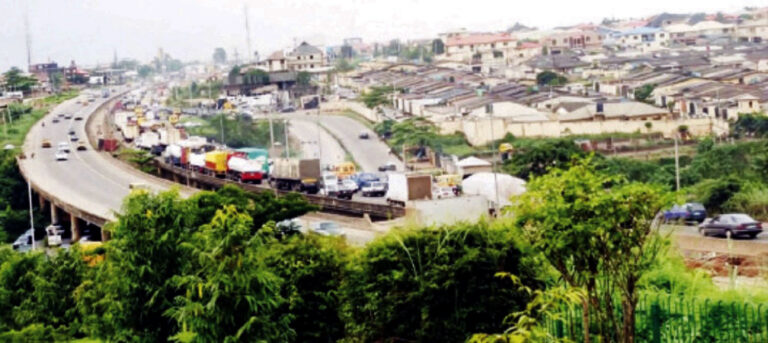
Sunday, January 27, 2002, the day that the sky over Lagos turned a hellish orange, and the earth shook with the force of an undeclared war, remains etched in the memory of the bereaved. For long hours, explosions rocked Ikeja Military Cantonment, shattered windows and set nearby buildings on fire. By evening of that day, as more and more bombs exploded in a wild orchestra of sound and earth-shaking vibrations, gargantuan stampede by mass of residents in Mafoluku and Oshodi ensued. The ever-growing mass of people, seeking to escape from the epicenter of the explosions poured like a swarm of locusts in the direction of Ajao Estate, across the Murtala Muhammad International Airport Road. Their goal was to get to relatively safer Ejibbo, Isolo and Okota areas of the Lagos metropolis. Thousands of others headed to Agege, Abule Egba and in that general direction.
For the human mass that went towards Ajao Estate, in the darkness of the night, tragedy soon struck. Right in the path of the human mass seeking refuge laid the canal, which separates the upscale Estate from Oke Afa. Thousands fled from their homes in the desperation to escape. People trudged down a dirt road that ran to the edge of the canal at a point that was not deep, and where a wooden platform allowed people to cross the canal to the other side, on normal days. But the dark night of January 27 was not a normal night. With frightened residents massing up at the platform and with the resulting pushing, a stampede soon happened. Hundreds were pushed into the canal and got trampled. Those who misjudged the depth of the seeming shallow part of the canal drowned or were similarly trampled by the heaving mass of people behind them, all in the mad rush to cross the canal.
By Tuesday, 48 hours after the horrendous incident started, hundreds had died. Official records showed that 1,100 bodies, mostly children, were recovered from the canal by divers. These were hapless citizens who fled from the fiery explosions only to perish in the murky depths of the Oke-Afa canal.
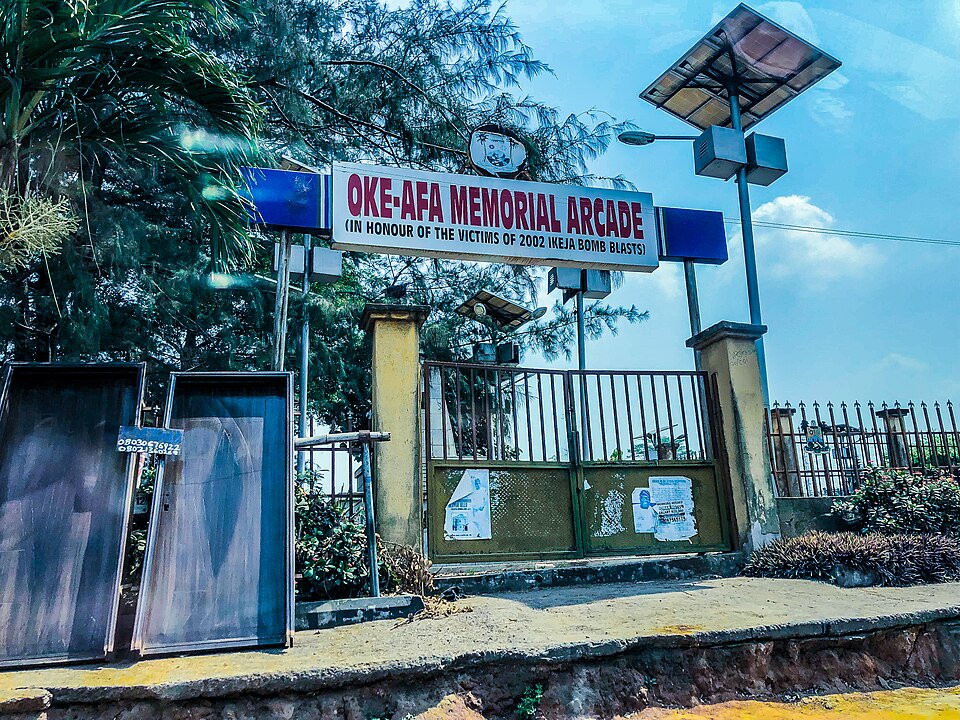
Corpses that were not claimed were buried by the side of the canal. The marked plot of land was then named Oke-Afa Memorial Arcade to immortalise the dead victims of the bomb blast interred the place. Today, the memorial built to house their memory is suffering a second, slower death: the death of indifference.
The graves of the victims remain a silent testament to tragedy, forgotten and neglected by the very society that mourned and grieved for them. The story of these graves is a stark reminder of how even the most profound moments of national sorrow can fade into obscurity if not properly commemorated and preserved.
Without a doubt, the Ikeja bomb blast was a tragedy wounded and traumatized thousands, and penetrated the hearts of Nigerians, exposing the fragility of peace and the urgent need for security and resilience. Sadly, the gravesite of the victims has over time become a victim of neglect, gradually decaying into an environment marked by disrepair and abandonment.
The Oke-Afa Memorial Arcade was supposed to be a sanctuary of “never again.” Instead, it has become a sore thumb of neglect. The transformation from a solemn tribute to a wasteland is nearly complete. The metal fence, meant to demarcate and shield the final resting place of over a thousand people, has rusted and given way at several points.

The once bright solar lamps which stood like sentries and illuminated the place at night have been stripped of their batteries, leaving the arcade in a tomb-like darkness after sunset.
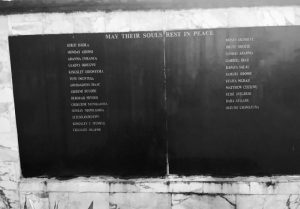
Underneath layers of grime and moss, the names of the victims are still visible, ghostly reminders of people, whose names officials of government have effectively stopped saying their names. No one even knows the name of the agency of the government responsible for maintaining the arcade.
“Go and check, you will find that the agency may be getting annual budgetary allocation to maintain the arcade, but the responsibility is not being carried out. That is sad reality of governance in Nigeria,” says Joseph Ibezim, a marketing and perception management consultant, who regularly drives through the area.
“I recall visiting my late cousin who had an office on Osolo Way that week after the bomb blast. I saw fathers carrying the dead bodies of their children on the shoulders and trekking towards Mafoluku. That day, the sirens of ambulances blared consistently on Osolo Way as corpses recovered from the canal were ferried to Lagos State government mortuaries. It was a pathetic sight.”
Walking through the gates of the arcade, the lack of sanctity is jarring. The arcade has been absorbed by the chaotic hustle of Lagos. At the side leading to the canal—the very water that became a mass grave—a block-production factory hums with mechanical indifference. The front entrance has been repurposed as a tricycle park, loud and bustling, while POS operators and petty traders occupy the fringes.
Other News
Ironically, the only thing keeping the site from being reclaimed by the jungle isn’t a government maintenance contract, but the block-makers. “The man who molds blocks has been clearing the weeds,” says Olawande (real name concealed), who works in the area. “If not for him, the weeds would have swallowed this place.”
Without security or lighting, the site is a beacon for the wrong reasons. While local activity keeps total forestation at bay, the fear remains that without intervention, the site will transition from a “neglected park” to a “criminal hideout,” warns Ibezim.
When a nation allows its memorials to rot, it sends a clear message: the tragedy was temporary, but the neglect is permanent. The 1,100 victims of 2002 Ikeja bomb blast deserve more than a crumbling edifice and the occasional swing of a block-maker’s scythe. They deserve a dignity that outlasts the news cycle.
Meanwhile, local residents and community leaders who agreed to share their feeling with Sunday Sun expressed frustration and sorrow over the neglect of the arcade, calling on Governor Babajide Sanwo-Olu to expedite action, to do the needful, recalling during his tenure, the former governor, Mr Babatunde Fashola, insured that the arcade was maintained.
Kamorudeen Jimoh, a resident in Oke-Afa, revealed that the arcade has been abandoned for approximately 14 years and lamented the absence of government intervention, both from the local government and the state authorities.
At that time, it was relatively neat, and people would come to pray or hold memorial services to honour the victims. This effort, however, appears to have waned over the years, leading to the current deplorable condition of the site. Jimoh expressed deep pain and frustration, emphasizing that the loss is not only personal but also national. The incident affected many families—some have lost two or three members from the same household. These families have endured tremendous grief, and the community continues to mourn the absence of a proper, dignified resting place for their loved ones.
Jimoh also highlighted that some families should try to maintain their loved ones’ gravesites, attempting to keep them dignified despite the overall neglect by the government. However, the lack of sustained government support and community involvement has made it difficult to sustain these efforts. The site’s current state diminishes the respect due to the victims and undermines the importance of memorializing such a tragic event properly. It is crucial for the government and the community to come together and ensure that the graves of these victims are honoured and preserved. This would serve as a reminder of the tragedy and a symbol of resilience and remembrance for future generations.
Sharing his perspective on the arcade, chairman of the tricycle operators in the area, Ibrahim Atoyede, stated that he was not in the area at the time of the event and was unaware of the tragedy until much later. Interestingly, he mentioned that he never anticipated that life would lead him close to the memorial arcade where the victims’ graves are located. However, upon his own observation, he noted that the place shows clear evidence that it has been abandoned and neglected for many years. This neglect, he pointed out, is not supposed to be the case, especially for a site that holds such significant historical and emotional importance.
Atoyede emphasized that death is unpredictable; it can occur at any time and to anyone. The victims of the Ikeja Bomb blast were simply running to find safety amid chaos when they met their untimely deaths. This incident is widely recognized as a national disaster that shocked the entire country and left deep scars in the hearts of many. Despite the tragedy, the gravesite of the victims, which should serve as a place of remembrance and reflection, has been left in a dilapidated state. The surrounding roads are in terrible condition, further adding to the bleak atmosphere of the area.
Driving through this environment requires extreme caution, and it is especially difficult for those working or passing through the area daily. The overall picture painted by this neglected site is one of sadness and abandonment, symbolizing the lack of regard for the memories of the victims.
Samuel David, another concerned citizen, agreed with the views of Jimoh and added that the victims of the Ikeja Bomb blast deserve national recognition and honour. He suggested that an edifice or monument should be constructed in their memory, not only to honour them but also to educate future generations about the tragedy. He pointed out that the site’s neglected state was disrespectful to the victims and their families. David emphasized that memorials and monuments serve as vital symbols of remembrance and resilience, and the government should prioritize creating a dedicated space that truly honours the victims’ memories.
Balogun Johnson added his voice to the discussion, noting that the government has made some efforts to maintain the site. He mentioned that the authorities have been committed to cleaning the area twice a week. However, Johnson acknowledged that government efforts alone are insufficient. He stressed that it is unreasonable to expect the government to be present everywhere at all times. Instead, he called on meaningful Nigerians, organizations, corporate firms, civil society groups, and NGOs to step in and contribute to uplifting the site’s condition. According to him, collective effort is essential to transform the gravesite into a dignified and respectful place of remembrance. Johnson further suggested that the government could employ security personnel to guard the site, preventing vandalisation and ensure safety. He also proposed the construction of a modern edifice—a monument or memorial structure that would stand as a lasting tribute to the victims.
Johnson stressed that the deaths of those victims were tragic, but their story should not be remembered solely as a moment of pain and loss. Instead, it should be commemorated with dignity and respect, turning it into a story of resilience and remembrance. The tragedy should be told through memorable moments, honoring the victims and inspiring future generations to promote peace and unity.
While acknowledging that she did not live in the area during the incident, Nwankego Okafor lamented that she was not even in the area at the time of the tragedy, she described as despicable seeming neglect of the arcade by the Lagos State government. Okafor said: “The current condition of the memorial site is a source of pain and disappointment. It is not supposed to be like this. I am only here to sell my market but I always feel sad each time I am looking at the place from my shop which is a short distance from it. We should have maintenance culture. This place holds the memories of those who lost their lives, and it should be treated with respect and dignity.”
Among others who vividly remembered the bomb blast was Eseohen, who implored people to come and hold memorial services, and honour the victims.
Eseohen added that the stories of these victims deserve to be told, their graves honoured, and their memories preserved. For in doing so, Nigeria affirms its commitment to never forget its past and to build a future rooted in resilience, compassion, and collective memory.
Only then can the tragedy be transformed into a powerful story of remembrance, healing, and unity for generations to come.