Follow Us on Google
From Adanna Nnamani, Abuja
The Nigerian Revenue Service (NRS) has set an ambitious revenue target of N40.7 trillion for 2026, building on its strongest performance yet after raking in N28.3 trillion in 2025, a 30.4 per cent increase over the N21.7 trillion recorded in 2024.
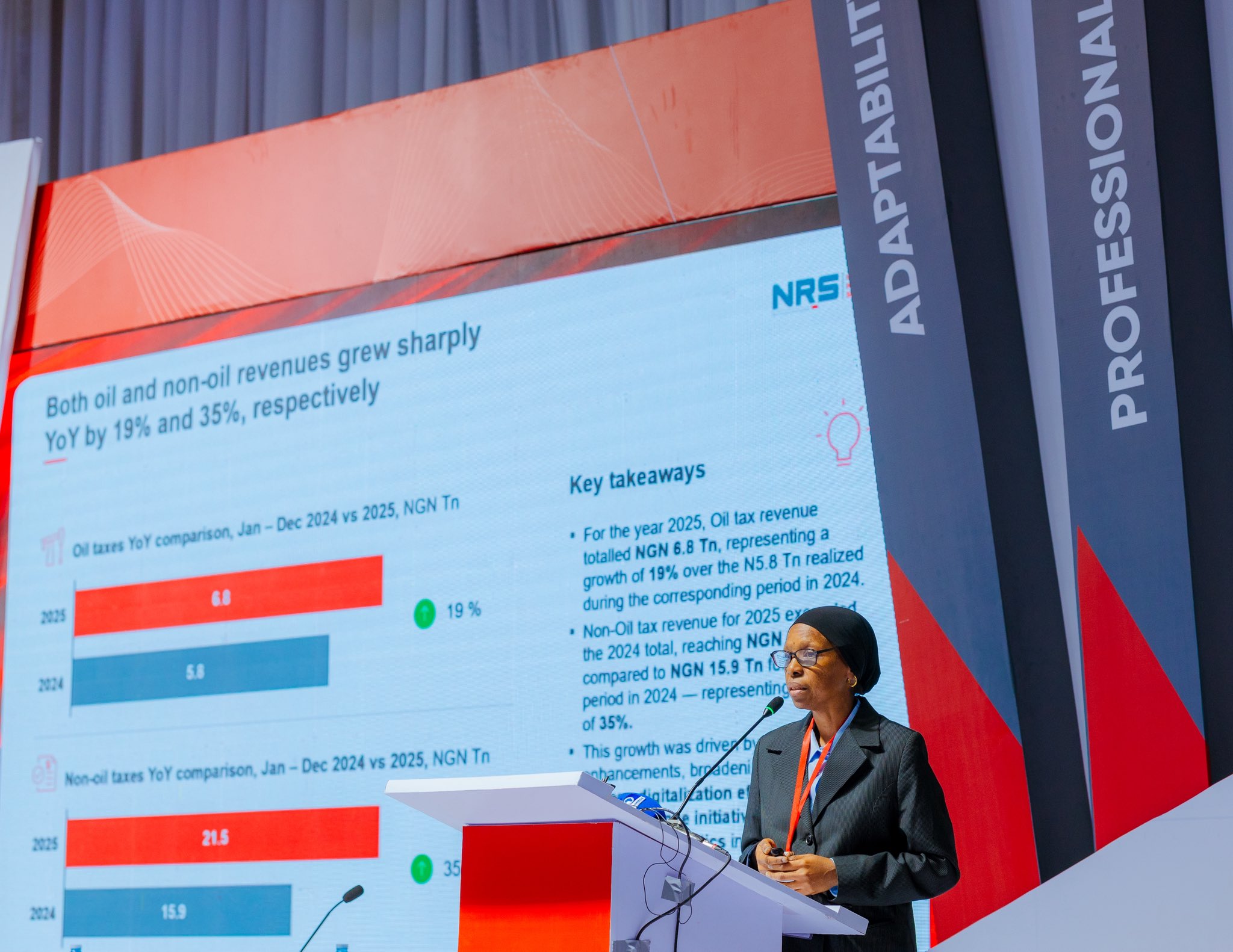
Executive Director, Government and Large Taxpayers, Amina Kurawa, disclosed this while presenting the service’s performance and outlook at the NRS 2026 Leadership Retreat held in Abuja on Tuesday.
Kurawa said the 2025 outturn exceeded the service’s target of N25.2 trillion, representing 112 per cent performance, stressing that the achievement was driven largely by deliberate reforms and improved compliance rather than inflation or exchange rate effects.
She explained that while oil revenues remained volatile due to pricing and production challenges beyond the service’s control, non-oil taxes emerged as the major growth engine, where NRS actions had the most impact.
According to her, total collections grew by N6.6 trillion year-on-year, with non-oil revenue alone reaching N21.4 trillion, representing 119 per cent of its target and a 35 per cent increase over 2024. Oil taxes, she added, stood at N6.8 trillion, about 95 per cent of target.
Breaking down the 2025 performance, Kurawa said the service recorded strong quarterly results, achieving 97 per cent of target in Q1, about 130 per cent in Q2, over 131 per cent in Q3, before closing the year at about 90 per cent in Q4.
She noted that across most major tax types, NRS exceeded its targets, with Company Income Tax (CIT), Value Added Tax (VAT) and Capital Gains Tax (CGT) posting exceptional results. CGT, in particular, witnessed an extraordinary surge, driven largely by divestments in the oil and gas sector.
“The only areas where we fell short were Petroleum Profit Tax and some earmarked taxes, which have now been consolidated into the Development Levy. With the rate now increased to four per cent, we expect better performance going forward,” she said.
Kurawa also highlighted improved monthly consistency, noting that collections in 2025 outperformed 2024 in 11 out of 12 months, a sign of sustained discipline and operational efficiency within the service.
Other News
On the drivers of success, she pointed to organisational restructuring carried out in 2024, which eliminated duplication, clarified reporting lines, and aligned tax offices and audit functions under unified leadership. This, she said, reduced internal bottlenecks and compliance friction for taxpayers.
She added that stricter enforcement, elimination of blanket waivers, expanded withholding tax systems, automation, digital monitoring and the introduction of e-invoicing all contributed significantly to revenue gains. Improved debt management and aggressive pursuit of non-filers also boosted compliance across CIT, VAT, withholding taxes, stamp duties and EMTL.
Looking ahead, Kurawa said achieving the N40.7 trillion 2026 target would rely heavily on non-oil revenue, projected to rise by about 38 per cent to N24.8 trillion, while oil revenue is expected to grow modestly. The new target also reflects the integration of royalty revenue under NRS’ expanded mandate.
She stressed that despite the record performance, the task ahead remained critical, given the country’s wide fiscal deficit.
“Even if we exceed our target, there is still a gap of about N25 trillion. Whatever more we can collect will be extremely important for national priorities,” she said.
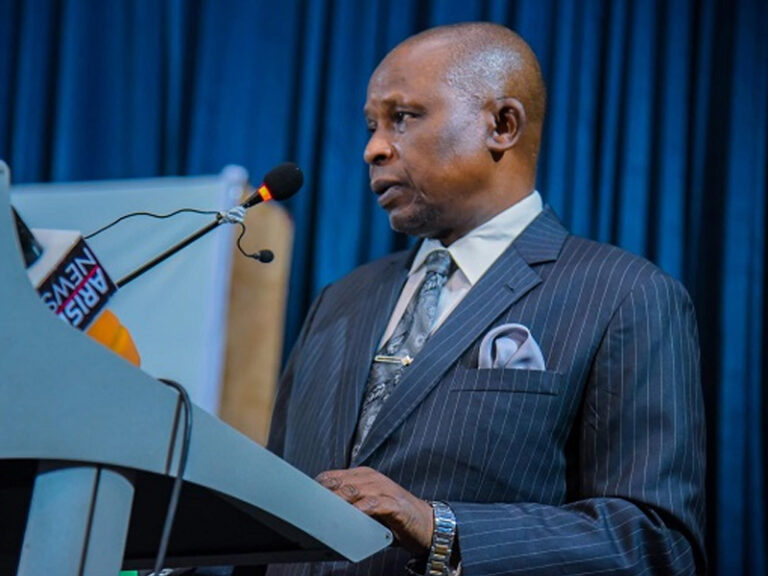
Earlier, in his opening remarks, Executive Chairman of NRS, Zacch Adedeji, called on leaders of the service to embrace a fundamental shift in mindset, warning that past approaches would not be enough for the new era the NRS represents.
Adedeji urged participants to suspend the comfort of familiarity and imagine the kind of leadership Nigeria’s current moment demands, stressing that the transition to the NRS would not be secured by titles, tenure or structures, but by the capacity to adapt, stretch and lead with excellence.
Reflecting on leadership challenges, the service boss warned that institutions often fail not because of weak strategies, but due to unexamined beliefs and habits that shape decisions and behaviour.
“The Nigeria Revenue Service marks a clear break from the past. New eras demand new postures. What brought us here will not be sufficient for where we are going,” he said.