Follow Us on Google
From Adanna Nnamani, Abuja
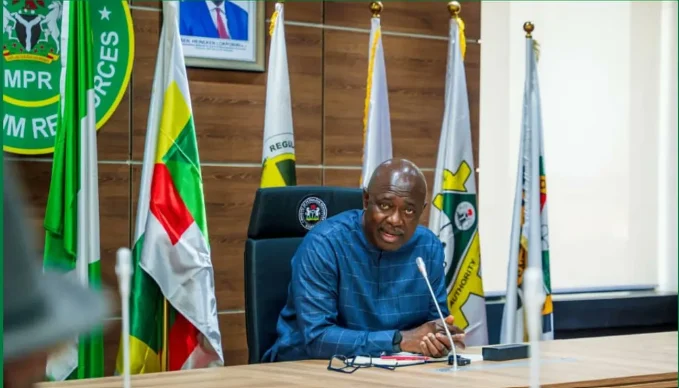
The Minister of Petroleum Resources (Oil), Heineken Lokpobiri, has decried the abuse and misinterpretation of the Nigerian Oil and Gas Industry Content Development (NOGIC) Act, saying it has encouraged the rise of “briefcase” Engineering, Procurement, and Construction (EPC) companies and shut out competent indigenous firms from growth opportunities in Nigeria’s oil and gas sector.
Lokpobiri, who spoke at the Nigeria International Energy Summit in Abuja on Tuesday, warned that the development has forced major EPC operators out of the country, delayed project execution, and increased production costs, particularly in the deep offshore segment.
He said the misinterpretation of the Act has distorted the service sector, making it non-competitive and discouraging serious investors, but added that the federal government has taken steps to reverse the trend by working with credible service providers and creating an enabling environment for both foreign and competent Nigerian companies.
The minister noted that although Nigeria is richly endowed with hydrocarbons across deepwater, shallow, and onshore terrains, resource abundance alone is not enough to attract investment. According to him, what now differentiates Nigeria is the legal, regulatory, financial, and structural reforms being implemented by the current administration.
He recalled that when the government came on board, the oil and gas sector was struggling with declining production, capital flight, and stalled investments, with no major final investment decision taken on new projects for over a decade.
Lokpobiri said the implementation of the Petroleum Industry Act (PIA) has restored investor confidence by providing a stable fiscal framework, clearer licensing, stronger regulation, protection for host communities, and predictable contract terms.
He added that the government has also introduced cost-reduction measures in upstream operations through fiscal incentives, while initiatives such as Project One Million Barrels have boosted crude oil production and revived industry activity.
He said, “Recognising that the FID is just a start for the project, we noticed a gap in the service sector, especially with regard to the deep offshore. A misinterpretation of the NOGIC Act gave rise to briefcase EPC companies, forcing major EPCs out of Nigeria and denying qualified indigenous companies the opportunity to not only play in the sector but also grow.
“We did not fold our hands; we leveraged the presidential order to work with service providers to return to the country. We are also creating an environment where they can exist side by side with serious and competent Nigerian players.
“Because investment-ready means more than just having reserves; it means having clarity, predictability, efficiency, incentives, and alignment.
“When this government started, this sector was struggling, production and capital flight, and investment had stalled.
Other News
“For more than a decade, there were no major final investment decisions on new projects. Investors were cautious, and confidence was lacking; that was our reality.
“We implemented the Petroleum Industry Act (PIA), which gives investors a stable fiscal framework, clearer licensing, stronger regulation, protection for host communities, local content provisions, and ensures that contracts and terms are predictable.
“We made moves to reduce costs in upstream operations: the Upstream Petroleum Operations (Cost Efficiency Incentives) Order 2025 grants tax credits to companies, lowers unit operating costs, and other far-reaching fiscal regimes.
“We launched ‘Project One Million Barrels’ in October 2024. In less than a year, production rose to between 1.7 and 1.83 million barrels per day, up by roughly 300,000 barrels in July 2025 alone.
“The number of active rigs jumped from a paltry 14 in 2023 to over 60 as of today. These are signs that the reforms are working, that idle assets are being activated, and existing assets are being optimised.
In his remarks, the Minister of State for Petroleum Resources (Gas), Ekperikpe Ekpo, said Nigeria’s energy strategy is anchored on a pragmatic approach that recognises global energy transition realities and Africa’s development needs.
Ekpo noted that while the world is accelerating toward low-carbon energy systems, Africa continues to grapple with energy poverty, industrial underdevelopment, and limited access to reliable power.
He said Nigeria is pursuing an energy pathway that balances climate responsibility with economic growth by leveraging its abundant natural gas resources to power industries, expand access to energy, and create jobs. He also stressed that collaboration among stakeholders remains critical to achieving sustainable growth in the sector.
“These realities compel us to pursue a transition that is not only green but also just, inclusive, and pragmatic.
“Nigeria is therefore advancing an energy pathway that balances climate responsibility with development needs, leveraging our abundant natural gas resources to power industries, expand access, and create jobs.
“This journey is not one that the government can undertake alone. Your collaboration remains essential to building an energy system that delivers prosperity while sustaining peace,” he stated.