Follow Us on Google
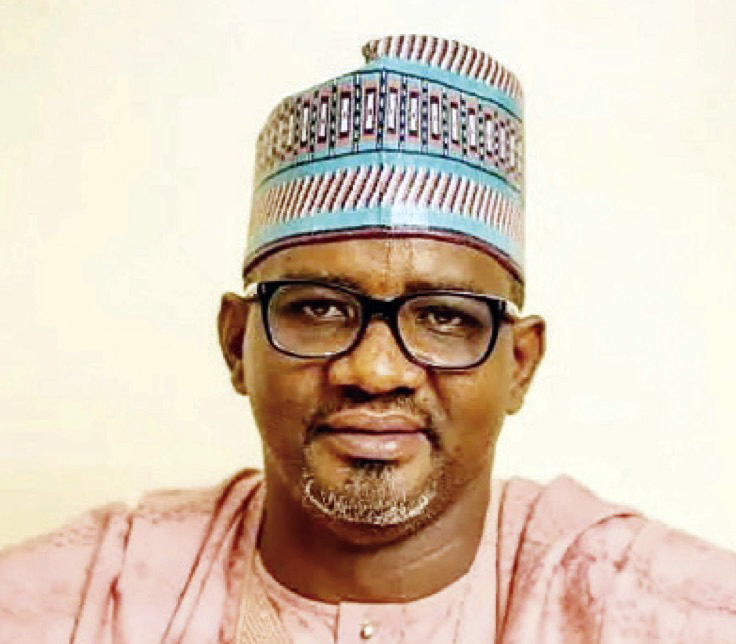
• Says, opposition nonexistent, Uba Sani’s inclusive administration will win 2nd term
From Sola Ojo, Kaduna
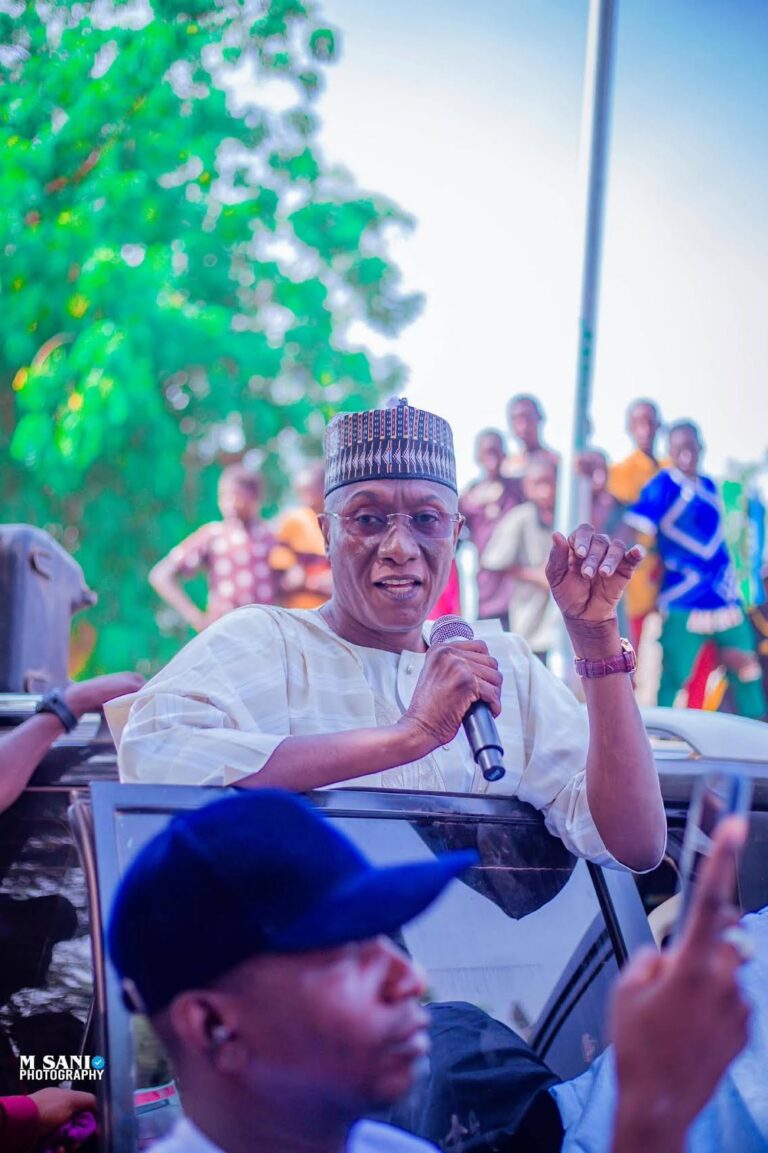
A former member of the Federal House of Representatives and now Kaduna State Commissioner for Planning and Budget Commission, Mukhtar Ahmed Monrovia, says Governor Uba Sani has earned the confidence of the people through inclusive governance, security improvements and sustained investment in agriculture, education, healthcare and social protection. In this interview, Monrovia speaks on the administration’s achievements over the past three years, the state’s development priorities, efforts to tackle insecurity and poverty, and why he believes there is “no vacancy” in Sir Kashim Ibrahim House in 2027.
As the 2027 governorship election gradually comes into focus, do you foresee a serious contest in Kaduna State, and why do you think Uba Sani should be re-elected?
Kaduna is a democracy, so anyone who wishes to contest has the constitutional right to do so. However, from what we see across the state, there is no vacancy in Sir Kashim Ibrahim House in 2027.
Governor Uba Sani has earned the confidence and support of the people through purposeful leadership and impactful governance. The people are happy with what the administration is doing, and those working with the governor are equally convinced that Kaduna is moving in the right direction.
By the grace of God, His Excellency will complete his first term successfully and seek a second mandate. We believe the people will renew that mandate because they have seen tangible improvements in security, infrastructure, agriculture, healthcare, education and social protection. By the end of eight years, Kaduna State would have undergone significant transformation for the better.
If re-elected, what areas do you expect the administration to prioritise?
The administration will continue strengthening security because sustainable development cannot take place without peace. Human capital development will remain a priority, while economic recovery will receive even greater attention.
When this administration came into office, the state’s economy had become highly polarised. The middle economic class had almost disappeared. That middle segment is critical because it drives productivity, entrepreneurship and economic growth.
The government is therefore investing in skills acquisition, enterprise development and infrastructure to revive the middle economy. We believe that rebuilding this segment will stimulate job creation, increase productivity and ultimately strengthen the state’s economy.
Governor Uba Sani campaigned on a seven-point agenda, and today, after three years, we can confidently say that substantial progress has been made across virtually all the promises contained in that agenda.
The agenda focuses on security, strengthening institutions, trade and investment, agriculture, human capital development, infrastructure and citizen engagement.
If you examine each component individually, you will discover that the governor has recorded measurable achievements. One of the remarkable aspects of the agenda is that it aligns with the Sustainable Development Goals (SDGs) 2030.
For example, agriculture, which directly contributes to poverty reduction, has received unprecedented attention. For the first time in Kaduna’s history, agriculture has consistently received 10 per cent budgetary allocation over three consecutive budgets.
Before this administration, agriculture typically received between two and four per cent of the state budget over the previous two decades. Today, Kaduna is implementing the Malabo Declaration, which recommends that governments allocate at least 10 per cent of their budgets to agriculture.
Similarly, the health sector consistently receives 15 percent budgetary allocation in line with the Abuja Declaration. Education and healthcare together account for approximately 25 percent of the state’s annual budget.
These are deliberate investments because sustainable development begins with investing in people.
Citizen engagement is critical in governance today so that government deliverables can be people-oriented. How has that helped this administration?
Citizen engagement is one of Governor Uba Sani’s strongest achievements. Kaduna has embraced openness, transparency and accountability in governance. We are active participants in the Open Government Partnership (OGP), which promotes inclusive governance and public accountability.
Beyond that, Kaduna has also joined the CoST Infrastructure Transparency Initiative, which ensures transparency in contract awards, project implementation and infrastructure delivery.
These initiatives demonstrate the administration’s commitment to open governance and responsible public financial management.
Security remains one of Kaduna’s biggest challenges despite improvements. How is government addressing the remaining pockets of insecurity?
Security requires both kinetic and non-kinetic approaches. One of Governor Uba Sani’s greatest innovations is what we describe as the Kaduna Peace Model. Rather than simply deploying force, the governor first took time to understand the root causes of insecurity. He realised that many conflicts were driven by exclusion, poor communication and lack of community participation in governance.
The administration therefore prioritised dialogue, reconciliation and inclusive governance alongside conventional security operations.
That approach has produced encouraging results across many parts of Kaduna State.
Certainly, there are still isolated pockets of insecurity, particularly around Kachia and Kagarko axis. These challenges have existed for nearly two decades and cannot disappear overnight. However, the same peace-building model that has produced positive results elsewhere will also be applied in those areas alongside ongoing security operations.
Other News
Another important lesson we have learnt is that insecurity often flourishes where development is absent. That is why government is extending infrastructure to communities that have suffered neglect for many years.
For instance, the Birnin Gwari Road project is expected to unlock economic activities and improve connectivity within the area.
There are local governments that had not witnessed construction of a single kilometre of road in well over a decade. Today, those communities are benefiting from government infrastructure projects. International development partners have equally acknowledged the improvements.
Officials from the United Kingdom’s Foreign, Commonwealth and Development Office (FCDO) recently visited Kaduna and recognised improvements in the state’s security profile. Senior British officials who previously avoided road travel now drive from Abuja to Kaduna to Kano, reflecting increased confidence in the security situation. These are positive indicators that our efforts are yielding results.
Your commission coordinates planning and budgeting of other Ministries, Departments and Agencies. How is Kaduna strengthening social protection for vulnerable citizens?
Before designing any intervention, you must first understand the problem. That is why we undertook comprehensive mapping of poor and vulnerable households across Kaduna State.
Working with the Kaduna State Bureau of Statistics, KADSEPA and Kaduna State Operations Coordinating Unit (KADSOCU); agencies responsible for the social register, we have profiled approximately 1.3 million households, representing nearly five million people.
We have also developed an integrated database that tracks beneficiaries of social intervention programmes, whether funded by the state or federal government. This helps eliminate duplication and ensures that support reaches those who genuinely need it.
In terms of funding, government allocated about N10 billion for social protection in 2024, maintained a similar allocation in 2025 and retained the same commitment in the 2026 budget.
These interventions include fertiliser distribution, improved seedlings, hand tillers for farmers, cash transfers and other livelihood support programmes.
We have equally invested close to N4 billion in direct cash transfer initiatives targeted at vulnerable households. One of the governor’s landmark initiatives was the Executive Order on Financial Inclusion.
The objective was to ensure millions of financially excluded residents open bank accounts, enabling them to access government interventions directly and transparently.
Financial inclusion is not merely about owning bank accounts; it enables citizens to participate meaningfully in economic activities.
In all these, what major social challenges still concern the government?
Displacement caused by insecurity remains a concern. Many displaced persons are not found in formal camps because cultural realities in Northern Nigeria encourage them to stay with relatives and host communities. We are working with the Federal Government through the SOLID programme to facilitate safe return and sustainable reintegration.
Another major concern is out-of-school children. Although we did not conduct a full census, we carried out extensive mapping covering about 380,000 households. The exercise identified approximately 187,000 out-of-school children. The good thing is that government is already designing interventions to return these children to classrooms because education remains central to long-term development.
Subsidy removal has exposed workers to high transport expenditure within their limited income. How is Kaduna government helping its citizens in this regard?
Yes transportation is receiving significant investment. Government has procured about 120 buses, many powered by Compressed Natural Gas (CNG), to reduce operating costs.
Currently, civil servants and many vulnerable residents are benefiting from free transportation services using these buses.
The Bus Rapid Transit (BRT) project will further transform urban mobility with dedicated bus corridors stretching from MararabanRido through Chikun to Command Junction. An additional 100 buses will support the BRT operations.
Government is equally constructing what will become one of the largest bus terminals in the state.
Beyond road transport, Kaduna is collaborating with the Federal Government on an ambitious light rail project linking major corridors, including MararabanRido, Millennium City and Sabon Tasha. Collectively, these projects will significantly improve transportation, reduce travel time and stimulate economic activities across Kaduna metropolis.
Finally, what message do you have for Kaduna residents?
My appeal is for citizens to continue supporting the administration of Governor Uba Sani. Government alone cannot achieve lasting peace without the cooperation of citizens. Residents should continue providing useful information to security agencies about suspicious activities because security is everyone’s responsibility.
Most importantly, we ask for continued patience, understanding and collaboration as government steadily implements programmes designed to improve the quality of life for all Kaduna residents.
We remain optimistic that with sustained peace, inclusive governance and continued investment in people, Kaduna State will achieve even greater progress in the years ahead.