Follow Us on Google


From Noah Ebije, Kaduna
The Southern Kaduna Peoples’ United Associations (SOKAPU) has declared that political candidates seeking the collective support of the people of Southern Kaduna in the 2027 general elections must first sign a written social and political contract outlining concrete commitments to security, equitable representation, infrastructure development and respect for traditional institutions.
The association said it would no longer support candidates based on political party affiliations, campaign promises, ethnic sentiments or political loyalties, insisting that electoral support must henceforth be earned through measurable and accountable commitments.
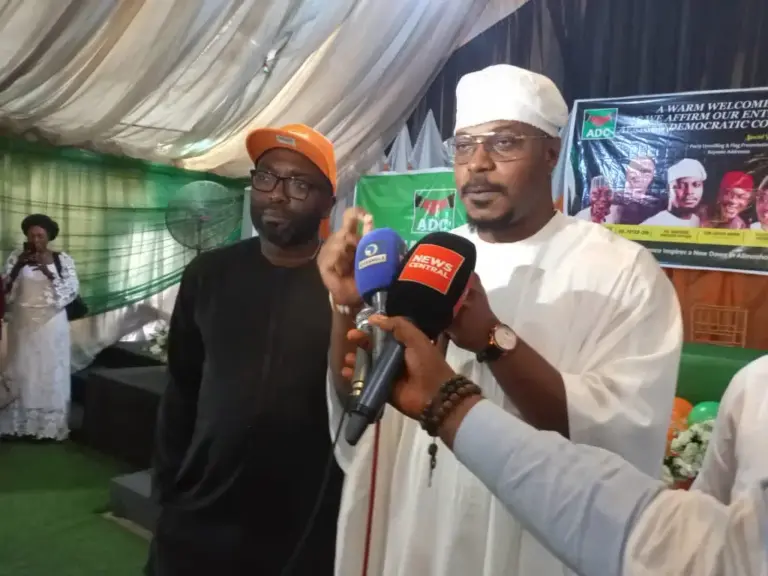
SOKAPU made its position known on Sunday, 8 November 2026, during a press conference organised in collaboration with the leadership of its Community Development Associations (CDAs) Standing Committee at its secretariat in Sabon Tasha, Kaduna.
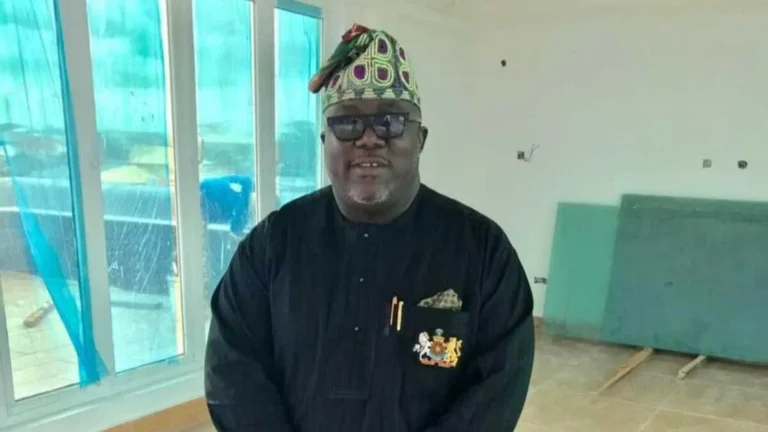
The press conference was led by the National President of SOKAPU, Engr Tabara Samuel Kato, alongside Comrade Manasseh Mamman.
Presenting the association’s position ahead of the 2027 general elections, SOKAPU described its proposed terms of political engagement as “a social contract, not a campaign promise”, declaring that no presidential, gubernatorial, senatorial, House of Representatives or State House of Assembly candidate would automatically enjoy the collective support of Southern Kaduna without endorsing the proposed agreement.
“Political support will no longer be given on the basis of promises, party loyalty, or ethnic sentiment. It will be earned – through written, measurable, and accountable commitments,” the association declared.
It further emphasised its position with a firm political message: “No contract, no block vote.”
Explaining the reasons behind its decision, SOKAPU highlighted persistent insecurity, displacement of rural communities, alleged political marginalisation, unequal distribution of infrastructure and interference in traditional institutions as some of the longstanding challenges confronting Southern Kaduna.
The association identified communities across Zangon Kataf, Kauru, Kaura, Jema’a, Kagarko, Kachia and Kajuru as areas that have endured repeated attacks, banditry, displacement and destruction of livelihoods.
According to SOKAPU, the prolonged insecurity has forced many residents away from their ancestral homes and farmlands, while several affected settlements are yet to be adequately reconstructed.
“Our people have paid for insecurity with blood and livelihood,” the association stated, lamenting that farmers who once contributed significantly to Nigeria’s food production have been forced to abandon their farmlands because of persistent security threats.
On political representation, SOKAPU expressed concern over what it described as the historical underrepresentation of Southern Kaduna in key government appointments and decision-making positions, as well as the alleged lopsided distribution of capital projects, including roads, healthcare facilities and schools.
It also accused successive authorities of weakening grassroots governance through interference with traditional institutions and inadequate support for local government administration.
The association renewed its call for the creation of Gurara State from the present Kaduna State, describing the prolonged agitation as an issue that requires renewed political and legislative commitment.
Central to SOKAPU’s position are five non-negotiable conditions which it wants all political candidates seeking Southern Kaduna’s collective support to endorse through a Memorandum of Understanding (MoU).
The first is a Security First Clause, requiring candidates to make documented and time-bound commitments to ending rural attacks, securing farming communities and deploying adequate security personnel and intelligence resources to vulnerable areas within their first 100 days in office.
The second is an Equity and Inclusion Guarantee, which demands a written commitment to proportional representation of Southern Kaduna in state and federal executive councils, government boards and civil service leadership positions.
Third is an Infrastructure and Reconstruction Bond, through which candidates would commit to establishing a dedicated Southern Kaduna Development Fund or providing prioritised budgetary allocations for the reconstruction of schools, primary healthcare centres, rural roads and bridges destroyed during years of insecurity.
The fourth condition concerns respect for the region’s identity, traditional institutions and self-determination aspirations.
Other News
SOKAPU is demanding written support for the restoration of the status of Southern Kaduna chiefdoms as they existed before the 2015 general elections, freedom of regional association for traditional rulers, preservation of cultural identity and legislative backing for boundary adjustments and the proposed Gurara State.
The fifth condition is the establishment of Periodic Accountability Town Halls, which would require elected representatives to participate in mid-term performance assessments conducted by SOKAPU, CDAs and civil society stakeholders.
The association said such assessments would provide an opportunity to evaluate the performance of elected officials against their signed commitments, with public denunciation serving as a possible consequence for those who fail to honour their agreements.
The association expressed concern that failure to address the region’s grievances could further deepen political alienation, economic hardship and distrust between Southern Kaduna communities and government authorities.
It warned that politicians must stop approaching the region only during electioneering campaigns with ethnic appeals, temporary gifts and promises that are abandoned immediately after elections.
SOKAPU also raised concerns about the long-term consequences of displacement and what it described as unchecked land occupation, warning that these developments could threaten the demographic and cultural identity of Southern Kaduna communities.
“We refuse to accept that future,” the association declared.
It maintained that the region would no longer be content with being treated merely as a voting bloc without commensurate representation in government, legislative influence, security protection and developmental opportunities.
Beyond security and political representation, SOKAPU called for deliberate policies addressing the economic and social needs of women and young people in Southern Kaduna.
It demanded the integration of women-led economic empowerment, educational and safety initiatives into government programmes, alongside active youth employment, vocational training and skills acquisition schemes.
The association argued that sustainable development in the region must go beyond political appointments and infrastructure to include opportunities that improve the livelihoods and economic prospects of ordinary citizens.
Clarifying its political position, SOKAPU stressed that its demands were not directed against any political party, candidate, religious group or region.
Rather, it said its proposed social contract was intended to establish a new standard of political engagement in which candidates would be judged by their willingness to address the genuine needs and aspirations of the people.
The association further declared that “SOKAPU is not against any party, candidate, or region. We are for justice, security, equity, and development.”
The association assured that any candidate, regardless of political affiliation, religion or background, who willingly signed the proposed agreement and demonstrated commitment to its implementation would enjoy its support.
However, it warned that candidates who signed the agreement but subsequently failed to fulfil their commitments would be held publicly accountable.
“We will support any candidate of any party, faith, or background who signs this contract and honours it. And we will hold accountable, publicly and firmly, any candidate who signs it and breaks it,” SOKAPU added.
SOKAPU further added what it described as a defining message for the 2027 elections: “Southern Kaduna will no longer vote on promises. We will vote on a contract.”