Follow Us on Google
From Stanley Uzoaru, Owerri
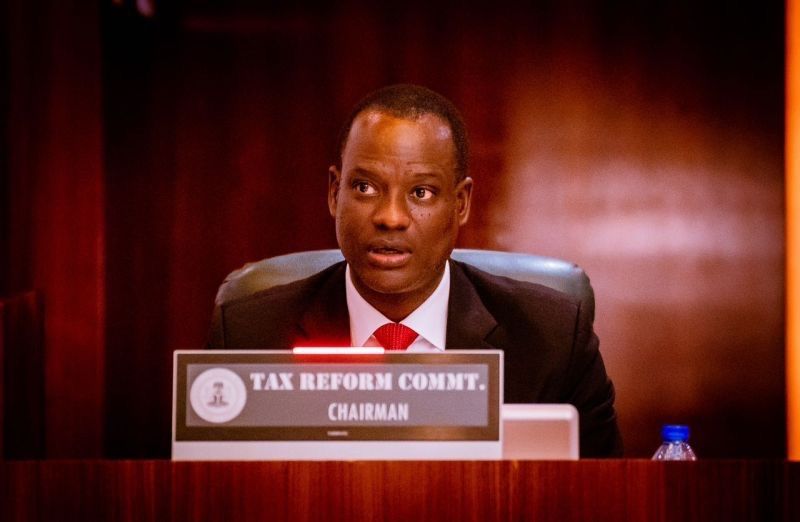
The Minister of Finance and Coordinating Minister of the Economy, Mr Taiwo Oyedele, has said no state in Nigeria is currently struggling to meet its salary obligations, attributing the development to ongoing fiscal reforms and improved management of federation resources.
Oyedele made the assertion yesterday in Owerri, Imo State capital, while declaring open a four-day retreat of the National Conference on Fiscal Federalism and Economic Diversification (NACOFED).
The minister said the improvement represented a significant shift from the situation in previous years when several states were unable to pay workers’ salaries for months.
According to him, the number of states experiencing difficulty in meeting salary obligations rose from about five in 1999 to as many as 27 states about three years ago.
“For nearly 30 years it was tough. As few as five states faced difficulty paying salaries in 1999. That number rose to as many as 27 states unable to pay salaries just about three years ago.
“But today, no state struggles to meet salary obligations. And that is not a footnote. It is because the federation is now working. That is fiscal federalism doing what it exists to do,” he said.
Oyedele said the Federal Government’s fiscal reforms, including measures introduced following the removal of fuel subsidy, were aimed at creating a more sustainable fiscal structure rather than pursuing policies for political popularity.
He said the decisions taken by the government were necessitated by the need to address longstanding weaknesses in the country’s fiscal system.
“This year’s theme was not chosen for its eloquence but because of the challenges of this time. NACOFED exists for this purpose. Members of the committee engage with experts not to use this year to compare notes, but to assess what the architecture we have built is delivering,” he said.
The minister, however, said the size of allocations shared by the Federation Account Allocation Committee (FAAC) should not be regarded as the ultimate measure of the success of fiscal federalism.
According to him, the real test is the impact of government revenue and fiscal policies on the living conditions of citizens across the country.
“The real test is what that number becomes in the life of the market woman in Owerri, a teacher in Sokoto and a young graduate in Yenagoa. And this is where equity comes in. It is an unfinished conversation,” Oyedele said.
He said effective fiscal federalism required more than coordination between the Federal Government and the 36 states, arguing that equitable distribution of resources among the different units of the federation was equally important.
“Coordination between Abuja and the 36 state capitals is only half of fiscal federalism. The harder part is equity among the units of the federation themselves,” he said.
Oyedele said states had different revenue capacities, population sizes, security challenges and developmental needs and therefore could not be treated as though they operated under identical economic conditions.
“We cannot build a resilient fiscal federation around assumptions that every state has the same revenue base, population pressure or security burden,” he said.
Other News
He said the Federal Government had expanded targeted social intervention programmes to address gaps in states and communities with limited revenue capacity.
According to him, cash transfers are now reaching about 15 million people, while the government has also introduced the Hope and Solid programmes to extend assistance to citizens in communities where internally generated revenue is insufficient to meet their needs.
“Equity is not charity. It is the recognition that federalism is only as assured as its most fiscally vulnerable members, and instability in one state does not stay contained within borders,” the minister said.
Oyedele also questioned whether the existing fiscal structure sufficiently rewards states that increase their internally generated revenue (IGR), rather than relying predominantly on monthly allocations from the centre.
He said the issue required broader discussion among the various tiers of government and other stakeholders participating in the NACOFED process.
“These are not questions meant for the Federal Government to answer alone. They are precisely why NACOFED exists,” he said.
The minister urged the conference to develop practical recommendations that would strengthen economic stability at the federal level, improve prosperity in the states and raise living standards at the local government level.
“I hope the retreat will achieve meaningful progress. The centre must drive economic stability, prosperity must happen in states, and better living standards must be delivered at the local government level. That is not a division of convenience, but responsibility,” he said.
The retreat was hosted by the Imo State Government, with Oyedele commending Governor Hope Uzodimma for providing the venue for the conference.
He described Imo as “the heartland of the nation”, saying decisions reached at the retreat could have implications for economic development across the country’s 774 local government areas.
Representing Uzodimma at the event, the Deputy Governor, Dr Chinyere Ekomaru, said the conference was coming at a time when economies around the world were under pressure and governments at all levels were confronted with the challenge of raising sufficient revenue to meet their obligations.
She expressed appreciation to President Bola Ahmed Tinubu for what she described as measures aimed at repositioning the Nigerian economy.
Ekomaru said Imo’s economic development strategy under the administration’s 3R agenda had produced results, adding that the state remained open to investment and business opportunities.
“Imo is open for business,” she said while declaring the retreat open.
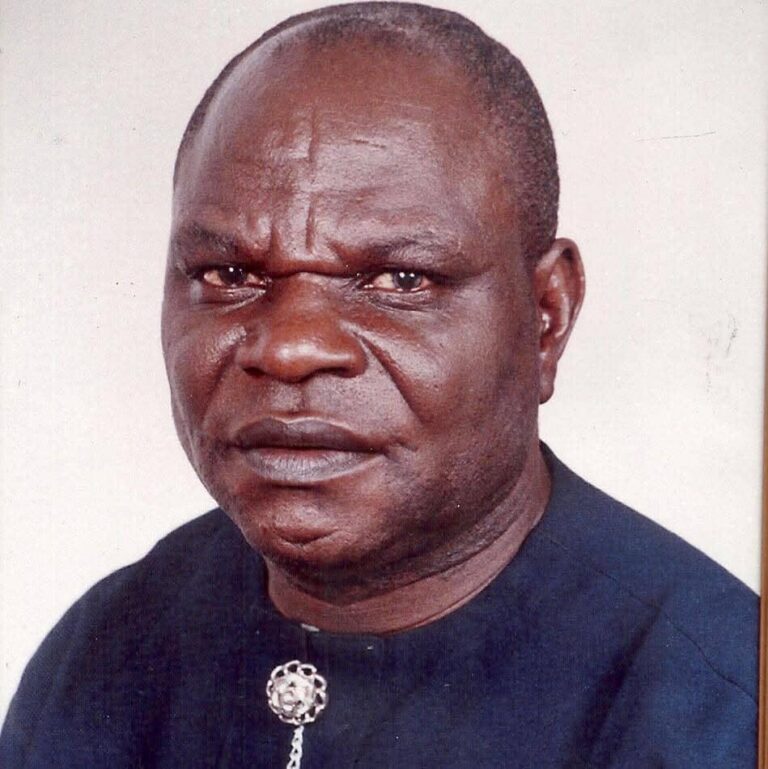
She also dedicated the gathering to the late Chief Emmanuel Iwuanyanwu, a prominent Imo statesman.
The NACOFED retreat is expected to focus on fiscal federalism, revenue generation, economic diversification and measures for improving the financial capacity of the different tiers of government.