Follow Us on Google
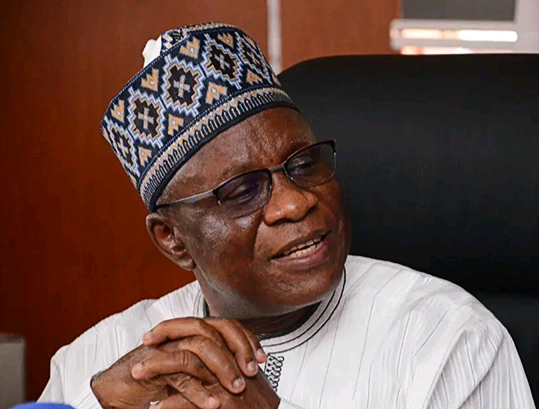
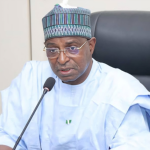
The Minister of Regional Development, Engr Abubakar Momoh, has declared that no single institution, regardless of its mandate or resources, can resolve the complex challenges of the Niger Delta, calling for a united, outcome-driven partnership for the region’s sustainable development.
Momoh stated this on Wednesday in Port Harcourt, Rivers State, while addressing the 2026 Niger Delta Development Commission (NDDC) Partners for Sustainable Development Forum.
Commending the NDDC Board and Management for convening the forum, the Minister described it as “both timely and necessary” and a practical instrument for advancing the Renewed Hope Agenda.
“This is a clear recognition of the fact that no single institution, regardless of its mandate or resources, can by itself resolve the complex and interconnected challenges of the Niger Delta,” he said.
According to him, the region requires the combined efforts of government, private sector, development partners, academia, civil society, traditional institutions, communities, youths and women.
“The Federal Government, under the leadership of His Excellency President Bola Ahmed Tinubu, remains committed to development that expands opportunity, strengthens stability, protects vulnerable communities, and delivers shared prosperity,” Momoh declared.
He revealed that the draft national policy on regional development is intended to provide a coherent framework for all regional development commissions, ensuring alignment with the Renewed Hope Agenda.
“The direction is clear: regional development must be integrated, inclusive, accountable, and driven by the comparative advantage of each region,” he noted.
Other News
Momoh, who lamented low representation at the forum, with only three of the nine Niger Delta states present, contrasted it with his experience at the South-South Development Commission forum, where all five governors were present.
“I want to use this opportunity to appeal to all stakeholders of Niger Delta: let us come together and work as a team. Niger Delta is not only for a particular person. Governors are stakeholders, traditional rulers are stakeholders,” he appealed.
He cited the Edo State Government’s provision of 200 hectares for an agro-industrial project by the South-South Development Commission as an example of commitment, saying the project covers the entire agricultural value chain including food processing for export.
On governance, Momoh clarified that Boards of commissions have powers to act on matters not explicitly provided for in their Acts, subject to approval by the President through the Ministry.
He disclosed that the NDDC’s old master plan is being harmonised with the Ministry’s document on presidential directive, and will require Federal Executive Council, FEC, backing.
“You can’t do a master plan that tends to conflict with the policy governing such plan by the Federal Government,” he warned.
The minister stressed that partnerships “must move beyond ceremonial declarations” and be reorganised around measurable outcomes, with a partnership register, performance indicators and public reporting.
He urged special attention for youths and women, noting: “The youths of Niger Delta should not be viewed only through the lens of vulnerability or restlessness. They are entrepreneurs, innovators, professionals, creators, and future leaders.”