Follow Us on Google
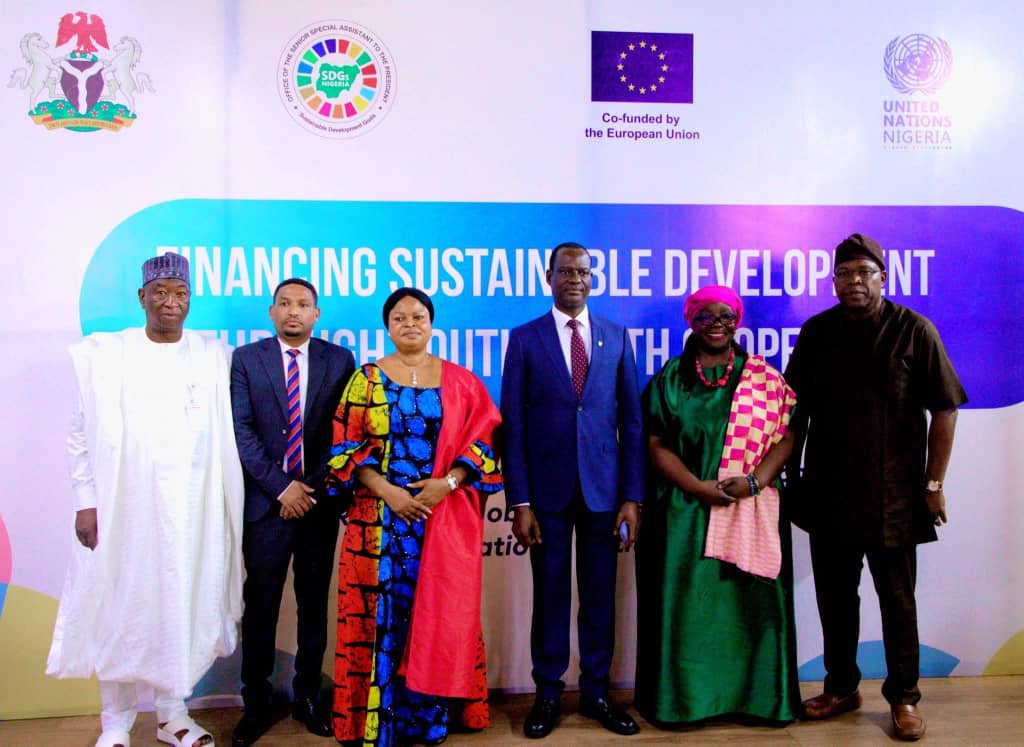
“No nation can finance its development on the basis of external dependence alone”, declared the Minister of Finance and Coordinating Minister of the Economy, Professor Taiwo Oyedele, at the opening of a high-level capacity-building session in Abuja on Wednesday.
At the Wells Carlton Hotel in Asokoro, Oyedele’s remarks framed Nigeria’s argument for a stronger domestic financing strategy and set the tone for an experience-sharing visit by a delegation from the Federal Democratic Republic of Ethiopia on Nigeria’s Integrated National Financing Framework (INFF).
He told state revenue leaders, development partners and Ethiopian counterparts that reliance on aid and concessional finance was neither sustainable nor sufficient. “Domestic Resource Mobilisation remains the most critical pillar of any credible financing framework”, he said. “Our objective is not to increase the burden on citizens. Our objective is to create a fairer, more efficient and growth-oriented revenue system that supports development, encourages enterprise and strengthens voluntary compliance.”
The minister presented Nigeria’s INFF as a practical, evolving response to the continent’s widening financing gap for the Sustainable Development Goals (SDGs) and Agenda 2063. He outlined the process that had produced the framework — a Development Finance Assessment, a multi-stakeholder steering committee and a Financing Strategy aligned with the Medium-Term National Development Plan — and cited concrete reforms: expanded digitalisation of tax administration, deeper engagement with international capital markets through green and sustainability-linked instruments and institutionalised accountability mechanisms.
“These are not merely technical outputs”, Oyedele said. “They are the instruments by which we mobilise, align and deploy financing to turn plans into services — schools, clinics, roads and social protection for our people.” He insisted the INFF was “a living framework” that would continue to adapt as Nigeria sought to deepen private-sector participation, mobilise climate finance and strengthen subnational financing architecture.
The minister’s emphasis on sovereign revenue came with a direct appeal to state actors. “I commend our State Internal Revenue Services and encourage deeper collaboration through the Joint Revenue Board to harmonise approaches, share intelligence and strengthen revenue administration across the federation”, Oyedele said, urging states to pursue reforms that would increase the tax-to-GDP ratio without unduly burdening households.
Oyedele positioned the INFF as the mechanism to reduce external dependence by aligning public, private, domestic and international finance with national priorities. “This is not cause for despair”, he said of Africa’s financing gap. “Rather, it is an opportunity to rethink how development is financed and to ensure that every available source of capital is aligned with national priorities.”
The minister listed priority areas where states and the federation had to act: strengthening domestic resource mobilisation through tax administration and digital platforms, harmonising revenue administration via the Joint Revenue Board, institutionalising accountability to measure outcomes and tapping private and climate finance to bridge funding shortfalls.
Other News
Addressing the Ethiopian delegation directly, Oyedele framed the engagement as mutual learning, stating: “Nigeria does not claim to have all the answers. Rather, we offer our experience in the spirit of partnership, transparency and mutual learning. Ask difficult questions. Challenge assumptions. Share your innovations and experiences.”
In her opening remarks, the Senior Special Assistant to the President on SDGs, Adejoke Orelope-Adefulire, told delegates that the capacity of states to effectively mobilise, manage and deploy financial resources directly influenced the quality of life of millions of Nigerians.
Stressing that states carried constitutional responsibility for primary healthcare, basic education, water and sanitation and other frontline services, she warned that current revenue and institutional weaknesses at the subnational level threatened service delivery across the country.
“The fiscal realities confronting many sub-national governments — rising expenditure pressures, limited internally generated revenue, growing infrastructure deficits, climate-related vulnerabilities and global economic uncertainties — are battering state finances”, Orelope-Adefulire said. “Addressing these issues requires innovative thinking, bold reforms and stronger collaboration among all key stakeholders.”
UNDP Resident Representative Elsie Attafuah echoed the call for domestic solutions while emphasising the value of peer learning. “The Sustainable Development Goals are ultimately delivered in states, provinces, cities and communities,” she said. “This is why strengthening fiscal capacity at the state level is not simply a revenue issue. It is fundamentally a development issue.”
Attafuah commended Nigeria’s reform agenda and stressed that South-South cooperation — exemplified by the Ethiopia–Nigeria exchange — could accelerate progress, noting: “No single country has all the answers. Yet every country has lessons that can help others move further and faster.”
The workshop drew executive chairmen of State Internal Revenue Services from all 36 states and the FCT, members of the INFF Core Working Group, the EU delegation to Nigeria, development partners and the Ethiopian delegation. Sessions would focus on digital tax administration, public financial management reforms at the state level, innovative financing instruments and mechanisms for peer learning and technical assistance between African countries.