Follow Us on Google
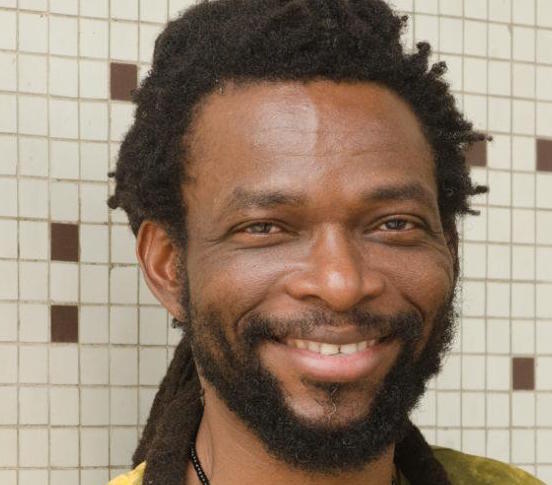
Foremost singer, songwriter and composer, Dr. Olusegun Akinlolu, also known as Beautiful Nubia, has revealed that since he started his music career which has spanned almost three decades with a great following across various continents, he is yet to get a major company to use him as brand ambassador.
Nubia, who is a celebrated contemporary folk singer and culture enthusiast made this known while featuring on the Toyin Falola Interview Series. The interview series which is a creation of American-based African historian and distinguished professor, Toyin Falola, has spotlighted prominent individuals, politicians, academics, policymakers, and opinion molders across the continent of Africa.
Asked if his type of music has attracted major companies in using as a brand ambassador, Nubia stated: “The answer is no. I can’t recall at anytime. There have been small things but not the big companies. We can say maybe we have misplaced priorities. If you say a beer company, they just want to sell their beer. They are going to use whoever appeals to the general masses. If they know there is a pop artiste that all the kids are following, they will go to him. They want the young people to drink. That is where the company will put their money. It is a perception. We can try to package ourselves to make ourselves attractive to them in that way too. But it is going to be hard to convince them that you are going to draw that same crowd for them. It therefore becomes a waste of energy in trying to.
“We have a festival that we run every year. We have tried to go after some companies to give us sponsorship. It has always been difficult. I remember I was at a very big company for sponsorshp. We spent quite some money in preparing the proposal. They invited us to come and talk to them. We went. We had an insider who was a fan. The man said ‘I am sorry but I don’t know you.’ I said ‘if you don’t know me you may know my music.’ Right there in the boardroom I got up and started singing for him. I sang ‘Owuro lojo’. He said he had never heard that song. I sang him ‘seven lives’ which is a song that several generations of Nigerian youths have been using. This man was much younger than me. But he said he had never heard the song. He asked for others who would be at the festival. I mentioned Jimi Solanke. He said he had never heard of him. I said Chris Ajilo. He had never heard of Chris Ajilo. I mentioned Yinka Davies. He had never heard of Yinka Davies. We left the place with nothing. It doesn’t make me feel sad. I didn’t come into this for endorsement. What interests me is that my music has touched one life and that person becomes a disciple of that message.”
The panel of interviewers led by Professor Falola, represented by Adepoju Oluwatoyin was made of prominent music critics and stakeholders. The panelists were Professor Tunji Azeez (professor of theatre, film and cultural studies, content developer and director in screen and stage in Africa and Europe); Banning Eyre (author, producer and guitarist whose work focuses on contemporary music in African disapora), and Dr Temitope Fagunwa (Marxist historian whose focus is on African economic history).
While reacting to the issue of music choice, global appeal and awards of recognition, Nubia said: “For me as an artiste, it doesn’t work that way. I have never been tempted because when I started out, I knew what I wanted to do. I wanted to play music that would lift my people, which would embolden and heal my people. I am not the only one who tries to do these kinds of things, all over the world. Making money is not the primary motive; it is about getting the message across. When you do this kind of thing, you don’t listen to the noise of the market. Just do what you have to do. There is an audience that is listening to you. I don’t look at the pop music market. That is not what I am into. There are many singers in the US and Canada who do what I do. But you don’t hear about them that much. They are there and they have huge followership. When they go on tour, people come out to watch them. But they are not pop artistes. That is the kind of person I am.”
Speaking on the influence of his mother (after whom he dedicated his recent album, Olumuyiwa) on his music, he told the audience that: “My mother was the first songwriter that I ever knew. Her ancestors on one side were Ifa priests. On the other side, they were Esu devotees. Her own mother became a Muslim. I lived with my grandmother. But my grandfather became a Christian. She became a Christian. As a child, I remember that when she would take us to church and they were stage plays in which she was asked to direct. I wondered why she had to do it. One day, I was rummaging through her wardrobe and I found this notebook folded up. I opened it and I saw several plays and I recalled that they were the plays that were performed in church. I started seeing songs that the choir had performed as special numbers. That was the first time that it got to my consciousness that somebody writes plays; somebody writes songs. I asked her about it and she said she wrote these things. But she never really sought any personal glory with it. She never wanted anybody to give her credit. In actual fact, some of those songs were taken and recorded by some people. That is the nature of the gospel music in Nigeria. As a child, my mother was the centre of my world. I never wanted to leave my mother’s sphere of influence. I always wanted to be around her, so it was difficult to make me go to school. We were very close. She sang all the time. The church was her stage; it was where she performed. At home, she was my father’s wife.
“Later when my parents had broken up and I would want to visit her, I would go towards the church. If I wanted to know if my mother was there, I had to listen to the singing. I did this from a long distance away. She had this beautiful soprano. It was on top. She could sing and dance. She could pray.
“When I started writing songs and singing, she never said ‘why are you doing this?’I t was when I became famous for it that sometimes she would ask me ‘where are you from? Where did you learn all these words you are putting into your songs?’ I replied that ‘I got them from you I guess.’ She passed on April last year. I thought it was a good way to celebrate her life. I had these songs that I wanted to record. I decided that I would dedicate the album to her. But I didn’t think I was going to put her picture everywhere. That came later.”
The interview was beamed across Youtube, Facebook, Telegram, and Zoom, and had over 2.7 million members of the audience.