Follow Us on Google
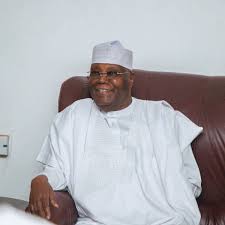
• Says social protection programme is panic reaction
From Ndubuisi Orji, Abuja
There was no let-up in the raging fuel subsidy battle yesterday as the African Democratic Congress (ADC) described the Federal Government’s $1 billion social investment programme as a “panic reaction” to its presidential candidate, Atiku Abubakar’s proposal for targeted support for domestic petroleum production.
The opposition party accused President Bola Tinubu’s administration of impoverishing millions of Nigerians through its economic policies and now attempting to “buy them back” with palliatives as the 2027 presidential election approaches.
In a statement by its National Publicity Secretary, Bolaji Abdullahi, the ADC said the timing of the Household Prosperity and Empowerment Social Protection Project (HOPE-SP), unveiled on Wednesday by First Lady, Senator Oluremi Tinubu, raised questions about the government’s motives.
The Federal Government said the programme was targeted at vulnerable households, but the ADC sought to draw a direct connection between its unveiling and the increasingly acrimonious debate triggered by Atiku’s proposal to subsidise domestic petroleum production as a means of lowering fuel prices and the cost of living.
“We find this sudden discovery of compassion, and money, quite remarkable. For three years, Nigerians have cried under the weight of food prices, transport costs and collapsing purchasing power, while this government insisted that there was no money to cushion the effects of its reforms. Now that elections are approaching, it has suddenly found $1 billion for the poor,” the party said.
“If the government could somehow conjure up this money, why did it remain indifferent to the suffering of Nigerians for three years? Or did the poor only become visible when their votes become valuable?”
The latest attack is another salvo in a subsidy battle that has rapidly developed into one of the first major economic issues of the 2027 presidential contest.
Tinubu had, on assumption of office on May 29, 2023, announced the end of the petrol subsidy regime, declaring in his inaugural address that “subsidy is gone.”
The policy was followed by sharp increases in the price of Premium Motor Spirit (PMS), transportation and production costs, but the administration has consistently defended the decision as necessary to end an unsustainable fiscal burden, eliminate corruption and free resources for development.
The argument returned forcefully to the political front burner last week when Atiku proposed government intervention to reduce fuel prices if elected in 2027.
Tinubu fired back, describing Atiku’s position as evidence of “serious ignorance on governance and economy” and questioning why the former vice president, who had previously advocated subsidy removal, was now proposing its return.
Atiku countered that changing economic circumstances demanded different prescriptions, arguing that subsidy removal, exchange-rate reforms and rising energy costs had combined to inflict severe hardship on Nigerians.
His Senior Special Assistant on Public Communication, Phrank Shaibu, subsequently clarified that Atiku was not proposing a return to what he described as the old “corrupt, open-ended subsidy bazaar,” but a targeted intervention tied to domestic refining.
“Atiku is not proposing the resurrection of the corrupt, open-ended subsidy bazaar. He proposes a targeted, capped, budgeted, time-bound and independently audited production-support mechanism tied to domestic production and protected against arbitrage,” Shaibu said.
Atiku also questioned the economic gains the administration claims to have recorded from subsidy removal, arguing that increased government revenues could not be regarded as evidence of successful reform while households grappled with declining purchasing power.
“You do not build a federation by impoverishing citizens so that Abuja can send bigger cheques to governors,” he said.
The former vice president also demanded greater transparency over petroleum-related expenditure and the savings generated by subsidy removal.
“If subsidy is dead, why are under-recoveries alive? If corruption was eliminated, why has opacity survived?” Atiku asked.
The Tinubu administration rejected the argument, maintaining that a return to subsidy, whatever its formulation, could recreate the huge fiscal burden and distortions associated with the previous system.
The Presidency has also questioned the cost of Atiku’s proposal and demanded details of how it would be financed.
Other News
Presidential aide Otega Ogra estimated that the proposed intervention could cost as much as N19.1 trillion annually, a calculation Atiku’s camp disputes as a misrepresentation of a plan it says would be capped and targeted specifically at domestic production.
The Presidency has equally accused Atiku and his campaign of shifting positions on subsidy after different explanations emerged from his aides over whether the proposed intervention would be temporary or remain until domestic refining capacity and competition had sufficiently expanded.
But Atiku’s camp insists the central issue is not a return to subsidising imported petrol but moving government support “from importation to production,” while tracking output and ensuring that any intervention translates into lower prices for consumers.
It was against the backdrop of the increasingly bitter exchanges that the ADC yesterday seized on the Federal Government’s $1 billion social protection programme, claiming its timing amounted to an admission that Nigerians required protection from the consequences of the administration’s economic reforms.
“Even more instructive is the Tinubu government’s own admission that Nigerians now require protection from the economic shocks associated with its failed reforms, including the removal of fuel subsidy,” the party said.
“This is precisely what our presidential candidate, Alhaji Atiku Abubakar, has been saying in proposing a targeted production subsidy to bring down the cost of living.
“The government dismissed that proposal and its officials told Nigerians that subsidy, in whatever form, was impossible. Yet, almost immediately, it has announced a billion-dollar programme to support Nigerians from the consequences of its evil policies.
“Why did it take Atiku’s widely accepted plan for this wicked government to remember that economic reforms must protect human beings?”
The ADC argued that Nigerians would not easily forget what it described as the hardship occasioned by the administration’s reforms, including rising food, fuel, transport and energy costs, declining purchasing power and business failures.
It also raised questions over previous social intervention expenditure, citing the government’s claim that more than N600 billion had been disbursed in cash transfers to slightly over 10 million households in the last three years.
“What evidence exists of actual beneficiaries, and what measurable impact did that N600 billion have? Have these numbers ever been independently verified?” the party asked.
It said concerns about poor targeting, unreliable social registers and corruption had dogged previous intervention programmes and demanded to know what the government would do differently under the new initiative.
“But no one is in doubt what this $1 billion intervention is about: a political programme by a government desperate to show something as the election approaches after spending three years getting richer while the people get poorer,” the ADC alleged.
“A government whose so-called reform has destroyed purchasing power through higher food, fuel, transport and energy costs cannot now return with a one-off N40,000 per family, which it cynically tagged ‘shock-response payment.’
“This makes one to wonder if this is not indeed a vote-buying programme.”
The party also questioned the role of the First Lady in unveiling the $1 billion programme, demanding details of its financing, approval process and accountability framework.
“While it is not unusual for the wife of the president to lend her voice to worthy humanitarian causes or even run her own pet projects, we find it quite strange that an unelected, and therefore unaccountable individual, is launching a social intervention programme involving $1 billion in the name of the Federal Government,” it said.
“Which makes us to ask again: Is this a Federal Government programme or a project of the First Lady? Who exactly is funding it? Under which budget head or financing arrangement was the money approved? What was the approval process? Which public institution is the accounting authority? Who controls disbursement and who answers to the Auditor-General and the National Assembly?”
The ADC said if the First Lady merely unveiled the programme on behalf of the government, the administration should state so clearly.
“One billion dollars is public business, and public business requires transparency. Every expenditure of government can only be undertaken based on established guidelines by people constitutionally authorised to do so. Where does the First Lady fit in within the official organogram of government?” it asked.