Follow Us on Google
• Reveals Oriire abductors demanded release of detained gang members alongside ransom
• Assures safeguards would be put in place to prevent abuse of State Police
• Military expands from eight to 12 divisions to intensify war on terror, banditry, reduce response time
• President refusal to pay ransom to kidnappers has sent strong message – Olubadan
_________________________________________________________
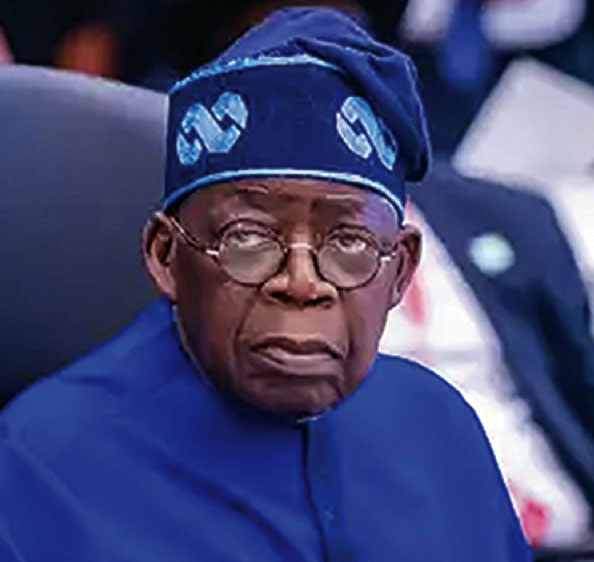
President Bola Tinubu on Thursday declared that his administration would never negotiate with kidnappers or terrorists, insisting that Nigeria’s security forces would continue to confront criminal groups without paying ransom, even as he confirmed plans to establish state police and expand military formations to strengthen the country’s fight against insecurity.
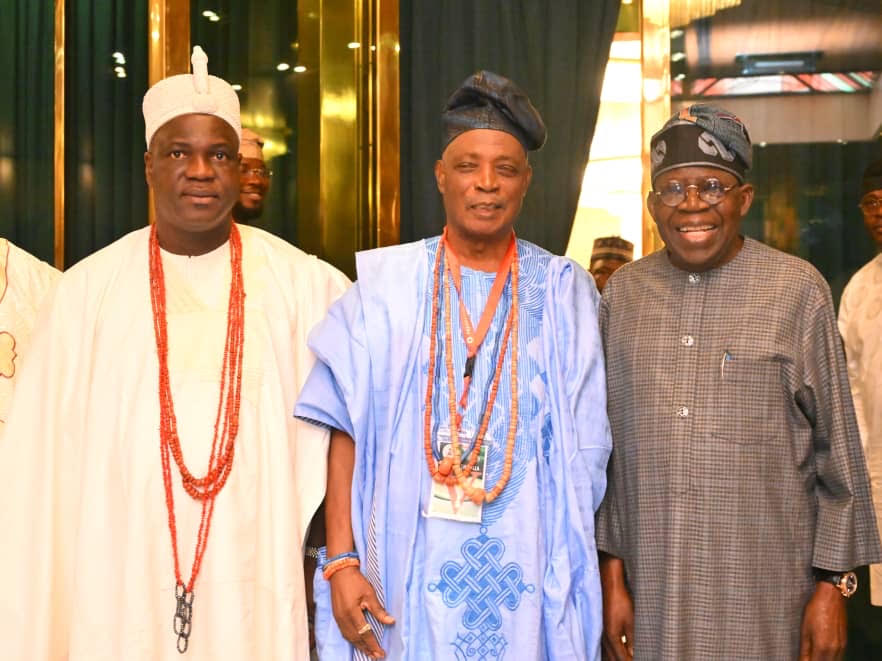
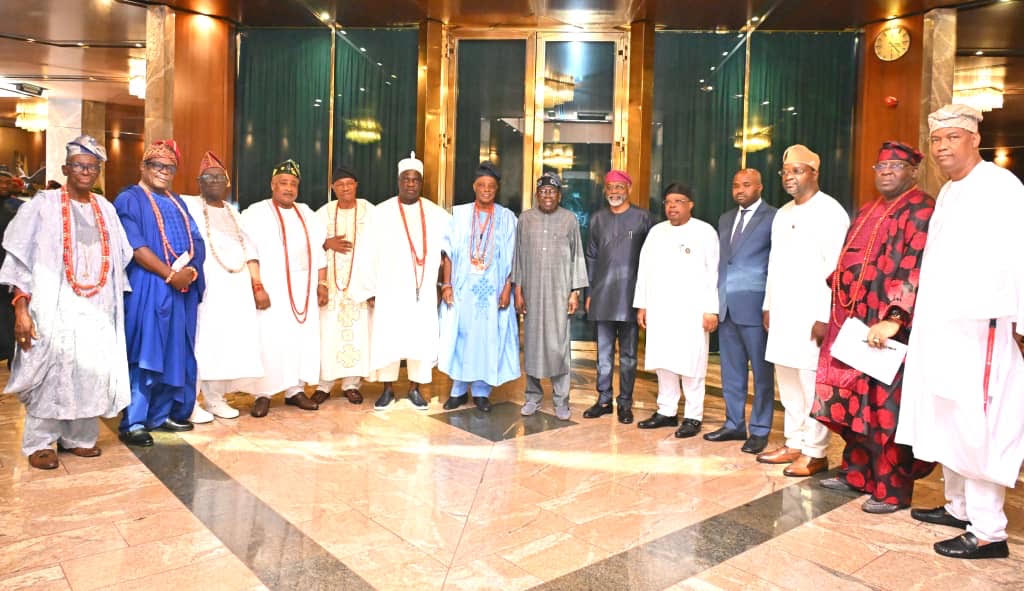
The President spoke while receiving traditional rulers from Oyo State, led by Oba Rashidi Adewolu Akanmu Ladoja, at the Presidential Villa.
Tinubu said the recent security operation that led to the rescue of victims in Oyo State demonstrated the effectiveness of the country’s security architecture and credited the success to the support and prayers of Nigerians, as well as the efforts of the armed forces.
“Congratulations on the Oriire Oyo State rescue that succeeded. I think we succeeded with your support, prayers, and I agree with you that we should commend the men and women of the armed forces for their excellent performance,” he told the delegation.
The President revealed that the military was restructuring its operational deployment by increasing its divisions from eight to 12 to reduce response time and strengthen the fight against terrorism and banditry.
“We refused to pay ransom. We have the geography of the forest. We know what it is… from eight divisions, we are now moving to 12 divisions to shorten the response time, to give that response time the teeth that is needed for us to defeat terrorism and banditry,” Tinubu said.
He stressed that every security incident had prompted a review of government strategy.
“As we emphasise the question of security, each event teaches us new methods, opens our eyes, challenges us to examine and re-examine our architecture, our strategy, our map and operations,” he added.
He made clear commitments on security reforms, confirming that Nigeria would establish state police and that safeguards would be put in place to prevent abuse.
“There will be state police, and that state police will have guardrail from abuses. We will protect it from abuses, and you traditional rulers too will have role to play more,” he said.
The President also announced plans to strengthen the country’s forest guards, saying their mandate would extend beyond wildlife protection to pursuing criminal elements hiding in forests.
“We are equally enhancing the capacity and capability of the forest guards. They are not just to chase antelopes and animals. We are going to have them chase the criminals and deal with them in various forests.”
Tinubu urged traditional rulers to encourage communities to provide intelligence to security agencies by remaining vigilant and reporting suspicious movements.
“I want you to take it to our people to be extra vigilant… know their neighbourhoods, know their areas, report strange people.”
Reiterating his administration’s hardline position against kidnappers, the President disclosed that criminal gangs had demanded the release of their detained members in addition to ransom payments, but the government rejected the demands outright.
“We refuse to negotiate for ransom. These criminals wanted us to release from detention members of their criminal gangs that were already arrested… and we said no deal. We are not going to negotiate with criminals.”
Other News
Tinubu noted that insecurity in neighbouring Mali, Burkina Faso, and Niger was worsening Nigeria’s security situation, with some criminal elements crossing into the country.
“Some of them are non-Nigerians. The problem of insecurity in Mali, Burkina Faso and Niger Republic is adding more fuel to our challenges.”
The President also challenged state governments to channel increased federal allocations into infrastructure that would improve security and economic activities rather than prestige projects.
“The money that I’m pushing to the states… they are taking four to five times their money. Nobody is borrowing money to pay salaries now. Pensioners are receiving their pay, and they should do more to instead of fly over where there is no numeric traffic, build roads and arteries network to really enhance the quality of life and the accessibility of the security agencies.”
Tinubu announced plans to convene meetings with traditional rulers across the country to obtain grassroots perspectives on governance and security.
“I will be calling meetings of so many of you traditional leaders to listen to you and offer some suggestions throughout the country.”
Despite acknowledging that insecurity remained a significant challenge, the President expressed confidence that government efforts were yielding results.
“The immediate challenge is monumental. It’s not an easy job, but I asked for the job and I got it… I accept the asset and liability of my predecessor.”
He added: “The security challenge is getting better. We are getting a hang of it much better. Any time you come across some of our soldiers and police officers, please pat them on the back and say thank you. They are doing a good job.”
Speaking earlier, the Olubadan of Ibadanland commended President Tinubu for what he described as a major turnaround in Nigeria’s security response, especially the handling of kidnapping cases in Oyo State. He also applauded the administration’s ongoing infrastructure drive in the state, including road projects worth more than N2 trillion.
The monarch said traditional rulers and other stakeholders came to deliver their goodwill and appreciation for the progress recorded under the Tinubu administration. He said the President’s refusal to pay ransom to kidnappers and his support for security agencies had sent a strong signal that Nigeria now has a government that knows what it is doing.
Ladoja noted that the development marked a turning point in the fight against kidnapping, adding that people in Oyo State had feared the problem could become a lasting crisis. He said the President’s stance showed leadership and had encouraged confidence in government’s ability to tackle insecurity.
The Olubadan, however, urged the President not to abandon the forest corridor that had previously served as a hideout for criminals. He said security agencies should maintain a presence in the area to prevent kidnappers from regrouping.
He explained that the forest stretches from parts of Oyo State to Niger State, passing through communities such as Iseyin, Igboho, Kishi, and Baruten, and said securing the area would help safeguard the wider region.
On infrastructure, the monarch said Oyo State is benefiting from 10 ongoing federal projects, which he said have brought hope to residents. He particularly mentioned the Ibadan-Ife road, describing it as a long-standing problem that may now be solved through the concrete road construction underway.
He added that the road network extending toward Ilesa and Akure also reflected the administration’s commitment to development, and wished the President success in continuing the projects.