Follow Us on Google

• Emergency no, 112, useless without ambulances, trained dispatchers, referral protocols – Stakeholders
• Govt should build, equip more hospitals to save lives
By Ngozi Nwoke
Olayemi Bolaji, a 41-year-old gospel singer popularly known as ToluwaniSings, slumped at his home in Ibadan on a Tuesday evening in October. Family members rushed him to the first hospital within 15 minutes. The staff there told them they did not have the facilities to manage the case and referred him elsewhere.
Over the next two hours, he was taken to eight other hospitals in the city. At each point, they were told there was no bed space, no specialist on duty, or that they should go to a teaching hospital. By the time ToluwaniSings got to a tertiary facility, he was already dead.
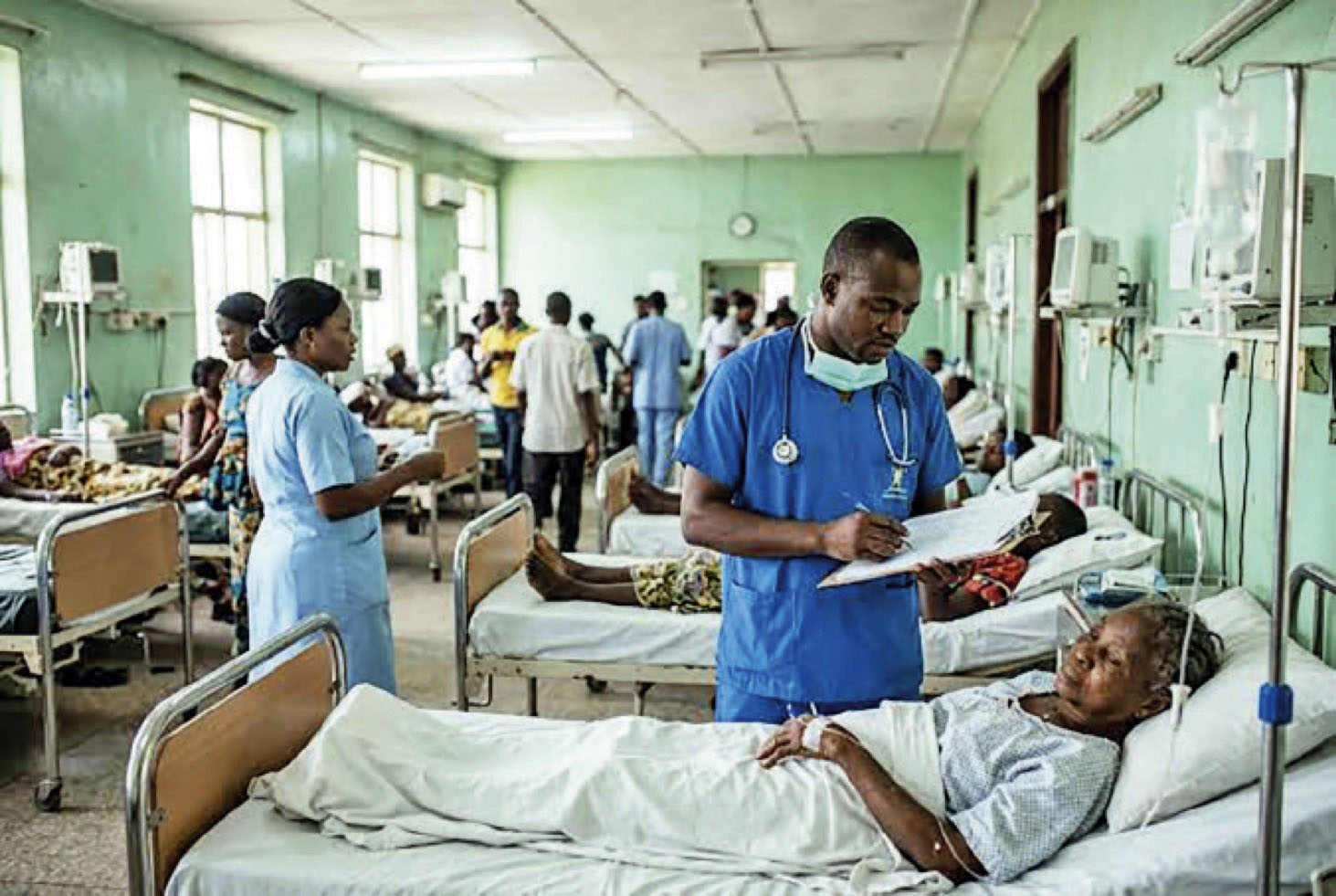
His death has joined a growing list of cases that Nigerians have been reporting across the country, cases where people in medical emergencies were allegedly rejected by hospitals and later died.
Last month in Lagos, a 52-year-old businessman identified as Mr Adewale suffered a road traffic accident on the Third Mainland Bridge. He was taken to three hospitals. According to his son, each hospital cited lack of bed space in the emergency unit. He died in transit to a fourth facility.
In August, a 17-year-old student, Joshua Ipoku, collapsed in his hostel due to severe asthma. His roommates said they took him to two private clinics. Both asked for an upfront deposit of ₦200,000 before admission. Neither Ipoku nor his roommates could raise the money immediately. By the time his family could transfer the money for his treatment, he was declared dead.
In July, a six-year-old boy, Chinedu Okafor, was rushed to hospital after suffering convulsions. His mother said two hospitals turned them away, saying the pediatric emergency unit was full. They eventually got treatment at a third hospital, but doctors said the delay contributed to brain damage. The boy died days later.
Scale of the problem
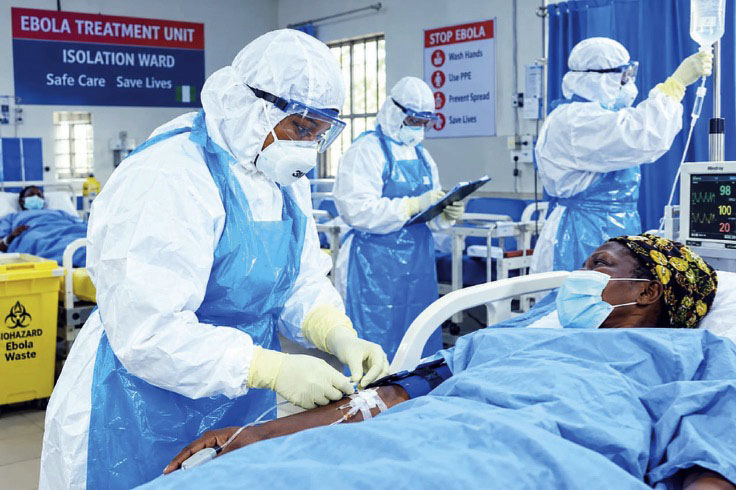
Nigeria does not have a nationwide ambulance and dispatch system that works in every state. The number 112 exists as Nigeria’s official national toll-free emergency number for medical crises and general emergencies, but reports from residents showed that the response times and availability is excruciatingly slow.
Without a central system to direct patients to hospitals with available beds and the required specialists, families said they end up driving from facility to facility while the condition of the patient worsens.
According to the Nigeria Health Facility Registry, there are about 40,000 health facilities in the country, but fewer than 1,200 are classified as hospitals with 24-hour emergency units.
The World Health Organisation in its 2024 report stated that Nigeria has about 4.7 doctors and 16.1 nurses per 10,000 people. The WHO recommended minimum is 44.5 health workers per 10,000.
The Federal Ministry of Health reports that Nigeria has about 0.9 hospital beds per 1,000 people. The global average is 2.9 beds per 1,000, according to WHO data.
The National Health Act 2014, Section 20(3), also states that “a person shall not refuse a person emergency treatment in a health facility.”
Outcry of concerned citizens
Kunle Lawal, Executive Director, Electoral College, said the rejection of patients in medical emergencies is not just a moral failure, adding that it is also a failure of law, regulation, funding and accountability.
He noted that Section 33 of the 1999 Constitution guarantees every person the right to life, while Section 20 of the National Health Act 2014 expressly prohibits healthcare providers from refusing emergency treatment and prescribes penalties for violations.
He called on the government to invest in functional emergency units, ambulance services, trained personnel and equipped public hospitals.
He also urged hospitals to establish clear emergency protocols, stressing that stabilisation must not be delayed by demands for deposits, police reports or paperwork.
Where a facility lacks capacity, Lawal said it should provide immediate care and arrange a safe referral.
“The question is not whether Nigeria has laws. It is whether we enforce them. Emergency care is not a favour for the wealthy or those who can pay upfront. A person’s chance of survival should not depend on their bank balance.
“The law is already there. What Nigerians deserve now is a system that makes its promises count when every second matters.”
Healthcare commentator, Oluwasuen Oluboyo, called for legislation to ensure that patients in medical emergencies receive immediate treatment on arrival, without delays for registration or payment.
He said hospitals are the first port of call in emergencies and that doctors, nurses and other healthcare workers owe a duty of care to every patient.
“The crux of the matter is that in an emergency, when is a person a patient? At the point of arrival, or after registration and payment? The latter is often the case, especially when payment cannot be made on the spot,” Oluboyo stated.
He noted that emergencies are unplanned and life-threatening, and requiring full registration and payment first can worsen the situation or prove fatal.
“As a concerned citizen, I propose that legislation be passed to ensure that medical emergencies are attended to on arrival without question, at least to stabilise the patient,” he said.
Oluboyo also proposed the creation of a fund or insurance to cover emergency responses when patients or their families cannot pay, with a verification process to prevent abuse.
He urged the Nigerian Medical Association to collaborate with stakeholders, citing the Physician’s Pledge to “maintain the utmost respect for human life.”
“Implemented properly, emergency cases can be taken to the nearest facility with the assurance of immediate care and better chances of survival,” he added.
Meanwhile, public affairs commentator Paul Ajibade Obafemi has called for urgent reforms to stop the rejection of emergency patients in Nigerian hospitals.
Obafemi said recent cases in Ibadan and Lagos where patients were allegedly turned away show that directives alone cannot solve the problem. He blamed overstretched infrastructure, inadequate bed space, equipment shortages, and the “Japa” exodus of medical personnel.
He urged the government and the Nigerian Medical Association to build a coordinated emergency system with expanded capacity, better staffing, proper equipment, and clear referral links between public and private hospitals.
For immediate action, Obafemi called for a functional 112 emergency number and the establishment of mini trauma centres along highways and in urban areas, connected to ambulances and referral hospitals.
He also stressed public training in basic first aid and CPR, and said hospitals must have transparent admission protocols with regulators enforcing compliance.
“An emergency patient should not depend on the goodwill of hospitals. The measure of our healthcare system is how reliably it can save a life when every minute counts,” Obafemi said.
Human rights advocate, Amachree Douglas, has called for urgent systemic reforms to address the rejection of emergency patients in Nigerian hospitals, saying the current system leaves lives to chance.
“A patient in an emergency should not have to depend on finding the right hospital by chance. The system should be able to respond when every minute counts,” Douglas said.
He stated that the solution is not only sanctions, but also requires more hospital beds, more medical staff, better equipment, a working emergency number, and a coordinated system where hospitals communicate instead of sending patients from one facility to another.
Douglas called for a functional national emergency number, adding that 112 must be backed by ambulances, trained dispatchers, and a real-time database showing which hospitals have bed space and specialists available.
He also recommended the establishment of strategically located mini emergency and trauma centres, especially along major highways and in densely populated areas. According to him, these centres should be linked to ambulances and bigger referral hospitals.
He further advocated clear referral protocols between public and private hospitals. Under such an agreement, he said, any hospital must provide stabilisation covering airway, breathing and circulation before transferring a patient.
Douglas said the National Orientation Agency, the Nigerian Medical Association, schools and workplaces should train citizens in basic CPR, bleeding control, and safe first aid while waiting for professional help.
He also urged regulatory bodies to monitor compliance. He said the Medical and Dental Council of Nigeria and state health ministries should investigate cases of unjustified refusal and publish their findings.
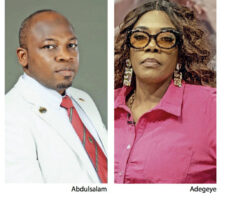
Medical expert, Bose .O. Adegeye, Director, Amazon Integrated Clinic, Lagos, urged Nigerians to take emergency patients to the nearest hospital with a doctor for immediate stabilisation before transferring to a bigger facility.
Adegeye said the principle in emergencies is “stabilise first, then transfer.” In cases like bleeding, heart attack, stroke and trauma, every minute counts because the brain starts dying after four to six minutes without oxygen.
She said any moderate clinic can provide first aid such as stopping bleeding, giving oxygen, CPR and IV fluids to keep a patient alive until they can reach a bigger hospital.
She noted that many Nigerians go straight to government hospitals because they cannot refuse emergency care without payment and have more equipment. However, the delay in getting there often worsens the patient’s condition.
Adegeye advised that for life-threatening emergencies, patients should go to the nearest clinic or hospital first and request stabilisation. Once stable, they can then move to a preferred hospital for full treatment. For non-life-threatening cases, going straight to a teaching or general hospital is fine.
She reminded the public that by law and medical ethics, no hospital should refuse emergency first aid. She also called “hospital shopping” a common mistake that costs lives as patients deteriorate in transit.
“In emergency medicine we say it is better to be treated inadequately nearby than to die perfectly on the way to a perfect hospital,” Adegeye said.
Yemi Zachary, a consultant physician at a public hospital in Lagos, said the rejections are not usually out of wickedness.
“When a patient comes in bleeding or in cardiac arrest and we have no ICU bed, no blood, and only one doctor on call for 40 patients, what do we do? We stabilise what we can and refer. But sometimes the patient does not survive the referral. It is painful for us too.”
He said patient load far exceeds available beds and equipment. A general hospital in Lagos with 300 beds said it sometimes admits over 600 patients. Blood banks, oxygen plants, and ICU units are often overstretched.
“A facility may have bed space but no neurosurgeon, while a teaching hospital with a neurosurgeon may have no bed. This creates a loop of referrals.”
Grace Gideon, a nurse, also said that private facilities face similar pressure.
“Management tells us we cannot admit without deposit because people run away after treatment. At the same time, the law says we must give emergency care. We are caught in the middle. Some of us end up giving first aid at the gate while the family looks for money. Also, the rising costs of drugs and consumables force us to demand deposits.”
What Nigeria Medical Association says
The NMA says it has consistently spoken against the rejection of emergency patients, noting that most cases of alleged rejection of emergency patients are due to lack of capacity and not refusal to treat.
Moruf Abdulsalam, the First Vice Chairman of the association’s Lagos State branch stated that when a facility evaluates a patient and finds it lacks the resources to manage the case, a referral is made, which relatives often interpret as rejection.
He said medical practitioners are guided by the MDCN Code of Medical Ethics, the National Health Act 2014 Section 20, and the Compulsory Treatment and Care for Victims of Gunshot Act 2017. All three, he noted, prohibit withholding emergency care because of inability to pay or lack of a police report.
According to him, cases of perceived rejection are often caused by lack of ICU beds, specialists, and other critical resources. He added that some private hospitals also fear financial loss in cases involving gunshot and accidents.
The medical doctor said the NMA Lagos is advocating that the Lagos State Government should fully operationalise the Emergency Trust Fund so hospitals can be reimbursed for treating indigent emergency patients.
Citing the MDCN Code, he said Rule 16 and 45 require doctors to respond to emergencies and not withhold treatment to save life even if the patient cannot pay immediately. On gunshot cases, he said the law mandates treatment first before notifying police.
He urged the public to report specific cases of rejection for investigation, and called on doctors to uphold their oath to preserve life first.
The association noted in a 2025 briefing that over 16,000 doctors have left the country in the last five years for greener pastures abroad, generally referred to in Nigeria as the “Japa” syndrome, which has made the public tertiary hospitals to carry the burden of 200 million people with infrastructure designed for half that number.
However, the Code of Conduct for Medical and Dental Practitioners in Nigeria, states that a doctor has an ethical obligation to provide urgent care to any person in need. Section 23 of the code states that a medical practitioner shall not refuse to attend to a patient in an emergency because of the patient’s inability to pay at that time.
The association also called on the government to address what it described as the root causes of inadequate funding, poor equipment, and manpower shortage.