Follow Us on Google
•Stakeholders push for equity, inclusion, reset of civic trust
From David Onwuchekwa, Nnewi
Tensions over political equity and long-standing zoning arrangements have taken a centre stage in Nnewi, as a broad coalition of stakeholders intensifies calls for strict adherence to the community’s rotational leadership agreement, an understanding many now describe as the moral backbone of local governance.
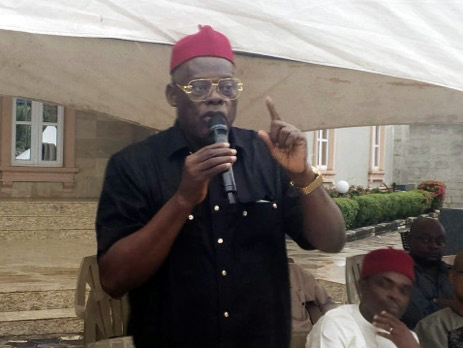
At a high-level gathering convened at the residence of industrialist Chief Gabriel Chukwuma, more than 600 participants from Otolo, Umudim, Uruagu, and Nnewichi assembled under the theme “Operation Nnewi Must Work.”
Beyond the symbolism of numbers, the meeting reflected a rare convergence of voices, traditional, political, intellectual, and commercial, united by a shared concern: that the unwritten rules holding Nnewi together are being tested.
The 1997 pact and its present-day strain
Central to the agitation is the 1997 rotational understanding among the four quarters, an informal but widely respected framework designed to distribute political power and prevent dominance by any single bloc.
For nearly three decades, stakeholders say, the arrangement has served as a stabilizing force in a town known for both its entrepreneurial dynamism and strong communal identities.
Today, however, that consensus appears fragile.
With the current chairman, Echezona Anazodo, from Umudim, apprehension has grown over alleged moves to secure a second term. To many at the meeting, such a move would not merely be a political contest, it would represent a break from a delicate balance painstakingly maintained over the years.
For advocates of rotation, the expectation is clear: Nnewichi, seen as next in line, should produce the next Executive Chairman of Nnewi North Local Government Area.
More than zoning: a question of justice
Speakers at the gathering were careful to frame their demands not as parochial interests but as a broader appeal to justice, fairness, and institutional integrity.
Chukwuma, who has increasingly positioned himself as a voice of civic moderation, explained that the movement is about restoring confidence in the system.
According to him, when agreements are ignored, it erodes trust, not just in leadership, but in the very idea of collective decision-making.
He painted a picture of a Nnewi where opportunity must not be determined by origin, where both indigenes and non-indigenes can pursue livelihoods without fear of exclusion.
His remarks struck a chord in a commercial town whose growth has long depended on openness to outsiders.
The non-indigene question
One of the most sensitive dimensions of the discussion was the treatment of non-indigenes, particularly in economic spaces like markets. Allegations of discrimination in stall allocation and instances of intimidation were raised, prompting calls for urgent reforms.
Stakeholders warned that such practices could damage Nnewi’s reputation as a business-friendly environment.
Other News
Professor Obi Nwosu, lending an academic perspective, emphasised reciprocity: Nnewi people thrive across Nigeria, and fairness at home strengthens their moral claim to fair treatment elsewhere.
This argument resonated strongly, especially among younger participants who see inclusivity as essential to sustaining Nnewi’s economic edge.
The role of traditional authority
Amid the political undertones, there was a strong reaffirmation of respect for the traditional institution, particularly HRH Igwe Kenneth Orizu III. Speakers described the monarch as a stabilising figure whose authority transcends partisan divides.
The repeated invocation of the Igwe’s role underscored a key reality in Nnewi: that governance is not solely the domain of elected officials, but a shared space involving tradition, consensus, and community legitimacy.
Political voices and legitimacy
The presence of Hon Augustine Ikedoji added a layer of political legitimacy to the gathering. As the representative of Nnewi North Constituency in the State House of Assembly, his endorsement of the meeting as lawful and reflective of popular sentiment carried weight.
Ikedoji’s remarks hinted at a broader alignment between grassroots expectations and segments of the political class, though whether this alignment will translate into action remains uncertain.
Other influential figures, including Chief Emma Nsoedo and Chief Eugene Nwizugbe (Anyanwu Igbo), reinforced the central message: that justice must not only be done but be seen to be done.
A community at crossroads
What is unfolding in Nnewi is more than a dispute over who becomes Chairman. It is a negotiation over identity, fairness, and the rules that bind a complex community together.
On one hand, there is a push for continuity of established norms; on the other, the realities of modern politics, where incumbency and influence often reshape expectations.
Observers note that how this situation is handled could set a precedent not just for Nnewi, but for other communities grappling with similar zoning arrangements across South Eastern States.
The stakes for the future
For many stakeholders, the fear is not immediate conflict but gradual erosion of trust, of unity, and of the cooperative spirit that has made Nnewi a model of indigenous industrialisation.
“Operation Nnewi Must Work” is therefore as much a slogan as it is a warning: that the system must function fairly if the community is to maintain its cohesion and economic vitality.
As the succession question unfolds, all eyes will be on whether political actors respect the rotational principle or seek to reinterpret it. The outcome will likely shape not just leadership in Nnewi North, but the broader narrative of governance in the town.
For now, one thing is clear: the demand for equity is no longer quiet, it is organised, vocal, and determined.