Follow Us on Google
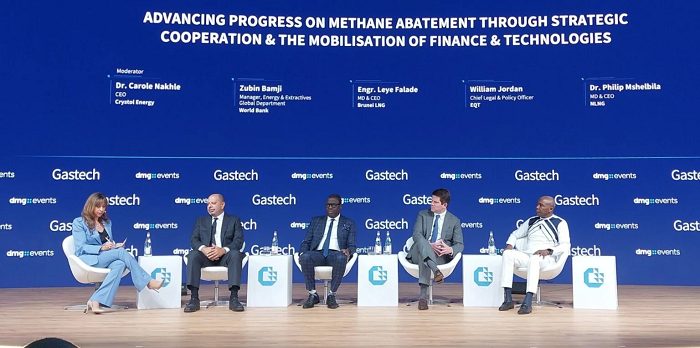
Nigeria LNG Limited (NLNG) has intensified its campaign to curb methane emissions, embedding preventive measures into facility design, upgrading existing assets, and deploying new technologies, according to its Managing Director and Chief Executive Officer, Philip Mshelbila.
Speaking on a high-level panel at the 2025 Gastech Conference in Milan, Italy, Mshelbila disclosed that NLNG is close to completing the installation of a new boil-off gas compressor system. The system will capture and re-inject methane back into the value chain, a step he described as central to the company’s mitigation strategy.
“NLNG was established 26 years ago to help reduce Nigeria’s high gas flaring levels, and since then we have cut flaring volumes by over 40% through the capture and monetisation of associated gas,” Mshelbila said. “We know our baseline, we know where the leaks occur, and we measure whether our interventions are working. But the bigger challenge is how we get others in the industry to do the same. No single operator can solve this problem alone.”
He highlighted that NLNG has achieved the Gold Standard under the UN-led Oil and Gas Methane Partnership (OGMP) 2.0 framework for two consecutive years, demonstrating a clear plan toward the highest levels of emissions measurement and reporting.
Mshelbila, however, stressed that prevention should be the industry’s guiding principle, urging oil and gas operators to prioritise smarter plant designs, improved pipelines, and timely upgrades to brownfield facilities to minimise fugitive leaks.
While acknowledging that oil and gas operations account for about 21% of total global methane emissions, he cautioned that efforts would be undermined if emissions from agriculture (40%) and waste are left unaddressed. “The oil and gas industry must lead by example, but this is a collective challenge. If agriculture and waste are not tackled, the gains in our industry will be limited,” he added.
The NLNG chief also pointed out barriers that must be addressed, particularly financing and policy gaps. “The technology is available, but not everyone can afford it. Financing, especially for smaller operators, is a major hurdle. And in many developing countries, methane policies and frameworks are far less developed than those for carbon dioxide. These are gaps the global industry must urgently close,” he said.
Mshelbila called for stronger partnerships across the energy value chain, from financing models that empower smaller operators, to sharing innovations like satellite-based detection systems.
Now in its 53rd edition, the Gastech Conference is the world’s largest platform for natural gas, LNG, hydrogen, low-carbon solutions, and climate technologies. The 2025 gathering in Milan convened global leaders, experts, and innovators to forge partnerships and showcase solutions driving the energy transition.