Follow Us on Google
From Adanna Nnamani, Abuja
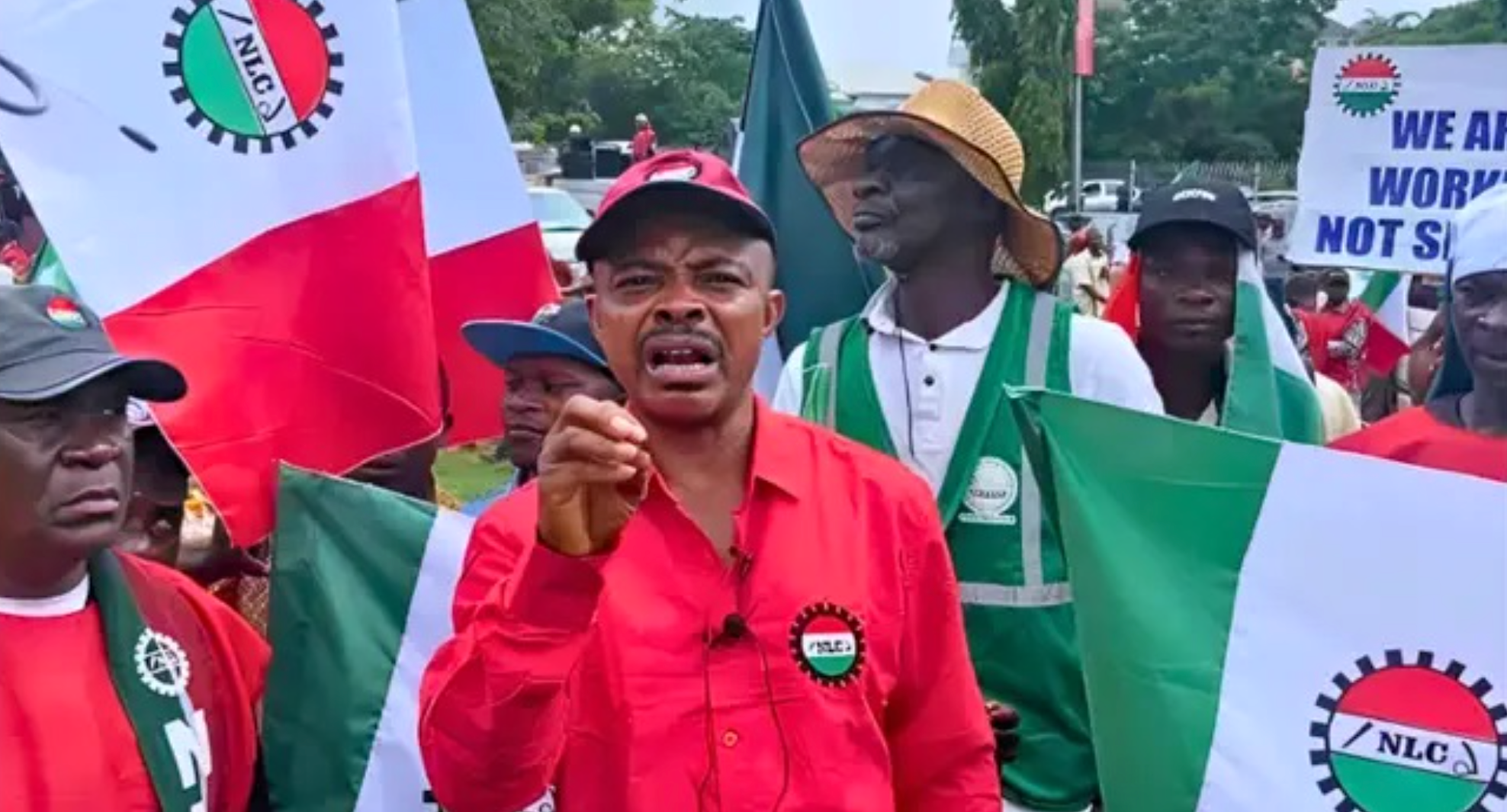
The Nigeria Labour Congress (NLC) has handed the Federal Government a four-week ultimatum to resolve all pending issues with unions in the tertiary education sector or face a nationwide strike involving all workers and unions in the country.
The NLC President, Joe Ajaero, announced the ultimatum in Abuja on Monday during a meeting with leaders of tertiary institution unions, including the Academic Staff Union of Universities (ASUU), Senior Staff Association of Nigerian Universities (SSANU), Colleges of Education Academic Staff Union (COEASU), and the Academic Staff Union of Polytechnics (ASUP).
The meeting came as part of efforts to address the prolonged crisis in Nigeria’s higher education sector, which has been crippled by repeated strikes over unpaid salaries, poor infrastructure, and unfulfilled agreements between the Federal Government and various unions.
After extensive deliberations, the labour centre resolved to work closely with the unions to create a coordinated framework that would ensure full implementation of past agreements, sustainable funding of the education sector, and review of wage structures and allowances in line with international standards.
The NLC also said it would no longer tolerate situations where government representatives attend negotiation meetings without proper mandates, a trend it blamed for the repeated breakdown of talks.
Ajaero revealed that a coordinated national campaign team would be established to follow up on agreements and enforce compliance. He warned that if the government fails to conclude all negotiations within four weeks, the NLC’s organs would convene to initiate a nationwide industrial action in solidarity with the tertiary education unions.
He further criticised the Federal Government’s “no work, no pay” policy, saying it would now be met with a reverse approach of “no pay, no work,” insisting that most strikes in the country were triggered by government’s failure to honour agreements.
Ajaero said: “The NLC, after extensive deliberation with the unions in the tertiary institutions on finding solutions to the perennial problems in that sector, decided to brief you guys that we have resolved, at the level of the NLC, to work with the unions to make sure that we are able to find a lasting solution on the problems that they have been facing all these years.
Other News
“We have decided to establish a framework for engagement towards implementation of agreements, outstanding agreements, and towards sustainable funding of education, in line with UNESCO principles of 25 percent, 26 percent funding of education, and review of wage structures and allowances in the tertiary institutions, and as well as respect of trading on rice, of collective bargaining.
“We discovered that those governments sent to meetings go there without mandate. Henceforth, nobody, the trade unions, either in the tertiary institutions or anywhere, will not go into any meeting with government representatives who don not have mandates. Because that what is at the point of this crisis.
“You go and finish a negotiation, you sign an agreement, and then you go back to renege. Never again. We will not condone this at all over the world.
“Agreements are held in very serious dimension. Development of coordinated team. We have agreed to set up a coordinated team and then ensure that we embark on national campaign, henceforth.
“We have decided to give the federal government four weeks to conclude all negotiation in this sector. They have started talks with us, but the problem in this sector goes beyond us or one union. All other sectors, all other unions are equally involved.
“If after four weeks this negotiation is not concluded, the organs of the NLC will meet and take a nationwide action that all workers in the country, all unions in the country will be involved so that we get to the root of all this. The era of signing agreements and threatening the unions involved, that era has come to an end.
“The policy, the so-called policy of no work, no pay, to henceforth be no pay, no work. You can’t benefit from an action you instigated. We have discovered that 90 percent of strike actions in this country are caused by failure to obey agreements.
“You cannot refuse to obey agreements and you punish the other party. So it’s a problem of cause and effect. So the person that caused the problem will be ready to bear the consequence.