Follow Us on Google
By Chinenye Anuforo
The Nigeria Internet Registration Association (NiRA) has raised fresh concerns over Nigeria’s limited control of its digital identity, warning that continued dependence on foreign domain names is undermining economic value retention, national security, and long-term digital competitiveness.
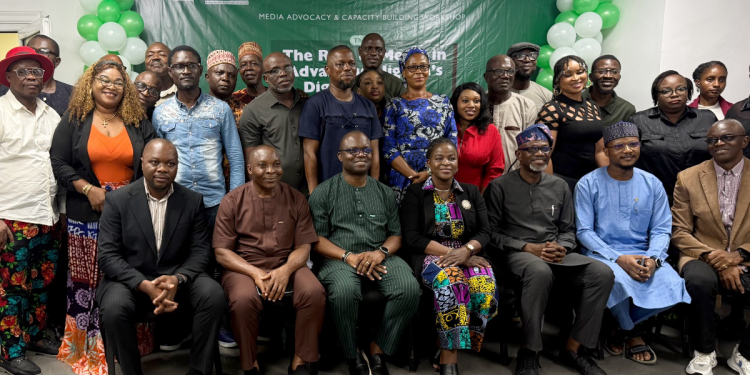
President of NiRA, Adesola Akinsanya, delivered the warning at the .ng Media Advocacy and Capacity Building Initiative in Lagos yesterday, where he urged media professionals to take a more strategic role in shaping Nigeria’s digital future.
Opening his keynote, Akinsanya posed a question: who truly owns Nigeria’s digital identity? He argued that the answer lies not just in technology, but in deliberate choices around domain adoption and the narratives amplified by the media.
To illustrate the risk, he likened the widespread use of foreign domains by Nigerian organisations to constructing valuable assets on land owned abroad, where legal control, security, and economic benefits are ultimately dictated externally.
“This is the current reality for thousands of Nigerian businesses,” he said, explaining that reliance on foreign domains such as .com effectively places Nigeria’s digital economy on infrastructure it does not control.
He warned that beyond symbolism, the issue has real economic implications, as value generated locally is not fully retained within the country.
While no official estimate was provided, stakeholders at the event said the scale of economic leakage is considerable. They noted that globally, the digital economy contributes between 15 and 20 per cent of GDP, with domain names forming a foundational layer that powers online businesses, transactions, and services.
In Nigeria’s case, with millions of businesses operating online, even a fraction of payments tied to foreign domain registration, hosting, and related services flowing offshore represents a steady outflow of value that could otherwise support local innovation, job creation, and digital infrastructure.
Nigeria’s digital economy has grown rapidly in recent years, supported by a youthful population, rising internet penetration, and a thriving ecosystem spanning fintech, e-commerce, and digital services.
Data presented at the event showed that the sector now contributes a significant share of GDP and continues to expand.
However, stakeholders noted that this growth masks a structural imbalance. While Nigeria is an active participant in the global digital space, it lacks control over foundational layers such as the domain name system, which determines how entities are identified and accessed online.
Experts at the forum explained that a large portion of Nigeria’s digital presence is still anchored on foreign domains, meaning that critical elements of identity, trust, and jurisdiction are effectively outsourced.
They warned that this dependence contributes to economic leakage, weakens national digital branding, and exposes businesses to external regulatory and pricing uncertainties.
Other News
Chief Operating Officer of NiRA, Seyi Onasanya, expanded on the economic dimension, describing domain names as “digital real estate” and a core component of national infrastructure.
He added that the .ng domain benefits from improved security infrastructure, including DNS Security Extensions (DNSSEC), registrar accreditation standards, and monitoring mechanisms designed to enhance resilience and accountability.
The discussion also underscored the growing importance of trust in the digital economy. With consumers increasingly concerned about authenticity and data protection, speakers said local domains can serve as a credibility signal that strengthens confidence in online transactions.
A major focus of the event was the role of the media in accelerating adoption and shaping public understanding.
Akinsanya urged journalists to move beyond reporting on startups, fintech, and innovation trends, and instead pay attention to the foundational infrastructure that supports these developments.
He described domain names as an often-overlooked but critical layer of the digital economy, warning that failure to highlight their importance has contributed to low awareness and adoption.
“The media controls visibility,” he said, adding that consistent coverage and informed storytelling can influence how businesses and institutions perceive the value of .ng domains.
Other speakers reinforced that journalists have a responsibility to educate the public, bridge knowledge gaps, and promote digital literacy, particularly in areas such as internet governance, cybersecurity, and digital identity.
They noted that by spotlighting Nigerian digital success stories and explaining the strategic importance of local domains, the media can help drive behavioural change across the ecosystem.
Participants agreed that achieving meaningful progress will require coordinated action across multiple fronts, including policy alignment, institutional support, private sector participation, and sustained public awareness.
They stressed that adoption is not accidental but driven by deliberate design, citing global best practices where governments and industry stakeholders work together to build strong local domain ecosystems.
Looking ahead, stakeholders said Nigeria’s ambition to become a leading digital economy will depend on its ability to align infrastructure, adoption, and narrative.
While NiRA continues to strengthen technical capacity and promote awareness, speakers emphasised that broader ownership of Nigeria’s digital identity ultimately rests on collective action.
Akinsanya concluded that Nigeria stands at a critical moment in its digital evolution, with the opportunity to either consolidate its position or remain dependent on external systems.
“The story of Nigeria’s internet is still being written. Whether it reflects digital sovereignty or continued dependence will depend on the choices we make now”, he said.