Follow Us on Google
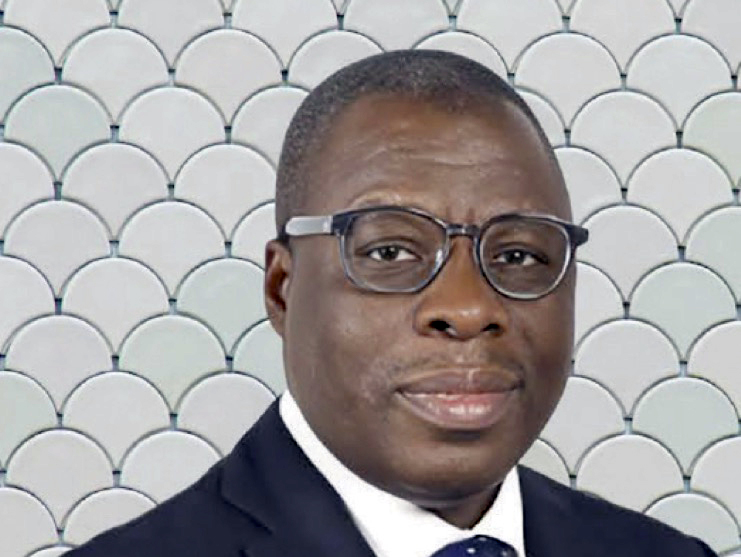
For nearly four decades, the Nigerian Liquefied Natural (NLNG), has remained one of Nigeria’s most successful energy investments.
Aside from generating nearly $150 billion in cumulative revenue, it has significantly curbed gas flaring, expanded access to cooking gas for millions of households, and delivered billions of dollars in taxes and dividends to the federal government.
Yet, according to its Managing Director and Chief Executive Officer (CEO), Mr. Adeleye Falade, the company’s biggest challenge is no longer building Liquefied Natural Gas (LNG) trains but securing enough gas to keep its existing facilities running at optimal capacity.
Speaking during his first media interaction with energy journalists in Lagos last week since assuming office on April 1, Falade reflected on NLNG’s 37-year journey, outlined plans to complete the Train 7 expansion project, disclosed that the company remains under force majeure due to persistent gas supply disruptions, and argued that Nigeria must urgently monetise its vast gas resources before the global energy transition narrows the opportunity.
Priorities for NLNG
My focus is to build on the strong foundation that has been laid over the last 37 years while preparing the company for its next phase of growth.
NLNG has gone through distinct phases, from incorporation, to operations, and now to expansion. The next chapter is about growth, consolidation and positioning the company to remain relevant in a rapidly changing global energy landscape.
Recent spike in cooking gas price
The increase in cooking gas prices was largely driven by supply shortages rather than the price at which NLNG sold the product.
At NLNG, we have consistently increased the volume of LPG supplied to the domestic market. We started with about 70,000 tonnes annually, and today we supply around 500,000 tonnes, representing roughly one-third of Nigeria’s domestic demand. That growth reflects our commitment to ensuring more Nigerians have access to cleaner cooking fuel.
However, national demand has continued to outpace supply. Nigeria’s annual LPG requirement is estimated at between 2.4 million and 2.5 million tonnes, while available supply remains lower, creating a deficit that inevitably puts pressure on prices.
Part of the solution will come from Train 7, which is expected to increase our LPG production by an additional 250,000 tonnes per year, representing about a 50 per cent increase over current production. That additional supply should help improve market availability and moderate price volatility.
When prices spiked earlier this year, the Federal Government, through the Minister of State for Petroleum Resources (Gas), convened several meetings with stakeholders to determine the cause. The discussions examined whether the problem was with production, distribution, transportation or supply logistics.
At one point, retail prices rose to about N2,400 per kilogramme, but they have since moderated following government intervention and improved supply. Efforts are ongoing to ensure such sharp increases do not recur.
It’s important to understand that NLNG does not sell directly to consumers. We sell to approved off-takers who are expected to distribute the product efficiently across the country. Our ex-plant price as of the time the open market was selling at N2,400 per kilogramme was between N800 to N900 per kilogramme which is significantly lower than what consumers were paying for
Based on NMDPRA recommendation, even after adding transportation and distribution costs, LPG should ordinarily retail at around N1,100 to N1,200 per kilogramme, not the much higher prices witnessed during the recent spike.
What happened was that some market participants with limited storage and distribution capacity bought products and held them back, creating artificial scarcity in the market. Others lacked the infrastructure to move the product quickly to retail outlets, further tightening supply. To address this, NLNG commissioned a comprehensive assessment of its domestic LPG off-takers. The review examined whether they have adequate storage facilities, logistics capability, distribution networks and the capacity to move products directly to retailers and end-users.
Going forward, priority will be given to off-takers with proven infrastructure and the ability to deliver products efficiently to the market, rather than those who merely buy and warehouse LPG.Our objective is to ensure that increased domestic supply translates into better availability and more affordable prices for Nigerian households, rather than creating opportunities for speculation or artificial shortages.
Contributions to Nigeria’s economy
The numbers speak for themselves.Our assets today are worth over $23 billion, while the company has generated close to $150 billion in revenues since inception.
We have paid almost $50 billion in dividends to shareholders, including the Federal Government, and since becoming tax compliant, we have also paid about $10 billion in taxes.
For the past five years, NLNG has consistently been recognised among Nigeria’s most tax-compliant companies.
Beyond finances, we have reduced gas flaring significantly, created employment, developed Nigerian talent and built a world-class company run predominantly by Nigerians.
Gas flaring, support for Nigeria’s energy transition
When NLNG was conceived, one of the major objectives was to commercialise gas that would otherwise have been flared.
Nigeria used to rank among the highest gas flaring countries globally. Through NLNG, we have contributed to reducing national gas flaring by more than 65 per cent.
We also play a major role in promoting cleaner cooking fuel.
We started supplying LPG to the domestic market in 2005 at about 70,000 tonnes annually. Last year, we supplied around 500,000 tonnes, representing about one third of Nigeria’s LPG demand. Our objective is not simply exporting gas but ensuring Nigerians benefit from cleaner, safer and more affordable energy.
Update on Train 7
Train 7 is progressing well.
Our immediate priority is to complete the project safely and according to specification.
Once completed, Train 7 will increase NLNG’s LNG production capacity by about 35 per cent, while LPG production will rise by roughly 50 per cent, adding another 250,000 tonnes annually to domestic cooking gas supply. That is a significant boost for Nigeria’s LPG market.
Beyond Train 7
Even as Train 7 moves towards completion, we have already begun conversations around future expansion.
We are already examining what it will take to develop Train 8 and subsequent projects. However, expansion must be backed by reliable gas supply. We cannot commit to new investments unless we’re confident sufficient gas resources will be available over the long term.
Nigeria’s struggle to exploit its large gas reserves
Nigeria is truly a gas country. Our challenge isn’t the availability of gas but what we do with it.
Many countries with smaller reserves have developed much larger LNG industries because they invested early and consistently.
The world is transitioning to cleaner fuels, but gas will remain an important part of the global energy mix for decades.
That means Nigeria has a window of opportunity to monetise its gas resources. We must act before that window narrows.
Gas supply as biggest operational challenge
Gas supply is our single biggest operational challenge.
For the last two to three years, plant utilisation has averaged around 60 per cent, whereas facilities like ours should ideally operate above 90 per cent.
One major reason has been pipeline vandalism.
Last year alone, we recorded about 19 pipeline interruptions, forcing repeated shutdowns and repairs. The good news is that government and security agencies have significantly improved pipeline protection, and we are already seeing better performance this year.
Force majeure
Yes. The force majeure declared in 2022 because of gas supply disruptions remains in place. We are making progress, but we can only lift it when supply becomes consistently reliable and sustainable.
Acquiring upstream gas assets to guarantee feedstock supply
It is a question we have thought about.
Traditionally, our business model has focused on gas processing and LNG production rather than upstream exploration.
Today, over 70 per cent of our gas already comes from third-party suppliers outside our shareholders.
For now, our strategy is to diversify supply sources rather than move into upstream production, although we’ll continue evaluating options as circumstances evolve.
New Bonny road’s impact on host communities
The Bonny-Bodo Road is transformational.
For decades, access to Bonny depended almost entirely on water transportation.
Today, people, goods and services can move much more easily.
Naturally, increased accessibility will bring new opportunities as well as new pressures.
We are already working with community leaders and government to ensure Bonny retains the qualities that have made it one of Nigeria’s most stable host communities while adapting to the changes that improved connectivity will bring.
Message to Nigerians
Nigeria’s gas story is only just beginning.
We have enormous resources, but resources alone don’t create prosperity.
Investment, infrastructure, sound policies and collaboration are what unlock value.
At NLNG, we’ll continue to invest, expand and advocate for greater gas utilisation because we believe natural gas remains one of Nigeria’s strongest pathways to economic growth, industrialisation and energy security.