Follow Us on Google
•Says promissory notes issuance responsible for country’s soaring debt stock
By Chinwendu Obienyi
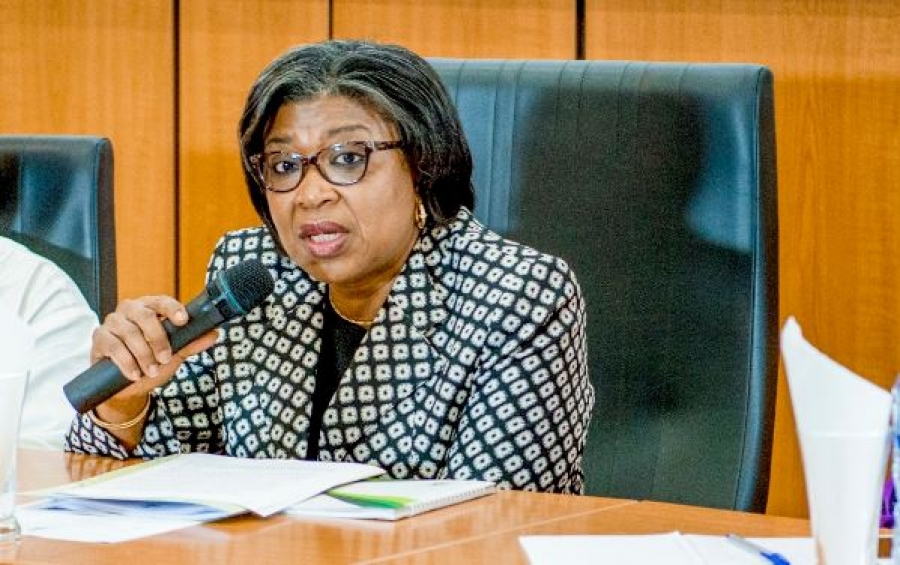
The Director-General, Debt Management Office, Patience Oniha, has stated that Nigeria’s total debt to GDP remains the lowest in Africa.
This was even as Oniha blamed Nigeria’s swelling public debt profile on borrowings and the continued issuance of promissory notes.
She made this known during a programme monitored by Daily Sun on Wednesday.
Addressing the country’s total debt, Oniha said several loans have been contracted from multilateral and bilaterals, while the Federal Government kept issuing promissory notes to settle obligations for which it does not really have the revenue.
A promissory note is a legal instrument, in which one party promises in writing to pay a determinate sum of money to the other, either at a fixed or determinable future time or on demand of the payee, under specific terms and conditions.
Oniha said although borrowing is an accepted form to fund government activities, there should be revenues generated to support it.
She also said the N77 trillion debt projection likely to be inherited before the end of the current administration, can be surmounted with incentives that need to be put in place to ensure borrowings equal balanced expenditure and sustained revenue.
“There are new borrowings for the budget, states, and Federal Government will borrow, ways and means will be approved and all that,” she said.
The nation’s debt stock is currently sitting at N46.25 trillion which includes the debt of the 36 state governments and the Federal Capital Territory (FCT). The Federal Government is responsible for 84 to 85 per cent of this.
Oniha said, “What triggers debts and why the debt stock keeps growing is because when it is growing, debt service also grows.
“The debt stock is growing because Nigeria has been running a budget deficit for many decades.
“In good and bad times with oil prices, we have borrowed. We have been running budget deficits and those deficits are funded largely by 85 percent to 95 per cent from borrowing and that is cumulative. These are publicly available data. “As we borrow each year, it adds up. So, the annual budget deficits are a major component. If you look at this year’s budget, the budget size is N21 trillion, borrowing is N10 trillion.
The third part – the government has been issuing promissory notes to settle obligations for which it doesn’t really have the revenue. So, that is why the debt stock has been growing.”
Oniha added that Nigeria had contracted several loans in the past from multilaterals like the World Bank, the African Development Bank, and bilaterals like Germany, India, China, and disbursements are going on.
However, Oniha said Nigeria’s total debt of gross domestic product (GDP) is lowest in Africa.
Our debt to GDP as at December 2022 was 23 percent and that is still within the limit the government set for itself and the 55 percent set by the World Bank and International Monetary Fund (IMF). If we add the ways and means, it increases to about 40 percent,” she explained.
“The challenge is debt service to revenue and Nigeria has 6.7 percent ratio revenue to GDP.”
She said the best way out is to reduce the level of borrowings and improve revenue at all costs.