Follow Us on Google
From Charity Nwakaudu, Abuja
Nigeria’s Social Cohesion Index (NSCI) has climbed to 48.8 per cent in 2026, its highest level since the survey began in 2019, reflecting growing national unity despite persistent distrust in government institutions.
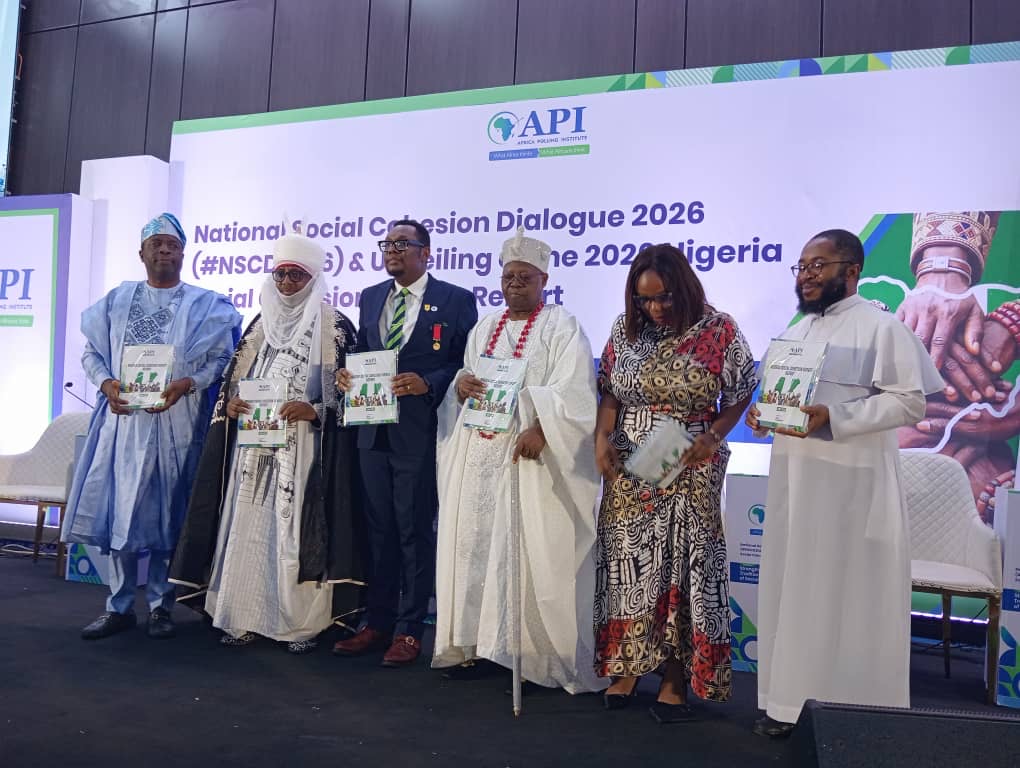
The finding was unveiled on Thursday in Abuja by the Africa Polling Institute during the presentation of its 2026 Nigeria Social Cohesion Survey.
The report showed a two-percentage-point increase from the 46 per cent recorded in 2025, placing the country just below the critical 50 per cent benchmark for social cohesion.
A key highlight of the survey revealed that, for the first time since the study commenced, a majority of Nigerians now identify primarily as Nigerians rather than by ethnic, religious or regional affiliations, signalling a significant shift in national identity.
According to the report, 46 per cent of respondents said they were proud to be Nigerians, while 44 per cent identified equally as Nigerians and members of their ethnic groups. Only 29 per cent said they identified more strongly with their ethnicity than with the Nigerian nation.
The survey described this growing sense of shared identity as one of the country’s most valuable social assets amid ongoing economic and political challenges.
Delivering a keynote address titled “We All Bleed Red,” Archbishop of the Catholic Archdiocese of Abuja, Ignatius Ayau Kaigama, stressed that social cohesion remains essential for national development.
“Because of our common biological and spiritual makeup, our needs and challenges as humans are very similar. Consequently, we must all come together in social cohesion to maintain order in society and confront our common challenges. Failure to do so prolongs our agony,” he said.
Kaigama, who was represented by Rev father Emmanuel Nnamba, described social cohesion as both internal and external, noting that harmony within families, religious institutions and communities is critical to building a stable society. He warned that selfish pursuits often fuel nepotism, tribalism and favouritism, which undermine national progress.
Earlier, API Executive Director, Bell Ihua, said the improved index reflects Nigerians’ resilience and commitment to peaceful coexistence despite prevailing difficulties.
He noted, however, that public confidence in government and state institutions remains at a record low, while religious and traditional leaders continue to enjoy high levels of trust among citizens.
According to Ihua, the findings highlight the need to strengthen the role of religious and traditional institutions in fostering national unity and promoting social cohesion.
The survey, supported by the Ford Foundation, assessed 14 indicators, including identity, trust, social justice, civic participation, corruption, security and migration.
While the report points to encouraging progress in national identity and social cohesion, it also underscores the urgent need for governments and public institutions to rebuild citizens’ trust to sustain the country’s democratic and developmental aspirations.