Follow Us on Google
From Kenneth Udeh, Abuja
The Nigerian Senate on Tuesday took a significant step toward strengthening the nation’s social protection system with the passage for second reading of a Bill for an Act to repeal the Nigeria Social Insurance Trust Fund Act (Cap N88, LFN 2004) and the Employees’ Compensation Act (Cap E17, LFN 2004), and to enact the Nigeria Social Security Trust Fund Bill, 2025 (SB. 557).
The Bill, sponsored by Senator Oluwole Fasuyi Cyril (Ekiti North), seeks to harmonize and consolidate the provisions of the two existing Acts into a single, comprehensive legislation that will establish the Nigeria Social Security Trust Fund (NSSTF) as the central institution responsible for managing, administering, and disbursing social security funds across the country.
Leading the debate, Senator Cyril explained that the Bill aims to eliminate duplication of functions between the Nigeria Social Insurance Trust Fund (NSITF) and the Employees’ Compensation Act (ECA) while creating a unified legal framework for effective social security administration.
He noted that the Bill’s overarching goal is to provide robust protection for workers in both the formal and informal sectors against risks such as workplace injuries, disabilities, unemployment, retirement, and other contingencies that may threaten their livelihoods.
Outlining the key objectives of the Bill, Senator Cyril stated that it seeks to:
Establish the NSSTF as the central authority for social security management in Nigeria;
Harmonize existing laws by consolidating the NSITF Act and the ECA into one legal framework;
Expand social protection coverage to workers across formal and informal sectors;
Guarantee sustainable financing through contributions from employers, employees, and government;
Ensure accountability and transparency by streamlining governance structures; and
Align Nigeria’s social security policies with international best practices and International Labour Organization (ILO) standards.
He further explained that while the Employees’ Compensation Act currently provides for compensation in cases of workplace injury, disease, or death, challenges such as delays in benefit disbursement, weak enforcement, and noncompliance by employers have persisted.
Other News
“The intention of the proposed Bill is not to create a new establishment,” Senator Cyril clarified. “Rather, it seeks to streamline and consolidate existing provisions under a single institutional framework, the Nigeria Social Security Trust Fund for greater inclusivity and efficiency.”
He added that the implementation of the Bill would not impose any additional financial burden on the Federal Government, as it would be executed by an existing statutory body.
During the debate, several senators expressed strong support for the Bill.
Senator Adams Oshiomhole (Edo North), a former Chairman of the NSITF, seconded the motion and commended Senator Cyril for his well-articulated presentation.
Oshiomhole lauded the Bill’s objective of reducing overlapping agencies, noting that the measure would help curb administrative costs and enhance efficiency.
In his contribution, Senator Simon Lalong (Plateau South), a former Minister of Labour and Employment, described the Bill as “timely and essential” for strengthening workers’ welfare, adding that those familiar with workers’ compensation issues would appreciate the urgency of its passage.
Senator Diket Plang (Plateau Central) also supported the Bill, pointing out that under existing laws, there are no adequate penalties for defaulters, a gap the new legislation seeks to address.
He said the Bill would ensure that workers in both public and private sectors are adequately protected and compensated.
Senator Victor Umeh (Anambra Central) noted that the proposed law was well-intentioned and would guarantee fair compensation for employees who suffer injury or death in the course of their duties.
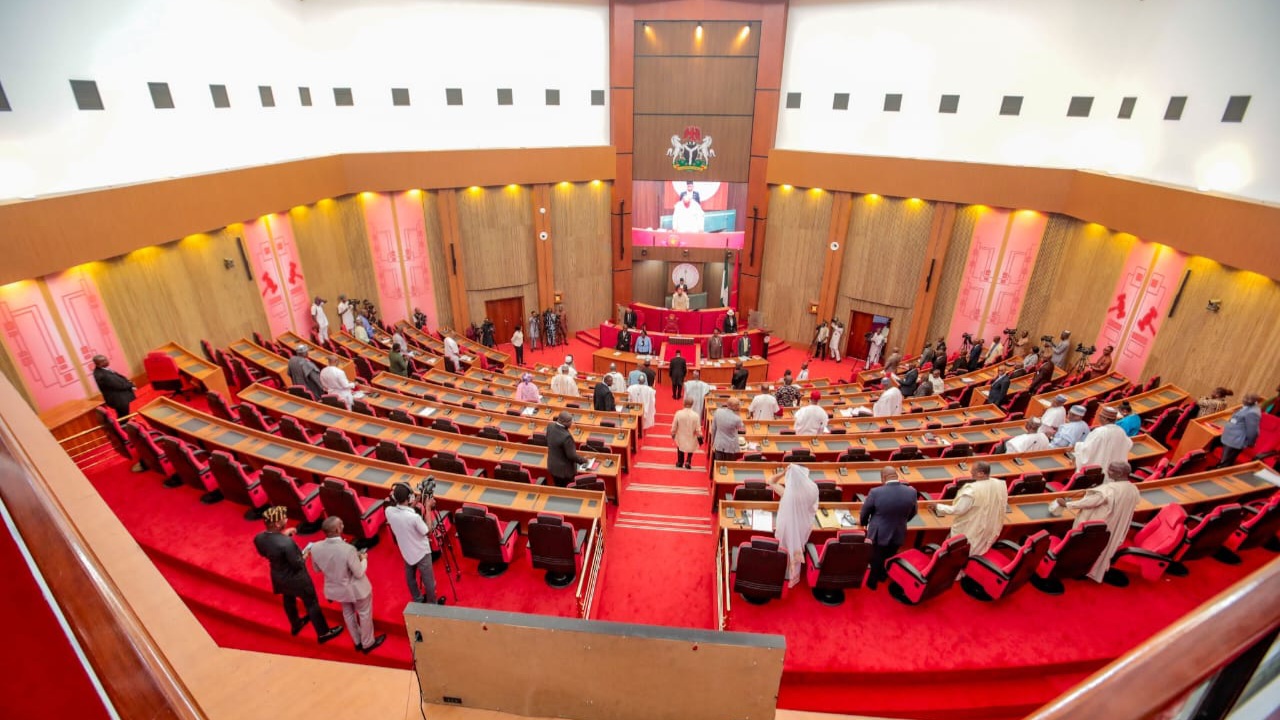
After deliberations, the Bill was unanimously passed for second reading following a voice vote presided over by Senate President Godswill Akpabio.
The Senate subsequently referred the Bill to the Committee on Labour, Employment, and Productivity for further legislative work, with a directive to report back within three weeks.