Follow Us on Google

By Maduka Nweke
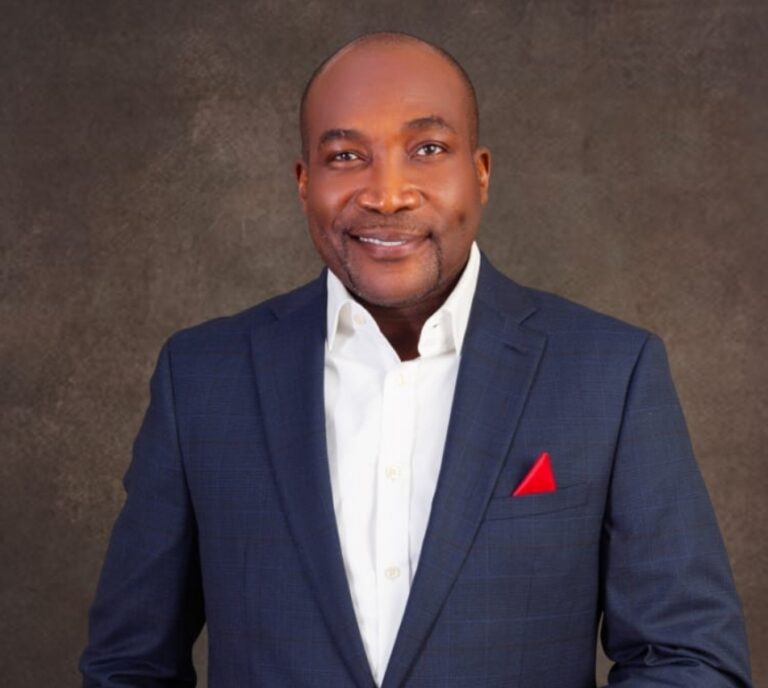
The Chairman of Periwinkle Residences Limited, Dr. Chiedu Nweke, has raised the alarm over what he described as the suffocating cost of construction in Nigeria, insisting that the government’s failure to stimulate local manufacturing of building materials and tame interest rates has left the sector struggling under unbearable weight.
Dr. Nweke, who also doubles as the Managing Director and Chief Executive Officer of Swampsea Construction Company Limited, developers of key projects such as Orange Island and Periwinkle Lifestyle Estate in Lagos, said the cost of real estate in Nigeria has spiralled out of reach largely because the country depends heavily on imported building materials.
“If half of all the building materials being imported into Nigeria are manufactured locally, the cost of properties and construction will drop drastically,” he declared.
The foremost developer identified high borrowing costs as the biggest albatross of the industry, stressing that the current structure of commercial lending in Nigeria makes construction an unviable venture.
“The cost of construction is too high. When we talk about cost, the major area is cost of funds. Even if you bring N100 million from your pocket to fund yourself, it has a cost. Now, if you go to the bank today to borrow N100 million, the interest rate is between 36 per cent and 40 per cent,” he lamented.
He contrasted Nigeria’s suffocating credit system with global benchmarks. “If you move from Nigeria to the United States, the interest rate is 4 per cent. In the UK, it’s 1 percent plus. In Dubai, it is also around 1 percent. There is nowhere in the world, except Nigeria, that interest is in double digits. The commercial interest rate is what drives the economy because any money you see has a cost. Here, N100 million borrowed for three months actually costs about N150 million,” he explained.
According to him, the mismatch between borrowing costs and expected profit margins explains why many projects collapse before completion. “The average profit threshold for any business is 25 percent. But when you borrow at 35 to 40 percent interest, and your profit is capped at 25 percent, the mathematics cannot work. That is why you see abandoned projects everywhere. Businesses are simply set up to fail,” he argued.
Despite these bottlenecks, Dr. Nweke maintained that real estate remains the single largest contributor to employment in Nigeria, dwarfing other industries in labour absorption.
“I don’t know any industry that is bigger than real estate in Nigeria. If you want to know how well the Nigerian economy is doing, check it from real estate. It embodies and employs the largest number of persons,” he said.
From cement makers to steel suppliers, transporters, bricklayers, artisans, carpenters and technicians, Nweke argued that real estate is the invisible thread binding multiple industries together.
Yet, he accused the government of neglecting its potential.
“It is just that the government has not properly addressed it. That part of the economy should be protected to thrive so people can have homes. Owning a home is a dream most families have and keep dreaming,” he noted.
He painted a picture of how housing provision could transform the social fabric of the country. “A young man will be dreaming, when will I have a home? But imagine that same man knowing that at a certain level in his career, he is guaranteed a home.
That gives direction and stability. Real estate defines the economy because it employs so many people. If properly addressed, it could also help in reducing inflation in the country,” he added.
For Nweke, the sector is both Nigeria’s greatest untapped strength and its most glaring failure. His message to the government was blunt: lower interest rates, encourage local production of materials, and watch the economy grow through real estate.