Follow Us on Google
By Merit Ibe
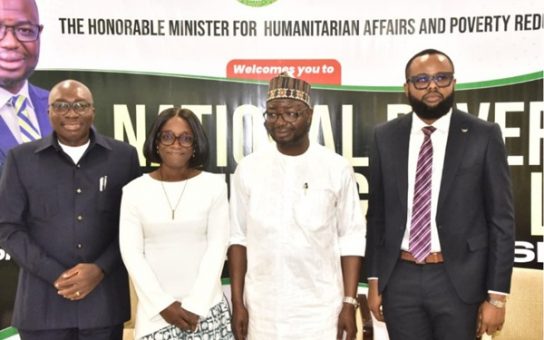
The Minister of Humanitarian Affairs and Poverty Reduction, Dr. Bernard Doro, says the newly unveiled National Poverty Intelligence Lab (NPIL) will fast-track reforms to transform how Nigeria understands, responds to, and reduces poverty at scale.
Doro spoke at the NPIL unveiling during a three-day workshop on using the lab’s instruments to tackle poverty in Nigeria. The workshop, organized by the ministry in collaboration with Innovations for Poverty Action, IPA, began in Abuja on Wednesday.
“I am excited to witness the operationalization of what we have long envisioned — a truly integrated national system for poverty intelligence and humanitarian response,” he said.
Doro said Nigeria faces one of the most complex poverty challenges in the world. “What this moment demands is not more of the same. It demands systems, intelligence, evidence-driven leadership, and coordinated, accountable action. That is exactly what today’s event is about,” he said.
He noted that the NPIL will serve as the intelligence backbone of Nigeria’s poverty reduction architecture. “The lab will underpin policy formulation, programme design and implementation, resource allocation, and performance management. For many years, our interventions have been driven by assumptions rather than evidence, sometimes by politics rather than data, and by silos rather than systems. The NPIL changes that,” he said.
Other News
“The Renewed Hope Agenda calls us to a higher standard. We are moving from palliatives to pathways; from fragmented projects to integrated systems; from measuring spending to measuring outcomes; and from dependency to dignity,” he added.
“Every household we reach through the One Humanitarian One Poverty Response System, OHOPRS, is a household we intend to graduate from vulnerability permanently. The NPIL is the engine that will tell us whether we are getting there,” he said.
Doro said poverty cannot be reduced through assumptions or scattered interventions without coordination. “Through OHOPRS, we are building the systems. Through the NPIL, we are building the intelligence. Together they will help Nigeria move from fragmented interventions to coordinated outcomes, from palliatives to pathways, and from vulnerability to prosperity,” he said.
He said the establishment of the NPIL is simultaneously a governance, accountability, systems, and poverty reduction reform.
IPA Country Representative, Mrs. Fumi Ayeni, said the collaboration is aimed at determining what the poor and vulnerable truly desire and how to reduce duplication.
Senior Technical Adviser to the Minister on Information Systems and Data Analysis, Dr. Abimbola Fasanu, said data is a strategic national asset. “Globally, government policies and programmes are informed by data. At the end of the day, the project will enable Nigeria and the ministry to make better-informed decisions whose outcomes can be measured,” she said.