Follow Us on Google

By Cosmas Omegoh, Gilbert Ekezie (Lagos), Laide Raheem (Abeokuta), Mohammed Munirat Nasir (Gusau), Gyang Bere (Jos), Timothy Olanrewaju (Maiduguri), Paul Osuyi (Asaba), George Onyejiuwa (Owerri), and Sylvanus Viashima (Jalingo)
The 1999 Nigerian Constitution as amended recognised the local councils as the third tier of government. They are to operate independently and be free from any encumbrances. 
At the moment, there are 774 councils in the country, and each one is supposed to be manned by a chairman. Their constitutional duties are spelt out; they revolve largely around provision of amenities which ought to impact directly on the people at the grassroots.
But there have always been arguments about the relevance of local governments. Such bickering never cease – always emotive, filled with fury. And so, depending on who one asks, local councils are both perceived as either channels of waste or good governance. 
On March 26, 2021, for instance, the House of Representatives tabled a motion for the scrapping of the local governments, the sponsor being a certain Solomon Bob of the People’s Democratic Party (PDP).
His motion drew the instant flax of local government employees notably the Nigerian Union of Local Government Employees (NULGE), President, Mr Ambali Olatunji, who called those moving against local governments as “enemies of Nigerians and democracy.”
He and his members vowed to occupy the homes of the House members should they go ahead with the motion.
In a push back bid of some sort, two local government chairmen in Lagos State, Mr Fatai Adekunle Ayoola of Ajeromi/Ifelodun and Dr Valentine Braima of Amuwo Odofin, argued that doing away with local councils would be a disservice to the people.
“There is no gainsaying that the local government should be well protected as the third-tier of governance,” Ayoola stated, adding that “obviously, the council is the closest to the people, and it is only at that level that one can have access to governance at the grassroots. So, it will be a disservice to humanity, if the LGAs are scrapped.”
Speaking through his Chief Press Secretary, Yomi Adejumo, Dr Braima contended: “It is unthinkable to say that the local government structure should be scrapped.
“How then do you get government closer to the people? Government cannot function without the LGAs.”
But a section of Nigerians believes that non-implementation of autonomy for the councils – even when President Muhammadu Buhari granted so through an executive order in June, 2019 – leaves them completely at the mercy of rampaging state governors.
The governors have penchant for withholding councils’ allocations from the Federation Account, thereby leaving them financially ‘castrated.’ And as such, hundreds of local councils are only existing without making any impact.
Consequently, Dr Braima believes that if the councils can be made truly autonomous, and allowed access to their allocation from the Federation Account, Nigerians would witness more robust governance at the grassroots.
“Just give them the autonomy and let the system flow. That is deserving. I think that it is ambiguous for anyone to say scrap the LGAs. When you removed the councils from the mix, you have just crashed the system,” he noted.
It was against this backdrop that our correspondents set out to see how the councils are faring amid the financial aridity they face.
The observations were revealing – very insightful – leaving fingers pointing at the rot that has existed for too long: active state governments’ brutal interventions which deliberately stifle the tier of government and setting it up for the big fall.
Ogun State: Councils run by transition committees
In Ogun State, transition committees are presently manning the 20 local government areas. These committees are made up of the chairman, vice chairman, secretary and other three members.
Though, local government elections have been scheduled to hold on June 24, 2021, to usher in substantive executive members into the councils, the transition committees were saddled with the responsibility of overseeing the affairs of the local governments, when they were inaugurated on January 17, 2020, by Governor Dapo Abiodun.
On paper, however, state governments often claim that they give autonomy to the local governments, but in reality this might not be so.
Investigation by Sunday Sun revealed that local council chairmen in Ogun State are free to execute projects they so desire, but with the imprimatur of the governor.
This, it was learnt, was to ensure accountability, probity and transparency.
Further investigation showed that projects embarked upon and executed by the chairmen are similar. These projects include lock-up shops, market stalls, borehole drilling, provision of public toilets and grading of rural areas.
The Local Government Autonomy Bill was signed into law by President Buhari, stipulating that only duly elected executives can get their allocation directly from Abuja. But the caretaker committees at various local governments in Ogun rely on the state government for fund, for both salaries and projects.
Investigation also showed that primary schools, primary healthcare centres and markets in Ogun State, are under the local government. But fund for teachers’ salaries, infrastructure and furniture, are routed through the Ogun State Universal Basic Education, from the Federal Government. This is one major reason salaries of primary school teachers are being paid promptly, since it is listed on the first line charge.
It was observed that at Itoku Market in Abeokuta South Local Government, a storey building of lock-up shops, embarked upon by the council, was almost at the completion stage.
Similarly, open stalls were constructed and inaugurated inside the Asero Market, Abeokuta South Local Government.
At Oke Egunya, Ago Oba area of the metropolis, a health centre is under construction, courtesy of the local government.
In Odeda local government, a rural council, along Abeokuta-Ibadan Road, major markets have been renovated by the caretaker committee in charge of the area. The LG Primary School at Obantoko area of the council, has also received a face lift from the local government.
In Ewekoro Local Government Area, another rural council, some projects dotted the landscape. One of such is the ultra-modern shopping complex at Itori town.
However, some decay, particularly in primary schools was observed.
At the Local Authority Primary School, Oke-Ilewo in Abeokuta South, no fewer than four classrooms were in a state of disrepair.
At Owiwi Primary School, Obada-Oko in Ewekoro Local Government Area, roofs of some classrooms had been blown off by the storm.
Also, a local government primary school at Mogan, in Odeda LGA, has almost become decrepit, but massive rehabilitation being undertaken in the school by Ogun SUBEB, is restoring the school.
Zamfara State: Councils under sole administrator
Zamfara State local government councils are being run by sole administrators following the sacking of the elected local government council chairmen by the state House of Assembly in June 2020.
The decision to sack the 14 council chairmen elected on the platform of the All Progressives Congress (APC) in February 2019 according to the state lawmakers was premised on security negligence and financial recklessness.
The House directed Governor Bello Mohammed Matawalle to submit the names to be rectified by it to serve as sole administrators of the 14 local government councils.
The names of the 10 chairmen who had before the dissolution of the local councils defected to the People’s Democratic Party (PDP) to join Governor Matawalle, were sent to the lawmakers for confirmation as sole administrators, while the four chairmen who refused to dump the APC for the PDP were replaced.
Although the 14 sole administrators are given free hand to function by the state government as they were allowed to decide what to do with their funds, most projects being executed at the local government level are jointly financed by the state and local government joint account.
The joint account being operated in Zamfara State does not hinder the local government councils from performing their roles of providing development at the grassroots level.
The local government councils are in charge of primary schools, primary healthcare centres and markets in the state.
Delta State: Residents’ expectations moderate
The recently inaugurated chairmen and councilors across the 25 local government areas of Delta State are settling down.
The people have become less enthusiastic about the performance of the third tier of governance due to obvious failures in the past.
Such failures have always been attributed to inadequate funding, a major bane militating against the performance of councils in terms of project delivery.
The major source of revenue to the councils which is the monthly allocation from the Federation Account, is hardly adequate for payment of council staff salaries, primary school teachers as well as entitlements of elected and political appointees.
As such, Delta State government, it was learnt, on a monthly basis, augments allocations to the councils to ensure that salaries of public servants are paid.
But infrastructural development remains in deficit in the councils. Some council authorities in the past plunged their areas into debt after borrowing money from financial institutions.
Now, even with the handout from the state government, some councils still fall short when statutory deductions have been made either at the federal or state levels to defray their debts.
However, the Chairman of Oshimili North Local Government Area, Innocent Eseweze, said he would change the narrative, and provide infrastructure in the next three years.
To give a facelift to the council secretariat at Akwukwu-Igbo, Eseweze laid the foundation stone for the building of an ultra-modern executive complex, entrance porch and gate house.
The project which is expected to be completed in three months, would address the problem of insufficient office space for staff and give the workers a more conducive environment to operate.
In Ndokwa West LGA, the council chairman, Obi Nzete said that he is in charge.
Nzete has already appointed the local education authority to manage the primary schools in collaboration with the state Ministry of Basic and Secondary Education.
Sunday Sun learnt that the council is working with market unions to ensure the progress of economic activities.
Although there are no infrastructural projects going on, a council source told our correspondent that there were plans to carry out perimeter fencing of the entire secretariat, build cemeteries and markets.
A resident in Asaba, Oshimili South Local Government Area, Patrick Mgbodo, said that they were not expecting much from Mr. Ezenyili.
“We don’t expect him to build skyscrapers, but with the little at his disposal, he should make an impact.”
According to Mgbodo, the council authority has little to do because the area is inside the state capital where there are lots of interventions from agencies of the state government.
“But we expect him to think outside the box, plug revenue loopholes, address lingering market issues to generate funds to touch the lives of the vulnerable groups mostly in rural communities.”
Ezenyili told Sunday Sun that his blueprint for the urban local government would be launched at the end of May, 2021.
Meanwhile, the Chairman of Association of Local Government of Nigeria (ALGON) in the state, Victor Ebonka, has said that the state government does not meddle with the administration of the councils.
Speaking at a public function, Ebonka who is the chairman of Ika North-East council, also confirmed that the state government augments allocations to the councils every month.
Plateau State: LGAs struggle to pay staff salaries
Since the outbreak of COVID-19 pandemic, local government areas in Plateau State have been going through hell to pay public servants the new minimum wage.
Most of the councils struggle to pay salaries with funds from the Federation Account while some borrow to meet up with their salary obligations.
Sadly, Sunday Sun gathered that it is no longer the priority of most of the council chairmen to address the infrastructural decay in their domains.
The situation became worse in April 2021 when payment of salaries in the 17 local government areas in the state was decentralised. Each local government was asked to shoulder the welfare of its staff since their funds come direct from the Federation Account.
Chairman of ALGON, Plateau State, Hon. Ezekiel Vulgap made the announcement after a prolonged meeting with NULGE to resolve the lingering protest over payment of the minimum wage.
Since then, most of the local governments have not been able to pay January to April salaries, while some have borrowed money to pay for two to three months.
Checks revealed that the local government chairmen still hold the normal joint account meeting with the state government where some percentage from the Federation Account is allegedly deducted.
It was learnt that the funds from the Federation Account passed through the state consolidated account; they are transferred into various local government accounts; the money is inadequate to pay salaries not to talk about executing projects.
It was also learnt that the local governments are still in charge of the welfare of primary school teachers and health care workers in their respective areas.
Some of the primary schools, health care centres and markets at the local government areas are in bad state.
In Riyom Local Government Area which has witnessed decades of insecurity leading to loss of lives and property, some primary schools are still being used as accommodation by the military who are on peace keeping assignment.
The Riyom council chairman, Hon. Mafeng Gwallson, it was learnt, is still battling to return and rebuild the secretariat after it was vandelised during the EndSARS protest.
In Langtang North Local Government Area in Plateau South, the secretariat was an eyesore before the coming of Hon. Joshua Laven who rehabilitated it recently.
Peter Kumshi, who hails from the area revealed that the council chairman was able to set up a radio station in the area. He said the station was necessary to mobilise and educate the people on health matters.
Jos South Local Government Area within the metropolis has a befitting secretariat and collapsed primary school classrooms in some villages.
The council Chairman, Gideon Dung Davou, has constructed shops within Bukuru metropolis. He is battling also to pay salary arrears of his staff; but primary schools and health centres in the area are begging for urgent intervention.
Commissioner for Local Government and Chieftaincy Affairs, Hon. Slyvanus Tapgun said that the state government doesn’t interfere in local government funds
Tapgun who admitted the state receiving subvention from the Federation Account, said that the Accountant General of the state always transfers such funds immediately to the respective local government accounts.
He said that the figures could be verified by the public on monthly basis, adding that the money so received to some extent could comfortably pay staff salaries.
He acknowledged that the council chairmen had executed some projects which had direct bearing on the lives of the rural dwellers.
Borno State: Insurgency hampers LG operations
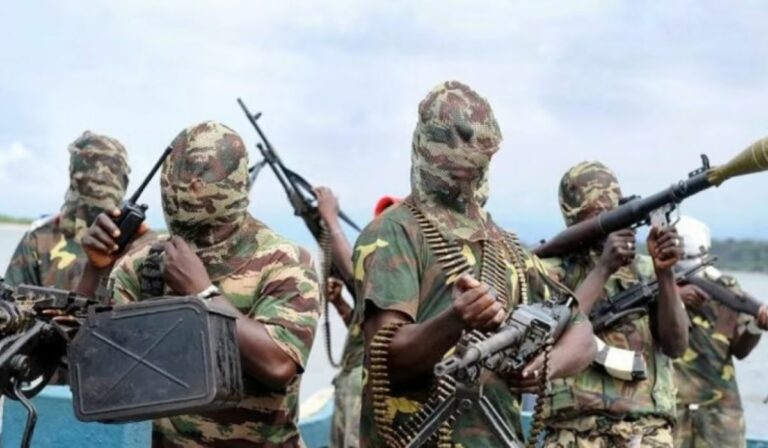
The decade-long Boko Haram insurgency in the Northeast has hampered governance and political activities in about 23 of the total 27 local governments in Borno State, Sunday Sun can reveal.
Violent attacks by Boko Haram which started in Maiduguri, the state capital late in July 2009, spread to other local governments few years later.
The insurgents seized seven local government areas, sacked civil authorities, destroyed public infrastructure and private buildings, established their bases at the various council headquarters between 2014 and 2016, before the military cleared them and recaptured the headquarters.
But then, the insurgents only moved to the remote communities and occasionally carrying out attacks on the council headquarters and adjoining towns.
Rehabilitation of buildings and other infrastructure undertaken by the state and Federal governments through the victims- support fund, were destroyed as soon as they were completed.
Over a million Internally-Displaced Persons (IDPs) are taking refuge in Maiduguri, and nearby communities, while scores are refugees in neighbouring Niger, Chad and Cameroon till now.
Magumeri, Monguno, Mobbar, Guzamala, Malam Fatori, Kukawa and Marte in the northern axis of the state remain very volatile till now and still witnessing more attacks.
Speaker, Borno State House of Assembly, Hon. Abdulkarim Lawan, expressed his frustration over the absence of civil authority in Guzamala local government, his constituency.
“My local government is still not safe; our people can’t go to farm. They are not secured,” he lamented.
Headquarters in Kaga, Konduga , Mafa, Bama, Gwoza, Gamboru/Ngala, Kala Balge in the central part of the state are garrison towns due to the heavy presence of military troops, camps, barricades, and several kilometres of trenches around the communities in the LGAs. Most of the council officials operate from Maiduguri and occasionally visit the council headquarters for important duities.
In Biu, the third biggest town in the state is the headquarters of Biu Local Government, where government activities are ongoing though with little restriction to the headquarters, some 187 kms to the state capital.
Other LGAs in the southern part of the state such as Damboa, Kuya Kusar, Askira-Uba, Hawul, Bayo and Chibok also have very limited local government activities. Most of the reconstruction and rehabilitation projects going on in a few LGAs are being executed by the state government.
In Maiduguri and Jere, two LGAs in the capital, ongoing projects including rehabilitation of roads, construction of market and motor parks and the ongoing N2 billion New Tarson Bama motor park and market stalls, are being undertaken by the state government.
Borno held local government election in November 2020, the first in about 13 years.
Lagos State: Allocation comes promptly
Dr Braima, chairman of Amuwo Odofin told Sunday Sun that “the local government is very crucial to the development of any nation. The direct needs of the people come to them through the councils. Most of the things that cannot be attended to at the federal level are what we handle, for instance roads. It is only the local governments that know how certain things are important to the people. And so, if there is no financial autonomy given to the local governments, the people have to wait to get the directives and funding to be able to handle that. So, it is the local governments that know where the shoe pinches. The LGAs domesticate the peculiarities of the people.”
He noted that Lagos State is a pacesetter, revealing a cordial relationship between the state and the local governments. “Lagos believes that in building a smart city, the local governments have to be involved.
“Here, the state government gives the local government its own share of the allocation promptly.
“With that, the local governments are able to meet a broad spectrum of needs – building and rehabilitating primary health centres, ensuring that primary education is functional, ensuring that the local government roads are motorable.
“Recently, we rehabilitated 119 classrooms in various schools. Primary health centres have been rehabilitated too. We are linking motorable roads. We have procured vehicles for policemen in the local government. We are de-silting the drainage channels for instance.”
His Ajeromi Ifelodun counterpart, Ayoola, said that at the grassroots, he had been able to reduce the infant mortality rates through the the Primary Healthcare Centre (PHC).
“We have been able to build a primary health centre in each of the political wards; if we are expecting the Federal Government to come and do it for us, it will be difficult.
“We have built over 40 inner roads; that has opened up the communities. For instance, we linked Tolu and Alakoto communities through Apena Street by building a bridge on Apena where there was canal. In the past, the two communities never had a motorable road. Their link had been Kirikiri road.
“Out of the primary health centres, one takes care of HIV/AIDS patients, while others are for child delivery, treatment of malaria and rest of other medical cares.”
He too admitted that the state governor, Mr Babajide Olusola Sanwo-Olu, does not thinker with the revenue and resources of the local governments.
“When the allocation comes, the governor has a template with which the primary school teachers’ salaries are deducted from source.
“We make sure that the kids have the best primary education because that is where characters and opinions are moulded. What we do here in Ajeromi Ifelodun, is to inject funding into primary education.
“When I came on board as chairman in 2017, I met Zumratul-Islamiyya Primary School, at Godo, along Mba Street, in a very sorry state. I demolished all the shanties and erected a story building, with a library and computer centre where the kids can also become computer literate. We also built a football pitch in our primary schools, so that when the kids go through the normal class room lessons, they can recreate by bringing out the talents that are embedded in them, which is what Ajegunle is known for.
“We now have what is called ‘Back-to-School’, which was not there before. Through that, we give school uniforms, bags, writing materials, exercise books and other items to children, just to support parents. We do that annually, and it is very competitive. In our council, some of the brilliant students get scholarship of N10,000 per annum, depending on their performances.”
Imo State: LGAs in quandary, receive between N10 – N15 million monthly
Presently there are no elected council chairmen in the state and no date has been fixed for election.
Former governor, Rochas Okorocha, had conducted council election six months to the expiration of his eight-year tenure in mid July of 2018. But the major opposition party the People’s Democratic Party (PDP) challenged the conduct of the council polls in court because the Okorocha administration conducted the elections outside the recognised INEC electoral wards in the state.
When ex-Governor Emeka Ihedioha took over on May 29, 2019, the Okorocha council chairmen and the 645 councilors were suspended by the state House of Assembly which directed Governor Ihedioha to appoint caretaker chairmen for the 27 councils for a period of six months pending election which was fixed for January 2020.
However, the short-lived administration of Ihedioha had instructed the caretaker chairmen to initiate projects in their areas on the specific needs.
As a result, some of the councils’ caretaker chairmen began to construct council secretariats to provide office spaces for their workers, perimeter fencing and rehabilitating some rural access roads to ease the movement of people.
But on assumption of office as governor on January 15, 2020, Senator Hope Uzodimma immediately sacked the caretaker chairmen appointed by Ihedioha and appointed new ones.
Right now, no date has been fixed by the Uzodimma administration for the conduct of council polls.
As a result of the change of government, the new caretaker committee chairmen of the councils, having been starved of funds, have neither been able to complete the previous projects their predecessors began, nor initiated new ones.
Investigations by our correspondent revealed that what the council caretaker chairmen now receive is between N10 and N15 million monthly from the state government regardless of their monthly allocation from the Federation Account.
It was also learnt that the amount is not even sufficient to pay salaries and run the affairs of the councils. But the state government has also taken over the payment of primary school teachers and pensions through the state Primary Education Management Board. This has resulted in most primary school teachers being owed several months of salaries in spite of the several verification exercises carried out by the state government.
Although, markets are the responsibility of the local government councils, in the case of the markets development, the state government has also appropriated the function through the Imo State Market Management Agency under the Ministry of Commerce and Industry.
Health care centres are supposed to be under the purview of the local councils. But a visit to the Owerri West council showed that nothing is going on there. Part of the council has been taken over by weeds. Even the new council secretariat which was started by the previous caretaker committee chairman has been abandoned.
The major road leading to council headquartes at Umuguma has already been reconstructed by the NDDC. But most of the roads in Avu, Oforola, Umuanunu and Umudibia communities are in terrible conditions.
John Iheancho, a native of Umuguma community alleged that the Owerri West council had failed to execute any projects in the area since last year.
He said that the road leading to Okuku which also connects Irete community is no longer motorable as the rainy season set in, wondering the essence of having a council.
In Ohaji/Egbema council of the state, natives of Obitti community lamented that the only primary health centre in the community had been abandoned. They also complained about lack of electricity.
In Ngor Okpala council, things are not different either, as most communities in the council do not have good access roads.
It was gathered that the current caretaker administration had neither embarked on any project nor completed any of the previous ones started by the immediate past administration.
With the rainy season approaching, it is now very difficult for the natives of most of the communities to even access the council headquarters at Umuneke Ngor because of the terrible state of the roads within the vast council, as none of the rural roads have been given a face-lift in the last one year.
Our reporter gathered that the health centres in the area are in derelict conditions, the same for the majority of the primary schools in the council. Workers especially teachers are owed several months of their salaries.
Egwu Chibuike, from Nnorie community, noted that the council has never had it bad before now.
“Nothing is happening in this council; there is nothing .The roads are very bad. Is it the non-payment of school teachers and workers? Even some of the rural road projects that were started by the previous chairman under Ihedioha administration was abandoned. Even renovation of primary health centres and primary schools have been abandoned. What we hear is that the governor does not give them enough money to do projects.”
Taraba State: Insecurity forces LG chairmen to Jalingo
A tour of some local government areas in Taraba State showed that while some local government chairmen were able to provide certain levels of development for their people, some have allegedly abandoned their secretariats to take refuge in Jalingo, the state capital.
The Jalingo LGA secretariat is usually a busy place, more because it is an urban area and there is always a stream of government activities going on there.
The Chairman, Alhaji Abdulnasiru Bobboji, who is also the state vice chairman of ALGON, told our correspondent that each of the local governments in the state receives their monthly statutory allocations intact and is allowed to operate freely.
“We receive our statutory allocations intact. That is how we are able to bring development to our people. We are all elected chairmen, and so we definitely have the free hand to operate.
“What the state governor, Darius Dickson Ishaku, does most times is to remind us that we would give account of our activities at some point; we should always think about the people first.
“While we pay the salaries of primary school teachers, the system is managed by the State Universal Primary Education Board (SUPEB), while the Primary Health Care Centres are managed by the State Primary Health Care Development Agency (PHCDA).
“But the markets are managed by the local government authorities.”
The local government has also recorded a number projects which the chairman described as “projects with direct and most impact on the people mostly because of their peculiar needs.”
One of such projects, he said, is the ongoing construction of a bridge at Gongon Mahuja village in Wuro Sembe area of the local government. The community was completely cut off from the rest of the town because gully erosion destroyed the road completely.
According to a native, Mr Irimiya Kotoro, “this bridge will really help us to move about better and to take our produce to Jalingo easily. Before, it costs only N100 to go to town, but since the water flooded our road, we now pay almost N500 because we have to go through other neighboring villages before going to town.”
The local government chairman also constructed another culvert at Bashin village to ease movement between Bashin and Takanaban and Bashin Jalo villages in Turaki B ward in the local government.
On health matters, Bobboji said: “We built a primary health care centre which is called Dr Aisha Shettima Memorial PHC at Jekadafare. It was named after the first health worker who died of Lassa Fever in the state. Because it is strategically located, it serves a large number of persons. We also contribute in our own way towards ensuring the functioning of all the Primary Health Care facilities in the local government.”
It was learnt that while the state government is working to ensure stable supply of potable water across the state, the local government constantly maintains over 200 boreholes in Jalingo.
Taraba State as a whole is plagued by security challenges ranging from kidnapping to armed robbery. In Jalingo local government, violence is on the rise.
The Jalingo LGA chairman said that deliberate efforts were being made in close collaboration with the local communities, security agencies and vigilance groups to ensure that “the situation is now remarkably under control,” which the state police spokesperson, David Misal, confirmed.
The LGA has also tried to get some youths gainfully engaged through quarterly skill- acquisition programmes. Over 5,000 beneficiaries have graduated with various skills across the wards.
But when our correspondent visited Sunkani, the Ardo Kola local government headquarters, it was a different story. Save for the National Identity Management workers who were providing NIN registration for the people, the secretariat looked deserted. The chairman was said to have travelled to Jalingo.
One of the persons who came for his NIN registration told our correspondent: “Nothing is happening here! There is nothing to come and do here.
“I am a staff of the local government, so I cannot tell you my name, but nobody comes to work here. There is nothing to come and do.
“Even the chairman only comes here once in a while. He stays in Jalingo most of the time. You will not blame people though. This chairman is still acting since the death of the former chairman. There is no project going on anywhere. In fact, they always say that they are controlling everything from Jalingo.”
Our correspondent also spoke to another worker in the council who said: “In terms of infrastructure, there is hardly anything to show, but I am aware of other services being rendered by the local government especially in areas of human-capacity building.”
Ardo Kola local government area has a good road, but it has been plagued by insecurity especially the activities of kidnappers.
“This is a predominantly rural local government area; most of the people are farmers who are basically contented with their simple life styles.”
Other local government areas in the state such as Wukari, Takum, Zing, Gashaka, Bali, Gassol, that are basically urban, have also enjoyed certain levels of development. However, widespread insecurity has diverted attention from provision of infrastructure to safeguarding lives.
Meanwhile, other local government areas such as Karim Lamido, Lau, Kurmi, Yorro, Ussa and others that are semi- urban do not have access roads; they are also battling with insecurity that has made their administration extremely difficult.
Most of the local government officials take refuge in Jalingo as they are major targets of criminal elements operating in their domain.
Only recently, the chairman of Ardo Kola LGA was kidnapped and later killed by gunmen, sending fear into other residents.