Follow Us on Google
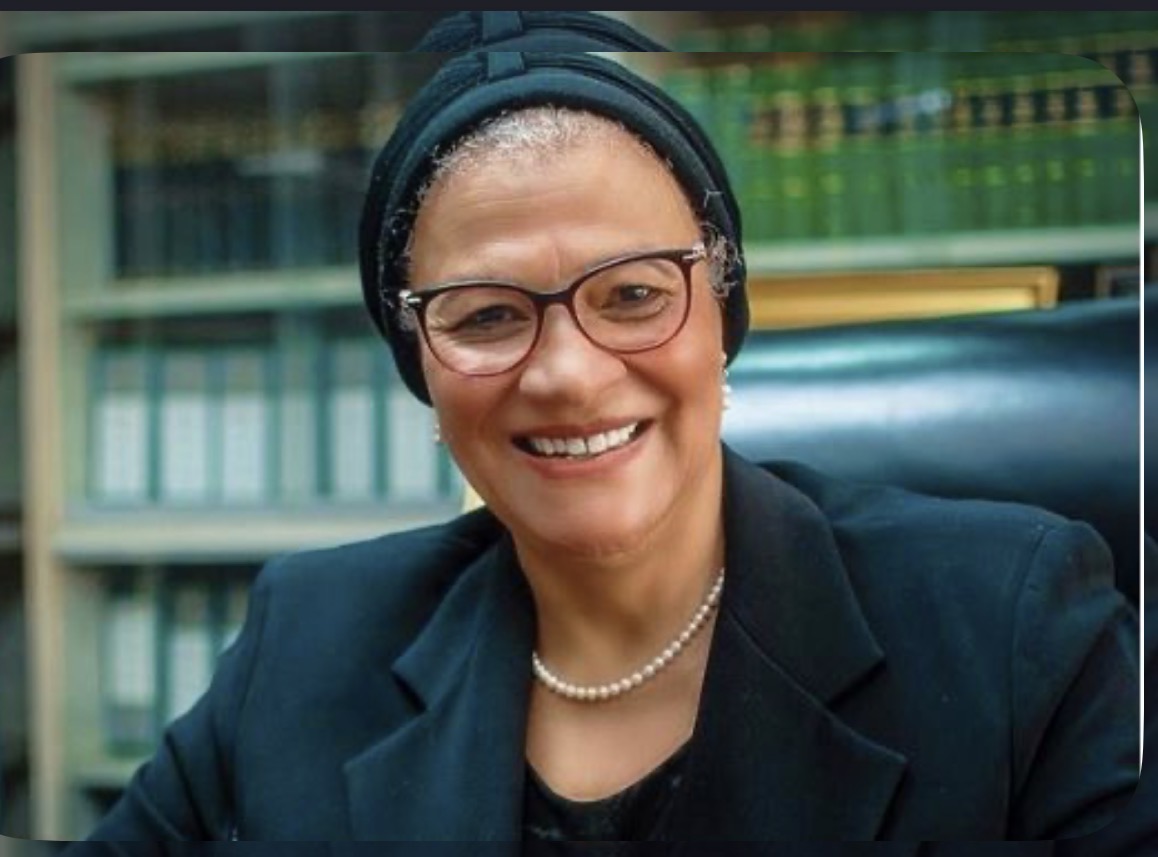
• says rule of law, justice delivery critical to attracting investment, protecting citizens
• hails Osun election without litigation, hopes 2027 polls follow suit
Retired Justice of the Supreme Court, Amina Augie, has warned that corruption, prolonged court proceedings and the high cost of justice are undermining public confidence in Nigeria’s legal system and require urgent reforms.
Augie spoke on Saturday while delivering an anniversary lecture titled, “The Rule of Law and Justice Delivery: The Last 40 Years, Today and Tomorrow — Whither Nigeria?”, at the 40th anniversary celebration of the Nigerian Law School Class of 1986, known as the Centennial Class of ’86, in Abuja.
She said Nigeria had made significant democratic progress since the return to civilian rule in 1999, but warned that those gains could not be sustained without institutions capable of protecting citizens, restraining government power and holding public officials accountable.
“The essence of the rule of law is that we should never operate under the rule of force or fear,” Augie said, recalling a landmark judicial pronouncement on the supremacy of the law.
According to her, the rule of law is not a luxury reserved for prosperous nations but a foundation for economic development, investment and the protection of individual rights.
“For a developing country like Nigeria, it is not the reward of prosperity; it is the precondition of prosperity,” she said.
Augie argued that investors would be reluctant to commit capital where contracts could not be enforced, property rights were uncertain and disputes took years to resolve.
“Investment is an act of confidence in tomorrow, and the rule of law is what makes tomorrow predictable,” she said.
She added that the law must protect the weak against the powerful and enable ordinary citizens to hold influential individuals and institutions to account.
Augie identified the excessive number of appeals reaching the Supreme Court as a major structural weakness, saying constitutional reforms were needed to enable the apex court to focus on matters of national importance.
Recalling her experience on the Bench, she said the court was often burdened with cases that should have been resolved at lower levels. She cited an appeal in a criminal case initiated by the state and questioned why such a matter had reached the Supreme Court.
According to her, the workload has become so heavy that some cases are being assigned hearing dates as far ahead as 2031.
“The only way forward is to amend this Constitution,” she said, advocating reforms to restrict appeals and allow the court to concentrate on issues requiring authoritative interpretation of the law.
Augie also criticised the high cost of litigation, saying financial resources could determine who was able to pursue a legal remedy.
The former justice criticised public authorities that fail to comply with court judgments, warning that government institutions could not demand obedience to the law while disregarding judicial decisions.
She cited instances in which orders for the release of detained persons were not obeyed, forcing litigants to seek intervention from other judicial institutions, including the ECOWAS Court.
“A nation cannot ask its people to obey the law while its government refuses to be bound by it,” she said.
Augie stressed that compliance with judicial decisions was essential to preserving the authority of the courts and preventing arbitrary executive action.
She also identified insecurity, poverty and inequality as factors that weaken citizens’ confidence in the state, particularly when people cannot adequately protect their lives, property or legal interests.
Augie described corruption within the justice system as especially damaging because the courts and legal profession are expected to serve as the final protectors of citizens’ rights.
She expressed concern over allegations of lawyers offering inducements to influence judicial decisions and warned that misconduct by some practitioners could damage the reputation of the wider legal community.
The retired justice urged the Bar, Bench and court registries to enforce ethical standards consistently and called on lawyers to resist attempts to manipulate judicial processes for personal or professional gain.
She said public trust was built through conduct rather than professional titles or declarations of commitment to ethics.
Augie, also applauded the fact that the recent Osun governorship election was not followed by litigation, expressing hope that the 2027 general elections would produce a similar outcome.
According to her, the absence of post-election litigation in Osun was a development worth celebrating, while praying that the experience would be repeated in the next general elections as Nigeria continues to strengthen its democratic institutions.
She stressed the need for Nigeria to build an electoral culture in which disputes are minimised and democratic outcomes are accepted, while ensuring that the courts remain available to provide remedies where genuine grievances arise.
Assessing Nigeria’s progress over the past four decades, Augie acknowledged the country’s unbroken period of civilian government since 1999, transfers of power between political parties and the ability of citizens to challenge government actions in court.
However, she said Nigeria had yet to translate those gains into a justice system that was sufficiently accessible, affordable and efficient.
Citing the World Justice Project’s Rule of Law Index, she said Nigeria ranked 120th out of 143 countries, a position she described as a reflection of persistent institutional weaknesses.
Augie urged lawyers to play a more active role in protecting democratic institutions, saying their responsibility extended beyond representing individual clients to defending the public interest.
Looking to the future of legal practice, Augie urged lawyers to embrace artificial intelligence and other technological tools without surrendering professional judgment or responsibility for their work.
She warned that excessive reliance on AI-generated research could expose courts to fabricated cases, false citations and judgments that never existed. She referred to reported incidents in the United States, Canada and England in which lawyers had submitted fictitious legal authorities generated by AI tools.
While AI could assist with research and summarise large volumes of judgments, she said it could not replace moral judgment, compassion, discretion or courage.
“A machine can summarise a thousand judgments, but it cannot feel the weight of sending a person to prison or taking a child from a parent,” she said.
“Let the machine carry the load. Never, never, ever let it carry the conscience of justice,” she added.
Augie further urged Nigerian lawyers to prepare for the growing influence of international standards in data protection, anti-money laundering, corporate governance and AI regulation.
She said law firms needed expertise in international commercial law, arbitration and technology law to compete for global transactions and retain legal talent in Nigeria.
Augie charged members of the Centennial Class of ’86 to use their experience to defend the rule of law and mentor younger practitioners.
She urged lawyers to reject the normalisation of institutional interference, abuse of power and corruption, warning that the erosion of legal standards could undermine national development.
“Nigeria will not win if we refuse to let the rule of law win her,” she said.
Earlier, Chairman of the Class of ’86 40th Anniversary Organising Committee, Mohammed Adoke, called on members to renew their professional fellowship and support one another beyond their individual achievements.
Adoke, former Attorney General of the Federation and Minister of Justice, said the anniversary was an opportunity to celebrate four decades of shared history while recommitting to mentorship, professional ethics and support for the Nigerian Law School.
In his welcome address, Chairman of the Centennial Class of ’86, Marcel Oru, said members had distinguished themselves across the judiciary, academia, public service, the military and the private sector.
He said the class had contributed to legal education through the construction of four moot courts at the Nigerian Law School headquarters in Bwari, Abuja, the donation of a Toyota Hiace bus and the establishment of an award for the best student in professional ethics skills.
Oru urged other graduating classes to support the Nigerian Law School and sustain the legacy of professional excellence.
The anniversary brought together members of the Centennial Class of ’86 to reflect on four decades in the legal profession, honour departed colleagues and renew their commitment to strengthening Nigeria’s legal institutions.