Follow Us on Google
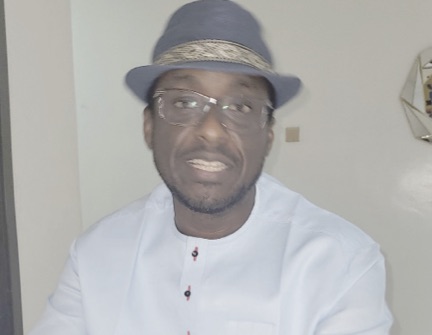
•Oralusi, Nigerian Capital Development Fund Chairman
By Uche Usim
Despite Nigeria’s wealth of high-net-worth individuals and abundant resources, accessing funding to nurture local talent remains a formidable challenge. Bureaucratic bottlenecks, misaligned priorities and a tendency to invest abroad have left promising initiatives struggling to gain the support needed to empower the nation’s brightest minds.
That is a discouraging experience Mr Hareter Babatunde Oralusi, the Executive Chairman of the Nigerian Capital Development Fund (NCDF) is facing and strategising to overcome.
Having worked overseas for many years, he returned to Nigeria to help develop the country using local expertise and resources.
In this exclusive interview with Daily Sun, Oralusi speaks on various initiatives in the offing being undertaken by his company to help propel Nigeria to the next level.
The beginning
I’ve been with them (NCDF) for over 15 years, trying to help our community by facilitating investment in Nigeria and overseas for sustainable development.
Vision behind NCDF
During the tenure of President Musa Yar’adua, I was given an opportunity to serve on the board of the Nigerian Labour Cooperative Society, where we had an opportunity to meet with the president. I was given an opportunity to serve in a higher capacity where I could actually be of help to the government. But I then suggested that, based on the problem then, what the government actually needed was not necessarily more institutions.
There is no country where only the government has to be responsible for the development of the entire country. So, based on my international education and career, I understood that Nigeria also needed some level of social, private institutions that would serve as intermediaries between the public, private, and social sectors.
With that, I designed the Nigerian Capital Development Fund and sought the approval of the federal government to be partners with the organisation so that we could run independently to fast-track implementation of development programmes.
Till now, there is a lot of bureaucracy and hurdles and political interests in government. Because of that, implementation takes so much time that grassroots people need something now, they need intervention. So, I was coming from the area that if given the opportunity to create this institution, we would be able to provide immediate intervention—not something that would take so long, leaving people already in a very bad shape to wait.
So, the then President Yar’adua was happy about it, blessed it, and started getting all the necessary approvals. President Jonathan, after taking over, also gave us the necessary support. Although there were many political oppositions, we crossed all the hurdles and were able to establish ourselves within the public sector and the private sector.
Achievements
We have done quite a lot in terms of facilitating affordable investment in agriculture, affordable housing, and other community infrastructures like transportation. We have built affordable homes. The government has supported us in terms of technical assistance.
We have done a lot of capacity development programmes and helped with financial inclusion and literacy at the grassroots level. We have worked with the federal government on agriculture in fertilizer distribution. We’ve helped the federal government with the E-Wallet programmes and touched on basically all the aspects of the grassroots sustainable development programmes.
Accommodating mortgage options in home acquisition
Yes, when we started, our dream was for the Federal Mortgage Bank to be able to give low-income civil servants a facility to buy. But the sad story is we waited for over four years. Just imagine now that you source an investment, you build a house, you have equity investment or debt. The house is four years old and you are waiting for the off-takers to get access to mortgages from the government to come and buy.
Because if you apply through primary mortgage institutions, they will send applications to the Federal Mortgage Bank. And if they use their own resources, it’ll be too expensive for the grassroots; their salaries would even disqualify them.
So, we disappointed many people. That’s the truth. Many people could not understand what the difficulty was. So, at the end of the day, we had to create a payment plan where people could start paying little by little over four or five years. But if we had known that they wouldn’t get that facility, even the day we opened the site, we would have introduced the “pay small-small plan.”
Foreign collaboration
In terms of funding, Nigeria needs a lot of foreign direct investments. Our resources seem to be so much, but that is really not the case. So, having lived and operated overseas for long before coming back to Nigeria, I was able to leverage my network to bring direct foreign investments, project financing, and capacity development.
We have also done a lot in providing technical assistance and bringing in initiatives that enhance the grassroots. For example, in December, we are expecting a set of expatriates who are coming to build the ‘Eternal Flame,’ as it is called. This is a type of bag that can be used as a cooking bag. It doesn’t require much, it forms like a stove, so you might not need gas. It is very easy for the grassroots; when they have the bag, they can put their pot inside, and it cooks the food.
What powers it?
It uses coconut shells as fuel. It heats it up, making it run for hours before it is technically recharged. This is a more efficient alternative to firewood. Some of our initiatives are investment-driven; some of them are social-driven. So, we do both.
Challenges
The biggest challenge is cooperation with the government. Some governments would approve and support, while others may not.
Another major challenge is in the area of funding. I realised that these funds were owned by high-net-worth Nigerians who told others not to give funds to me or any of our structures, either in the UK or Nigeria, because they know I am Nigerian. So, they take our money here to put it in Luxembourg. But those in Luxembourg use it to fund their own start-ups and young people. They were using our resources.
NCDF in 10 years time
We have quite interesting projects. We have projects with our international affiliations and partners in renewable energy, affordable homes, and financial inclusion. We are about to launch a bank called ‘Konto Money,’ a hybrid of agency and digital banking.
Advice to FG, States on poverty alleviation
It is the sincerity and seriousness of purpose that matters. I feel most people in the public sector are not very sincere about tackling poverty and engendering development. And many don’t feel the pain the grassroots person feels. There is no need for technical things here; it’s easy to identify that people are suffering and need support. For instance, creating a transport company to take people from one point to another doesn’t need so much technicality or years to construct.
I’ll also suggest impact investing, which is our specialisation. They are happy to invest in the projects that will give them financial returns and also help their community. Let me give you a very simple example of that. If I have two billion naira, I could buy a house in Ikoyi, just one house for two billion and resell the house or build one house and eventually resell the house.
But that two same two billion could help me to build hundred low-cost houses, low-income housing houses that are the same cost. A conventional investor would build a career house. But a social investor or an impact investor would build a low income house. Because 100 houses is going to create a community. Let’s assume four people are living in one, times 100, there will be a commercial space and a lot of things will happen there.
Raising funds to execute project
Raising funds is challenging, especially when high-net-worth Nigerians are not willing to support initiatives tied to local structures, whether in the UK or Nigeria. These funds often end up in foreign economies, like Luxembourg, where they are used to support startups and young entrepreneurs in those regions, while similar opportunities are denied in Nigeria. The irony is stark: funds generated here are redirected abroad to empower foreign youth while neglecting local talent. This creates a gap where promising Nigerian initiatives struggle to find financial backing, leaving us reliant on external systems unwilling to invest in our own country’s growth.