Follow Us on Google

From Adesuwa Tsan, Abuja
President Bola Tinubu’s nominee for Chief Executive of the Nigerian Upstream Petroleum Regulatory Commission (NUPRC), Mrs Oritsemeyiwa Eyesan, has described as “unthinkable” the situation where Nigeria remains largely in darkness while endowed with more than 200 trillion cubic feet of natural gas.
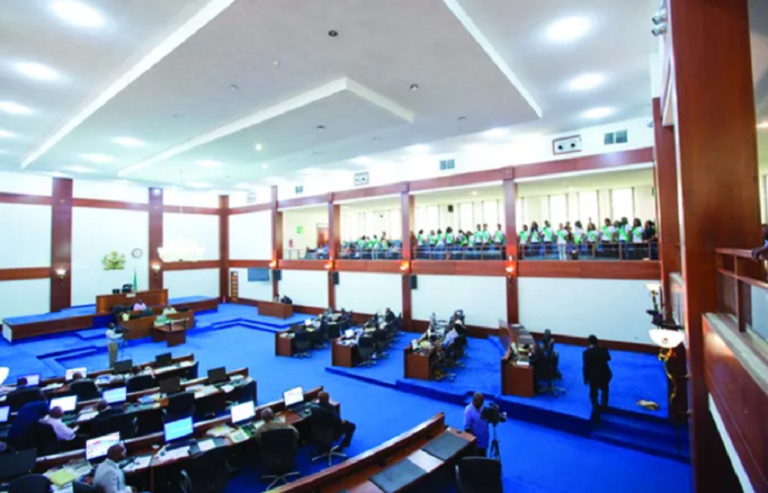
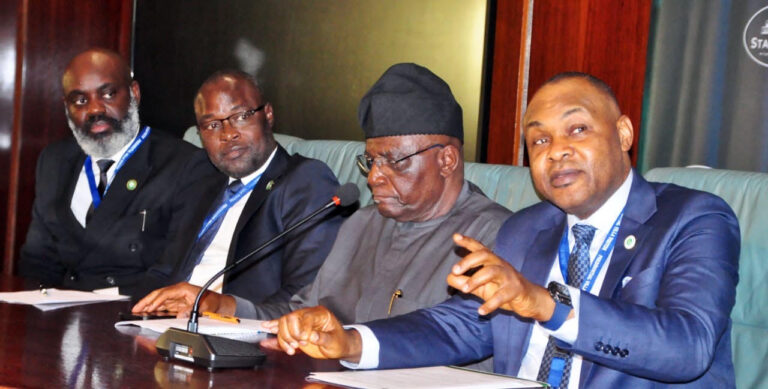
She said this on Thursday when she appeared before the joint Senate Committees on Upstream, Downstream, and Gas for her screening.
“We struggle with light, and we are sitting on over 200 trillion cubic feet of gas. It is unthinkable.
“We must convert our resources into value. Oil, gas, even aviation fuel must be refined into meaningful products for domestic use and for export.”
She argued that Nigeria’s energy crisis is not rooted in scarcity but in inefficiency, weak coordination, and outdated operating systems, warning that the country continues to lose enormous value through manual processes and poor data management.
“The world is transiting at great speed, and we are still manual,” she added. “Without digitisation, you are losing money, wasting money. Without real numbers, you don’t even know what you are dealing with.”
Mrs Eyesan, who has over 33 years’ experience in the oil and gas industry and previously became the first female head of corporate planning and strategy at the NNPC, said digitisation, data transparency, and asset integrity would be central to her leadership if confirmed.
She stressed that the Petroleum Industry Act (PIA) offers a solid framework to reverse years of inefficiency in the upstream sector, provided it is fully and faithfully implemented.
“The PIA is a valuable document. We must leverage it to ensure we achieve our objectives. The world will not wait for us; if we don’t move with it, it will leave us behind,” she said, adding that sustained collaboration with industry players and government agencies was critical to reform.
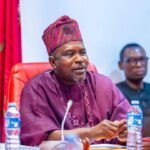
On his part, Mr Saidu Muhammad, nominee for Chief Executive of the Nigerian Midstream and Downstream Petroleum Regulatory Authority (NMDPRA), told lawmakers that Nigeria must first secure its domestic energy needs before focusing on exports, warning against policies that undermine local investments.
“As a regulator, your primary aim should be national interest,” Mr Saidu said. “If it is necessary to fill a deficit, we can import. But if not, we must protect our local investment. With local refining, we have been yearning for it.”
He cautioned that failure to protect domestic refiners could lead to the collapse of the sector, drawing parallels with the decline of Nigeria’s textile industry.
Other News
“We have to protect our local investment; otherwise, we will see them go the way the textiles went,” he said.
A career NNPC staff member who once served as deputy managing director of the Calabar depot and played a role in restarting operations at the Kaduna refinery, Mr Saidu recalled a period when Nigeria’s refineries met local demand and exported surplus products.
“There was a time when the three local refineries were meeting our needs, and the fourth was built for export. That was why the Bonny Export Terminal was constructed,” he said.
Mr Saidu identified poor contract enforcement and lack of discipline in the gas value chain as major obstacles to stable electricity supply, stressing that reliable power depends on binding agreements and consequences for default.
“Gas is a commodity that is sold before production begins. There must be contracts from the producer to the transporter to the end user,” he said. “That is why the power plant in Benin enjoys uninterrupted gas supply—because there are contracts and consequences.”
He urged strict enforcement of the gas network code, warning that without order and discipline, the entire system could collapse. He also highlighted major investment gaps in pipelines, gas processing plants, and quality assurance infrastructure.
“You cannot enforce quality when you don’t have a laboratory,” Mr Saidu said. “Regulation without technical capacity will not work.”
The screening followed two letters from President Tinubu, read on the Senate floor by Senate President Godswill Akpabio, requesting confirmation of the nominees in line with the Petroleum Industry Act 2021, after the resignation of the immediate past chief executives of both agencies.
Former NMDPRA Chief Executive Farouk Ahmed resigned on Wednesday, while his NUPRC counterpart, Gbenga Komolafe, also stepped down. Both were appointed in 2021 by former President Muhammadu Buhari following the passage of the PIA.
Mr Ahmed’s exit came amid heightened scrutiny of the petroleum regulatory space, particularly after a public dispute with billionaire industrialist Aliko Dangote in December 2025 over allegations of living beyond legitimate means, which drew national attention to the regulator.
Referring the nominations to the joint committees on Upstream, Downstream, and Gas for expedited consideration, Mr Akpabio cited the strategic importance of the agencies and the need to avoid leadership vacuums.