Follow Us on Google
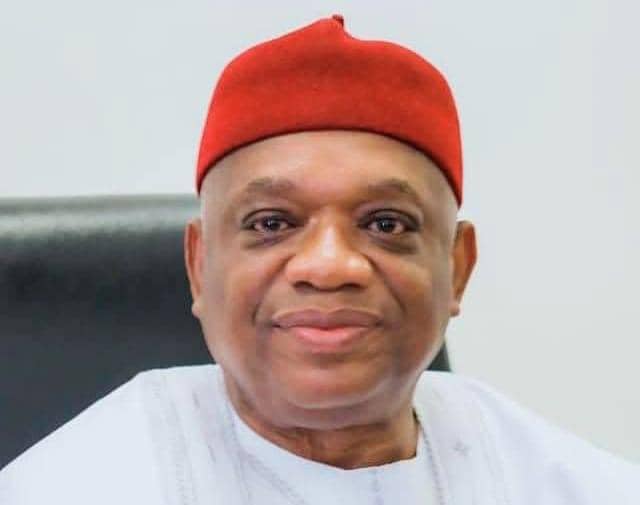
Senator Orji Uzor Kalu has declared that the historical narrative blaming corruption alone for the collapse of the Nigerian economy is a fundamentally dangerous myth.
In a detailed assessment that has sent shockwaves through political circles, the former Governor of Abia State warned that a 66-year-old legacy of collective, short-sighted decisions by successive leaders has done far deeper structural damage than the simple theft of public funds.
The lawmaker, who currently represents Abia North in the Senate, lashed out at decades of economic mismanagement, declaring that Nigeria had been brought to its knees by its own policy choices rather than a single administration or individual mistake.
In a blunt intervention, Kalu claimed that corruption had long served as a convenient smoke screen for policymakers, hiding a systemic failure to diversify the national economy.
He revealed how successive military and civilian governments became dangerously addicted to easy oil revenues, deliberately abandoning the nation’s once-vibrant agriculture, manufacturing and technology sectors.
According to the Senator, leadership cohorts repeatedly chose the path of least resistance. “When global oil markets inevitably crashed, the hidden structural rot was exposed, leaving local industries crippled and the Naira highly vulnerable.
“Instead of building a diversified economy capable of withstanding global shocks, the nation relied excessively on a single source of income,” Kalu stated, adding that “when oil prices fell, the weaknesses in the economy became painfully obvious.”
The Abia North senator refused to spare any faction of the political establishment, insisting that responsibility for the current malaise is shared across generations of leaders, public institutions and a broader culture that prioritised immediate consumption over long-term production.
“Successive governments, political leaders, institutions and even citizens have all contributed in different ways to the economic realities we face today,” Kalu observed.
He identified several catastrophic pillars of failure that have undermined the country since independence, asserting that “poor investment in education, inadequate infrastructure, inconsistent economic policies, weak support for local industries, excessive import dependence and a culture of consumption over production have all played significant roles.”
Other News
The lawmaker lamented that many vital conversations have been deliberately avoided by the political class and the public alike.
“We rarely discuss how policy inconsistency discourages investors, how poor maintenance culture drains public resources or how ethnic and political divisions sometimes take precedence over competence and national interest,” Kalu declared, warning that these issues have accumulated over decades, creating challenges that cannot be solved overnight.
The Senator emphasised that “the truth is that economies are built or broken by the decisions made consistently over time,” and added that “Nigeria’s current situation is not the result of one administration, one generation or one mistake. It is the outcome of countless decisions made across many decades, some of which were driven by personal interests rather than national priorities.”
He insisted that his intervention was not designed to apportion blame, but to demand immediate structural survival.
“Recognising this reality is not about assigning blame,” he maintained, “it is about learning from the past so that better choices can be made for the future.”
He called on the political class to embrace absolute honesty and strategic foresight, declaring that “economic transformation requires honesty, accountability, strategic planning and a commitment to policies that promote productivity, innovation and sustainable growth.”
He appealed for hope, reminding citizens that the country retains its core developmental potential.
“Nigeria remains a nation blessed with immense human and natural resources,” Kalu stressed.
He insisted that “the same collective power that contributed to past mistakes can also be used to create a better future,” noting that “the first step towards meaningful progress is having honest conversations about the decisions that brought us here and the actions needed to move the country forward.”