Follow Us on Google
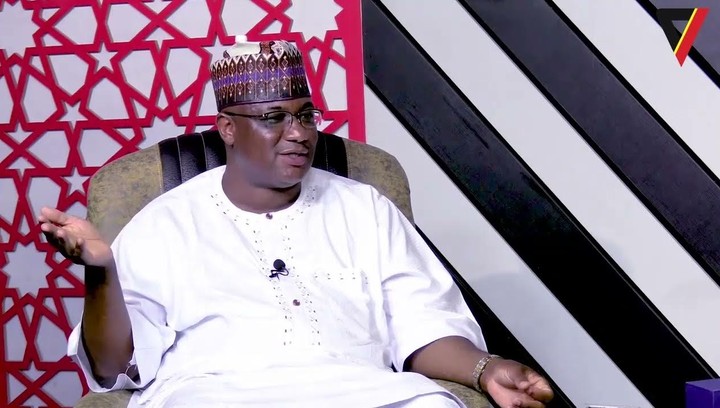
A member of the Central Bank of Nigeria’s (CBN) Monetary Policy Committee (MPC), Murtala Sagagi, has observed that Nigeria’s debt burden is climbing again, despite the removal of fuel subsidy and the liberalisation of the foreign exchange (FX) market.
In a communiqué released on Monday, covering the MPC’s meeting of July 21–22, Sagagi said limited economic diversification and government’s heavy dependence on borrowing continue to expose the economy to global shocks.
“Since mid-2023, unlocking opportunities for economic diversification and associated welfare improvement has remained the ultimate goal of the current structural reforms. “However, even with the removal of fuel subsidies and liberalisation of the exchange rates, the appetite for unfettered spending by the government has grown even stronger”, he noted.
Sagagi revealed that Nigeria’s public debt rose from N144.67 trillion at the end of December 2024 to N149.39 trillion by March 31, 2025, shrinking fiscal space and raising debt service costs.
“The country’s debt profile is deteriorating and thus shrinking the fiscal space due to huge debt service costs,” he warned.
Other News
While acknowledging progress in inflation moderation and FX unification, Sagagi urged policymakers to guard against complacency. “Ensuring fiscal discipline and deliberate effort to stimulate local productivity and employment are non-negotiable,” he stressed.
He projected that Nigeria’s growth could reach 3.2 percent in 2025, ranking among the highest in Africa. But he cautioned that sustaining momentum requires deeper policy reforms. “To fast-track inclusive growth, a policy shift is required to restore fiscal space, exercise more discipline, promote domestic oil refining, and stimulate non-oil production and exports,” Sagagi said.
He added that the new Finance Act, alongside improved oil and non-oil revenues, provides an opportunity to reposition the economy. “Growth-enhancing adjustments are needed using fiscal-monetary tools to stimulate local productivity, reduce debt, and crowd out private sector investment,” he emphasized.
Sagagi emphasised that without stronger fiscal responsibility, Nigeria risks undermining recent macroeconomic gains.