Follow Us on Google

From Ndubuisi Orji, Abuja
The House of Representatives has said that the country’s debt profile, noting that major public borrowing proposals by the federal government should be subjected to public hearings.
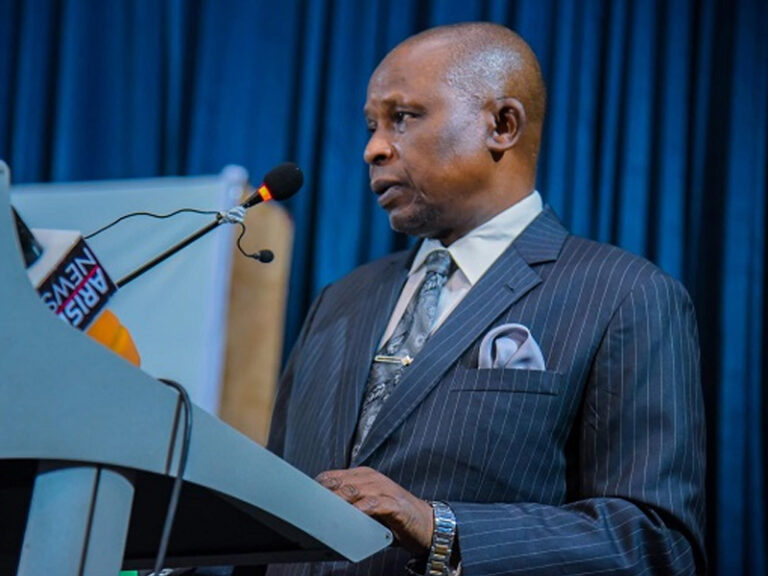
The speaker, Tajudeen Abbas, stated this, while declaring open the 11th Annual Conference and General Assembly of the West Africa Association of Public Accounts Committees (WAAPAC), yesterday, in Abuja.
Abbas, who was represented by the House leader, Julius Ihonbvere, said recent data indicates that the country’s debt burden has reached a critical point.
According to him, at the first quarter of 2025, Nigeria’s total public debt was ₦149.39 trillion, which is an equivalent of about US$97 billion.
The speaker , who explained that domestic debt accounted for 53 percent, with external loan making up the other 47 percent, expressed concern that country’s debt-to-GDP ratio, stands at about 52 percent, which is above the statutory 40 percent prescribed by extant laws.
Other News
“In Nigeria, recent available data indicate that our debt trajectory has reached a critical point, showing that as at the first quarter of 2025, the total public debt stood at ₦149.39 trillion, equivalent to about US$97 billion, with domestic borrowing making up 53 percent and external borrowing accounting for 47 percent. This represents a sharp rise from ₦121.7 trillion the previous year, underscoring how quickly the burden has grown.
“Even more concerning is the debt-to-GDP ratio, which now stands at roughly 52 percent, well above the statutory ceiling of 40 percent set by our own laws. This breach of our debt limit signals the strain on fiscal sustainability.
It highlights the urgent need for stronger oversight, transparent borrowing practices, and a collective resolve to ensure that tangible economic and social returns match every naira borrowed,” he said.
The speaker, while noting that public debt could be a tool for economic and prosperity if managed well, stated that it could be become an economic burden if left unchecked. Consequently, he stated that African parliaments must ensure that every borrowing reflects transparency and the overall interest of citizens.