Follow Us on Google
From Adesuwa Tsan, Abuja
With just 24 hours to the March 31, 2026, deadline, the Federal Government (FG), from all indications, appears to be facing a narrow window to fulfil one of its most consequential governance commitments, delivery of infrastructure and other obligations under the re-enacted 2025 capital budget. The deadline, set by President Bola Ahmed Tinubu and approved by the legislature, was intended to mark a clean break from Nigeria’s long-standing practice of running multiple overlapping budgets. But as the date approaches, Daily Sun’s investigations reveal that the full closure may be difficult to achieve within the timeline.
At issue is not just project completion but also payment for work already done. The ability to fund projects has become central to understanding the true state of the 2024 capital budget and, increasingly, a measure of the Tinubu administration’s credibility in delivering on its commitments.
Political promises versus reality
Daily Sun gathered that the decision to extend the lifespan of the 2024 capital budget into the first quarter of 2026 was driven by persistent implementation gaps, particularly delayed releases and unpaid contractor certificates. The capital performance had lagged behind expectations. By mid-2025, the presidency confirmed that about N2.23 trillion had been released for capital projects under the 2024 budget, a figure that fell short of total appropriations and reflected the broader constraints facing the administration.
At the same time, the scale of outstanding obligations remained significant enough for the Federal Government to make fresh provisions in the 2026 budget to address them, an indication that liabilities were already spilling beyond the extended window. But beyond the figures, the delayed releases have political consequences. Capital expenditure, particularly payments to contractors, has long served as one of the most visible ways governments demonstrate presence and performance due to its trickle down effect on the workforce. When those payments are delayed, the effects go beyond economics, they shape public perception of governance.
Across sectors tied to public projects, the slowdown in payments has translated into stalled activity, delayed wages, and reduced visibility of government impact. In a climate already defined by public concern over living conditions, this, Daily Sun learnt, has reinforced narratives of underperformance and weakened the political value of budgetary promises. The scale of the dismal performance of the budget widely revibrated during the budget defence sessions by heads of ministries, departments and agencies of government who lamented poor or no fund releases in their respective hearings before committees of the National Assembly.
To, therefore, set the budget back on track for performance, in December 2025, President Tinubu sent a formal request to the National Assembly seeking legislative approval to amend the 2025 Appropriation Act to extend its implementation timeline to March 2026. The extension followed the repeal and reenactment of the 2024 and 2025 Appropriation Bills. The request, as read during plenary, framed the move as necessary to reflect “prevailing fiscal realities” and “execution constraints,” while ensuring that ongoing projects could be completed and existing obligations honoured.
Central to the proposal was the extension of the capital component of the 2025 budget, effectively transforming what was originally a one-year appropriation into a multi-year implementation framework. The National Assembly subsequently approved the request, allowing the executive additional time to settle liabilities and conclude ongoing projects.
Politically, the move underscored a broader challenge confronting the administration, which is the gap between policy ambition and execution capacity and the need to manage that gap within a system where public expectations remain high.
But while the extension of the budget was intended as a corrective measure, it coincided with a broader slowdown in its implementation. Despite its size, the fiscal plan struggled to gain traction, particularly on the capital side. Available data and official disclosures show that capital releases during the year were limited and uneven, with many Ministries, Departments and Agencies unable to mobilise projects at scale.
The reasons are rooted in structural pressures within government, where competing obligations have forced difficult prioritisation choices. Revenue inflows remained below projections, while debt servicing obligations continued to take a significant share of government earnings. In such a constrained environment, fiscal authorities prioritised recurrent expenditure to sustain government operations, leaving capital spending to adjust to available cash.
The result was a dual strain on the system: ongoing obligations from the 2024 budget, and non-execution of the 2025 capital component. This overlap further created a strain on the government’s ability to meet the March 2026 deadline. This underperformance of two consecutive budgets has amplified scrutiny of the administration’s capacity to translate plans into results, particularly at a time when public expectations are shaped not by policy announcements but by visible outcomes.
Legislative approval, lax oversight
Other News
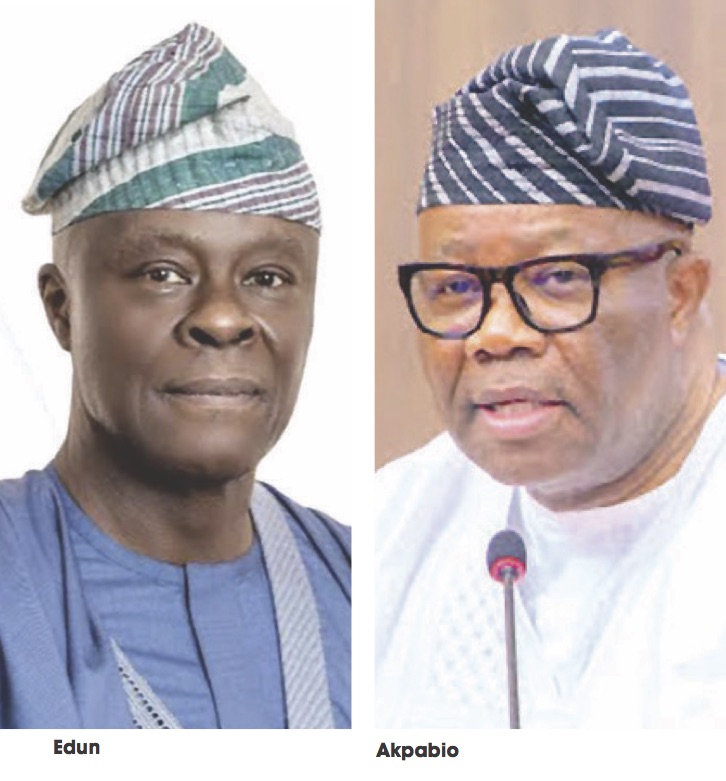
Investigations Daily Sun revealed that the lawmakers may have approved the extension largely on the grounds of necessity, recognising that abrupt closure of the 2024 budget would leave numerous projects incomplete and contractors unpaid. During deliberations, presiding officers emphasised the importance of ensuring that appropriated funds translate into tangible outcomes, even as they acknowledged the implementation challenges. Many of them voiced out concerns that their constituents rate their performance based on the execution of projects within their tenure, regardless of whether they are implementors of the budget or not. In his remarks whenever budget requests are presented, Senate President Godswill Akpabio repeatedly stressed the need for improved budget execution, warning in separate remarks that appropriation must be matched with performance to retain public confidence. Similarly, Speaker Tajudeen Abbas underscored the legislature’s expectation that the extension would be used strictly to complete ongoing projects and not to perpetuate delays.
However, the political context of the approval is significant. With both chambers dominated by the ruling All Progressives Congress (APC), the same party as the president, budget approvals come with ease. While the political alignment between them has facilitated coordination between them, it has decimated the robustness of oversight, particularly in holding the executive accountable for implementation gaps.
Major issues raised about the budget still linger days to its close. Industry groups, including the All Indigenous Contractors Association of Nigeria, have publicly raised concerns over delayed payments for completed and ongoing projects. Their position is consistent across multiple engagements: many projects have been executed, but payment cycles remain slow.
The Federal Government has acknowledged these liabilities. In the 2026 budget framework, about N1.7 trillion was earmarked to address outstanding obligations, much of it tied to capital projects carried over from previous budgets. Finance authorities maintain that payments are ongoing. Minister of Finance and Coordinating Minister of the Economy, Wale Edun, has stated in public briefings that the government has already disbursed substantial sums to contractors and is continuing to process outstanding claims.
However, the existence of large provisions for arrears suggests that not all obligations can be cleared within the original or even extended timelines. Beyond the fiscal dimension, the delayed payments have created a broader governance challenge. Contractors represent not just economic actors, but also stakeholders who feed into wider perceptions of government reliability and trust.
Politics of performance ahead of 2027
With the 2027 general elections on the horizon, the Tinubu administration faces mounting pressure to demonstrate tangible improvements in governance. Budget execution, particularly capital spending, remains one of the most visible indicators of government performance. The underperformance of both the 2024 and 2025 budgets, both of which were products of this government, has therefore taken on heightened political significance.
Delayed capital releases have contributed to reduced money circulation within the system, limiting the broader impact of government spending. In a period marked by rising public sensitivity to economic conditions, this has reinforced scrutiny of the administration’s policy choices and implementation record. For an administration that has pursued far-reaching reforms, the political challenge now lies in converting those reforms into outcomes that are visible, measurable, and felt across the country.
As the March 31 deadline approaches, there are indications that full closure of the 2024 capital budget is unlikely within the timeframe, even if significant progress is made. The constraints are clear: outstanding contractor liabilities remain substantial and competing demands limit available resources for capital payments.
While accelerated releases in early 2026 may reduce the backlog, the inclusion of legacy obligations in the 2026 budget indicates that some liabilities have already been deferred beyond the deadline. If the deadline slips and the Federal Government is unable to meet the March 31 target, the implications will extend beyond the 2024 budget itself.
One possibility is a de facto rollover, where outstanding obligations are absorbed into the yet to be passed 2026 fiscal framework without a formal extension. This would allow payments to continue but would undermine the objective of ending overlapping budgets. Another option would be a formal legislative adjustment, requiring fresh approval from the National Assembly, an outcome that could reopen debates about fiscal discipline, executive accountability, and planning credibility. Either scenario, analysts say, point to the same underlying issue: the difficulty of aligning policy commitments with implementation capacity.
A test of credibility
Ultimately, the fate of the 2024 capital budget has become a test of the Tinubu administration’s broader political credibility. As the deadline draws closer, the outcome remains uncertain but one thing is clear: even if the books are formally closed, the political consequences of failing to deliver on the two budgets designed by the Tinubu administration will be a part of the performance measurement of his governance in times to come.