Follow Us on Google
• Silent immunisation crisis makes child survival difficult
By Doris Obinna
Despite decades of immunisation campaigns, policy reforms and support from global health partners, Nigeria remains among the countries with the highest burden of zero-dose children worldwide. Current estimates indicate that about 2.1 million Nigerian children have never received a single routine vaccine, while another 2.3 million are under-immunised, having started but failed to complete recommended vaccination schedules.
For a country with Africa’s largest population, these figures represent more than statistics. They are children left vulnerable to diseases that modern medicine has long learned to prevent.
As Nigeria joins the rest of the world to mark World Immunisation Week 2026, the theme: “For every generation, vaccines work,” highlights the long-term, life-saving impact of vaccines across all ages. The campaign focuses on strengthening trust in vaccines, expanding access to prevent diseases like measles and polio and celebrating over 50 years of immunisation.
Observing this year’s World Immunisation Week, April 24 to 30, Nigeria is once again confronting a troubling public health reality, millions of children remain outside the reach of routine vaccination services, leaving them exposed to preventable diseases and avoidable deaths.
According to estimates from the World Health Organisation (WHO) and the United Nations Children’s Fund (UNICEF), Nigeria has about 2.1 million zero-dose children — children who have never received a single routine vaccine. The figure places the country among those with the highest burden globally and highlights deep-rooted challenges in one of Africa’s most populous nations.
Beyond this, an additional 2.3 million children are said to be under-immunised, meaning they started vaccination schedules but did not complete them. Together, these figures paint a stark picture of gaps in Nigeria’s healthcare delivery system and the urgent need for coordinated action.
Health experts warn that these numbers are not mere statistics. They represent children vulnerable to deadly but preventable illnesses such as measles, pneumonia, meningitis, diarrhoeal diseases, polio, diphtheria, and whooping cough.
Data from the Nigeria Demographic and Health Survey (NDHS) shows that only about one-third of Nigerian children aged between 12 and 23 months are fully immunised. This means millions of children are growing up without the full protection modern vaccines provide. Even more alarming are estimates suggesting that at least 41 per cent of under-five deaths in Nigeria are linked to vaccine-preventable diseases.
Also, Gavi, the Vaccine Alliance, estimates that unvaccinated children account for about 39 per cent of such deaths, amounting to roughly 337,000 child deaths annually. “For a country already carrying one of the world’s heaviest burdens of maternal and child mortality, the continued existence of such large numbers of unvaccinated children presents a major obstacle to improving child survival rates,” it further disclosed.
Public health specialists say immunisation remains one of the most cost-effective and successful interventions ever developed. “Globally, vaccines save millions of lives every year, reduce disability, lower healthcare costs, and strengthen economies by keeping children healthy enough to learn and thrive. Yet in Nigeria, many families still struggle to access routine immunisation services.”
Experts attribute the persistence of zero-dose children to several overlapping factors: weak health systems, poor infrastructure, inadequate funding, vaccine stock-outs, shortage of trained health workers, insecurity in some parts of the country, poor transportation networks, and fragile data systems that fail to track children who miss appointments.
Misinformation and vaccine hesitancy
Public health experts further disclosed that misinformation and vaccine hesitancy also remain serious obstacles. According to Save the Children Nigeria, in some communities, rumours, religious misconceptions, distrust of government institutions, and harmful gender norms continue to discourage parents from vaccinating their children.
The organisation disclosed that for families living in remote rural settlements, crowded urban slums, and fast-growing peri-urban communities, access can be particularly difficult. “Some mothers must travel long distances to reach health centres, while others are unable to leave work or household responsibilities to attend clinics.
“Children who miss vaccines are often the same children facing other forms of deprivation; malnutrition, unsafe water, poor sanitation, poverty, and limited access to quality healthcare. These overlapping disadvantages significantly increase their risk of severe illness or death.”
In response to the growing concern, Save the Children Nigeria has renewed calls for urgent and sustained action to reach zero-dose and under-immunised children, especially in underserved communities in Lagos and Kano states.
Other News
The organisation is implementing the Better Opportunities for Optimal Services and Targeted Immunisation (BOOST) Project, a four-year initiative running from 2024 to 2027 and funded by GlaxoSmithKline (GSK). The project is being carried out in partnership with government agencies and community stakeholders to improve vaccine access, strengthen demand among caregivers, and build supportive policy and social environments for immunisation.
Under the programme, targeted interventions are being tested in selected local government areas of Lagos and Kano to identify practical strategies for reducing zero-dose and under-immunisation rates. Country Director, Save the Children Nigeria, Duncan Harvey, said the crisis demands urgent national attention. “Vaccines have protected families for generations, yet millions of Nigerian children are still missing out on this basic right. Reaching zero-dose and under-immunised children requires strong health systems, trusted community engagement, and sustained investment,” he said.
He added that World Immunisation Week should remind leaders that every child, regardless of where they live, deserves access to life-saving vaccines.
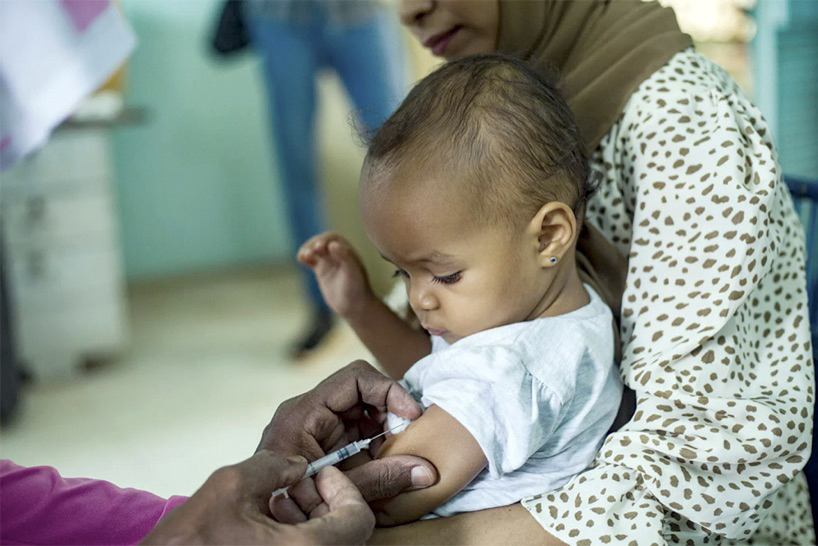
On the ground, some beneficiaries are already speaking about the impact of outreach efforts. One beneficiaries in the BOOST Project in Lagos State, identified as Mama Ismail, said she was happy her child had been vaccinated and urged other mothers in her community to do the same. “The injection is very important for the good health of their children,” she said.
“Over the last 50 years, vaccines are estimated to have saved more than 150 million lives. That means six lives saved every minute, every day, for five decades. They have helped reduce infant mortality by 40 per cent worldwide and protected children from disabilities caused by diseases such as polio, measles and meningitis.
“Today, vaccines protect against more than 30 dangerous infections and diseases, with newer vaccines now targeting malaria, HPV, cholera, dengue, RSV, Ebola and mpox,” WHO further disclosed.
Efforts to reverse trend
The Federal Government, through the National Primary Health Care Development Agency (NPHCDA), has also intensified efforts to reverse the trend.
Under the national “Big Catch-Up” campaign, the agency announced that as of March 31, 2026, over two million previously zero-dose children had received their first dose of the diphtheria-tetanus-pertussis vaccine, while 3.4 million doses of Inactivated Polio Vaccine had been administered.
Executive Director, NPHCDA, Dr. Muyi Aina, said the agency remains committed to revitalising primary healthcare centres, strengthening routine immunisation and training health workers to close the coverage gap. “At state level, advocacy efforts have also increased, with community leaders in several states mobilising mothers and caregivers to vaccinate children.”
Yet public health advocates insist that campaigns alone will not solve the problem. They argue that routine immunisation systems must be made stronger, more reliable and more respectful to caregivers. “Data systems need improvement to track children who miss appointments. Health workers require support, motivation and adequate resources.
“Whether Nigeria can reverse the trend will depend on political will, sustained investment, stronger health systems, and a collective decision that every child matters, no matter where they are born.”
Global benefits undeniable
According to WHO, globally, the benefits of immunisation are undeniable. In Africa alone, WHO says nearly 20 million lives have been saved through measles vaccination programmes since 2000.
Public health advocates argue that Nigeria can achieve similar success if routine immunisation becomes a true national priority.
They insist that solving the crisis requires strengthening primary healthcare centres, improving vaccine supply chains, investing in reliable health data systems, supporting frontline health workers, combating misinformation, and increasing both domestic and donor financing.
Stakeholders are also calling for community-led engagement, where traditional rulers, religious leaders, women’s groups, youth organisations, and local influencers help build trust and encourage vaccine uptake.
“The country’s 2.1 million zero-dose children are more than a statistic they are a call to action. Today, vaccines protect people at every stage of life. Infants receive early childhood vaccines against tuberculosis, hepatitis B, polio, measles and other diseases. “Adolescents are protected through booster doses and vaccines such as HPV. Pregnant women can receive vaccines that protect both mother and newborn. Older adults benefit from vaccines against influenza, pneumonia and shingles.”