Follow Us on Google
By Okorie Uguru
Since the COVID 19 pandemic of 2020 through 2021 and the resultant lockdown in global travel, the tourism industry has seen a steady rebound in the last four years. The future forecast for global tourism is bright. According to the World Tourism Barometer prepared by the United Nations Tourism (UN Tourism), the global body for tourism, in 2025, international tourism arrival grew by five percent between January and September 2025. The research stated that over 1.1 billion tourists travelled between January and September last year. This is about 50 million more than the number of tourists that traveled at the same period last year.

In its research, the World Travel and Tourism Council (WTTC) forecast that international visitors spending for 2025 will be around $2.1 trillion dollars, about $164 billion dollars more than the pre-COVID 19 peak of 2019.
However, while tourism is enjoying a healthy global rebound from the pandemic in the last few years, Nigeria has not made steady progress to grow tourism in the last few years. Except the Federal Government plays a more active role in 2026, the sector might not see meaningful progress. The major problem is that most of the federal agencies that ought to be at the forefront of developing the industry are inactive. The country’s efforts towards putting a proper structure in place for tourism to grow in the country have been poor. 2025 was the year when all the right noises were made, but nothing to show that there has been any meaningful achievement to grow the industry. The success of any tourist destination or emerging destination is all about tourism traffic, when there is no tourist traffic to a destination, it could not be said to be doing fine. However, the little ray of hope had been the Detty December that developed organically.

A country’s tourism industry growth, all over the world, is predicated on the synergy between the public and private sectors. While the public sector, which is the government, thinks out a policy pathway to grow the industry, the private sector runs with these policies by the government, create business, make profit and pay taxes.
In Nigeria, the Federal Ministry of Arts, Culture, Tourism and Creative Economy is in charge of tourism in the country with Ms. Hannatu Musa Musawa as the minister in charge. In the last one year the minister had been seen to be active both within and outside the country in one official function or their other. Within this period, she has signed so many Memorandums of Understanding (MoU) with different groups and foreign governments, but these have had no impact in the sector.
In February, the ministry signed partnership agreement with a group for a programme it called the Motherland 2025 Initiative to host a festival. Unfortunately, there was already a Motherland Beckons Initiative by Otunba Wanle Akinboboye. So, the partnership with the tourism ministry came to nothing.
An important milestone for tourism last year was the ministry’s collaboration for the Nigerian Economic Summit Group (NESG) was the presentation of the reviewed the tourism policy of the government to a few practitioners. However, many believe that having such critical documents is key for tourism industry growth.
In an effort to move and boost tourism development, the tourism minister announced that the President Council on Tourism (PCT) will be reconstituted under the chairmanship of the president. However, nothing has come out of it beyond the announcement.
However despite all these efforts at creating and engaging in activities at the ministry level, the public sector’s meaningful intervention in the tourism industry was almost non-existent. The reasons include the inability of the ministry to come up with ideas that could get sponsorship from the corporate world. The few occasions the corporate world was meaningfully brought in were during the UN Tourism CAF Meeting in Abuja and the Cavista Holding project that nothing has been heard about.
Another reason is that the federal government has not been releasing budgetary allocations to both the ministry and the two tourism parastatals, the Nigeria Tourism Development Authority (NTDA) and the National Institute for Hospitality and Tourism (NIHOTOUR), except running costs.
NTDA has the statutory responsibility of promoting and marketing Nigeria as a destination to bring in tourists. In the last few years, the parastatal has been redundant with little or no meaningful activities that could impact the tourism fortune of Nigeria. The parastatals’ leadership would always complain of not having funds to engage in any marketing and promotional activities either locally or internationally.
With this at the back of the mind, there would likely not be any meaningful change in 2026. Lucky George, the Executive Director of Africa Travel Commission (ATC), spoke on this: “The year 2025 has not been a good year for tourism in Nigeria. It is unbelievable that we tend to have made a good start with the review of the tourism policy by the ministry in which we spotted some errors. So, the issue of the policy by the government which was supposed to be a direction for the structure and picture of the tourism industry saw the industry people raise some issues which, to the best of my knowledge, I was told had been corrected in the representation. However, the role of the government goes beyond tourism policy, it has to do with tourism development, and promotion. So, if the government has done well in the area of the policy, now that the policy has been confirmed, what happened to the development? The development aspect of it has to do with both soft and hard aspects of it. The hard aspect is providing infrastructure while the soft aspect has to do with promotion, which is the services, which regrettably are not in place.
“As far as 2025 is concerned, I would probably say that they have been inactive, in terms of concrete engagements, apart from the few moves to position themselves, especially NIHOTOUR. As for the NTDA, it has been bedeviled over the years with the problem of funding. I think in the last one year, apart from just showing their faces attending a few gatherings where they were invited, nothing concrete has been achieved, because the role of the NTDA is to promote Nigeria for Nigeria, and promote Nigeria to the outside world. I don’t think they have done anything concrete in the last year.
“The problem has to do with funding, which is true. It is not just NTDA alone, it is virtually all federal government parastatal, funding has not been available. So, as far as NTDA is concerned, the issue of funding to enable it to carry out marketing and promotion within and outside Nigeria is very critical.
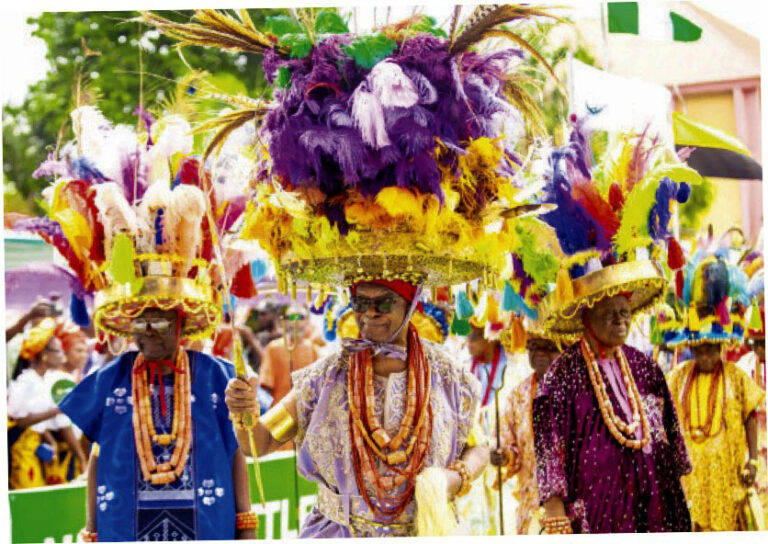
Unlike the federal ministry and agencies, the states have fared better in all ramifications. We can see what Lagos State has done, Akwa Ibom State, Cross River State because of the carnival, Ekiti and Enugu State.
The Federal ministry and parastatals for tourism had been mostly inactive for most part of the years, the private sector industry practitioners fared better. Organisations like the Akwaaba West Africa Travel Market, the National Tourism and Transportation Summit (NTTS), and few others were able to hold their programmes and organize trips to promote destinations in Nigeria
Many industry practitioners in Nigeria believe that as long as the federal government is not ready to play a more active role in the promotion and development of tourism in Nigeria by releasing funding, the prospect of rapid development of the industry in 2026 will still remains bleak.