Follow Us on Google
By Rita Okoye
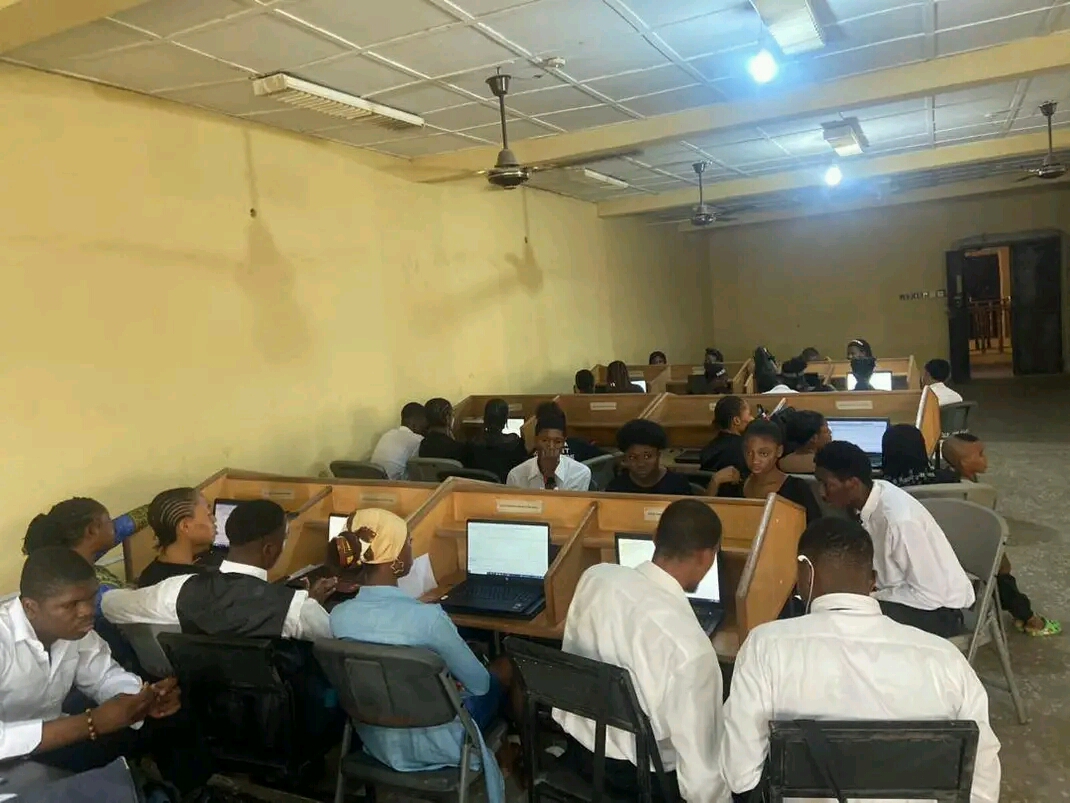
Over one hundred Nigerian STEM undergraduates showed that homegrown talent can produce world-class solutions during the 2025 NSE Orlu Hybrid AI & Programming Hackathon.
Held virtually from June 20–25, the week-long event brought together students from universities across Imo State to create AI-driven projects tackling agriculture, healthcare, governance, and employment challenges in line with the United Nations Sustainable Development Goals (SDGs).
With the theme “An Institutional Collaboration for Sustainable Development”, the hackathon united participants from Imo State University, Federal Polytechnic Nekede, Federal University of Technology Owerri (FUTO), and other schools. Students were mixed into cross-campus teams to encourage knowledge sharing and collaborative problem-solving.
Leadership and Coordination
Engr. Dr. Gerald Ibe Okwe, FNSE, chaired the overall organizing committee, ensuring strategic alignment between the Nigerian Society of Engineers (NSE) Orlu Branch and the participating institutions. Dr. Elvin Ugonna Eziama, the event’s STEM Coordinator, led cross-institution planning, challenge design, and smooth technical operations. For five intense days, teams brainstormed, coded, tested, and refined their ideas under the guidance of seasoned professionals from industry and academia.
By the end of the week, five standout projects emerged, each addressing a national need and shaped by close collaboration between students and their assigned judges.
Transforming Nigerian Agriculture
The grand prize went to Team Mbari Builders for AgroAI, a platform helping farmers make better decisions through machine learning analysis of soil data, weather, and crop health. Farmers receive real-time recommendations in local languages on planting schedules, irrigation, fertilizer use, and pest control.
Judges Courage Oko-Odion, a finance and data analytics expert, and Sandra Onochie, an urban geographer, provided crucial guidance. Oko-Odion integrated satellite imagery from Sentinel-2 and Landsat with IoT sensor data via Apache Kafka pipelines, enabling instant weather-driven updates. Onochie trained ensemble models on 15 years of localized climate data and improved AI interpretability, making AgroAI both highly adaptable and farmer-friendly.
Combating Misinformation
NaijaTruthCheck, built by Team Owerri Coders, is an AI platform verifying news and social media posts in English and Nigerian languages.
Judges Solomon Olumba, a data analyst, Jacob Alebiosu, a cybersecurity expert, Dominic Ogbuagu, a software developer, and Emmanuel Olayinka Afolabi, a computational linguist, worked closely to refine it. Olumba restructured the bulky prototype into a microservices architecture using Apache Kafka, enabling it to flag 90% of false content within hours. Alebiosu stress-tested defenses against AI-generated fakes, Ogbuagu brought practical industry insights on misinformation patterns, and Afolabi improved WhatsApp data labeling and added sentiment analysis. Their combined input strengthened the platform’s accuracy, resilience, and speed.
Addressing Youth Unemployment
Team Umuaka Innovators created NaijaCVRanker, an AI tool that streamlines recruitment by scoring résumés and offering personalized improvement tips.
The team’s judges, JohnPaul Adimonyemma, an NLP specialist, Oladipupo Dopamu, a cybersecurity expert, and Joy Nma Anyanacho, a machine learning scientist, played a key role in shaping the final product. Adimonyemma guided the application of advanced NLP with bidirectional attention mechanisms to recognize informal qualifications common in Nigerian résumés. Dopamu ran bias tests using synthetic CVs across diverse demographics, then helped retrain the model, cutting discrimination metrics by 89%. Anyanacho optimized the inference pipeline, enabling over 100,000 concurrent users with under three-second responses. Their mentorship ensured NaijaCVRanker was fast, fair, and scalable.
Civic Engagement Through VoteRight
VoteRight, developed by Team Odenigbo Advocates, is a mobile app that walks citizens — especially first-time voters — through registration, voting procedures, and ballot marking.
The project’s judge, Esther Anyiam, a fintech expert, mentored the team on user interface design and encryption, ensuring voters could report incidents of intimidation safely. She encouraged the integration of GPS-based polling unit locators and a verified candidate database, both implemented before the final pitch. Her guidance made VoteRight a secure and user-friendly tool with strong potential to boost turnout and reduce invalid ballots.
Revolutionary Mental Health Support
Team Amurie Omanze Coders developed MentalHealthBuddy, an AI-powered chatbot offering free, culturally sensitive mental health support in over 50 languages. During the hackathon, it reached more than 400 users and facilitated 1,600 chat sessions, showing both demand and potential impact.
The judging panel — Victor Ifechukwude Agboli, a US-based public health researcher; Leleji Akpewe James, an artificial intelligence language specialist; Sandra I. Eziama, an artificial intelligence optimization expert; Ngozi Judith Eziama, a data analytics expert; Timothy Ekene Anyim, a clinical psychologist; and Stella Chisom Eziama, a mental health advocate — provided targeted mentorship. Agboli advised on integrating differential privacy and federated learning to strengthen anonymity, while guiding fine-tuning of transformer models for Nigerian dialects. James offered strategies for improving responses in low-resource languages like Hausa, Urhobo, and Pidgin. Sandra I. Eziama suggested methods to cut response times from 1.2 to under 0.9 seconds, while Anyim provided deep psychological insight for empathetic response design. Ngozi Judith Eziama recommended personalized responses and timely check-ins based on usage patterns, and Stella Chisom Eziama contributed expertise on user engagement strategies in mental health support apps. Together, their guidance helped shape MentalHealthBuddy into a more secure, responsive, and culturally adaptable platform.
Post-Event Vision
For Dr. Eziama, the hackathon was only the starting point. He announced plans for post-event incubation, academic integration, and long-term mentorship for promising teams. Several government agencies and private companies have expressed interest in funding the top projects, and the NSE Orlu Branch has launched internship pipelines to connect participants with tech firms.
Organizers aim to make the NSE Orlu Hybrid AI & Programming Hackathon an annual event, expanding to more universities and drawing participants from across Nigeria. The long-term vision is to channel youthful creativity and technical skill toward solving the nation’s most urgent problems.
Closing the event, Rev. Engr. Anthony Ekejiuba, MNSE, Chairman of NSE Orlu Branch, reflected on the bigger picture:
“When young people start building tools for voter education, food security, and mental health — you’re not just witnessing innovation. You’re watching the future of Nigeria being built, right in front of you.”