Follow Us on Google
From Emmanuel Adeyemi, Lokoja
Nigerian-born public speaker, Dr. Osemeike Gloria Eyieyien, has challenged urban planners in the United Kingdom and elsewhere to design cities that go beyond accommodating diverse populations to deliberately creating spaces where people can interact, participate and develop a sense of belonging.
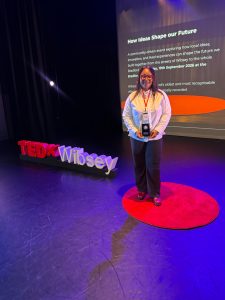
Eyieyien, who spoke at TEDx Wibsey in Bradford, United Kingdom, argued that as cities become increasingly diverse, their success should be measured not only by physical infrastructure but also by their capacity to foster human connection, peaceful coexistence and productive community life.
Delivering a presentation entitled, “The Future Is Social Product: Designing Cities for Connection,” she said people and relationships should be placed at the centre of discussions about the future of the built environment.
According to her, the rapid development of cities and growing reliance on technology and infrastructure should not obscure the need to create neighbourhoods and public spaces that encourage interaction among residents of different backgrounds.
She challenged city planners and engineers to consider how the physical environment could be designed to bring people together rather than merely provide places for them to live.
Eyieyien said cities should be places “where people want to truly belong,” arguing that social interaction and connection among people of different backgrounds could contribute to peace, unity and development.
She described cities as more than collections of buildings, roads and public infrastructure, saying they were living social environments shaped by the relationships and interactions that occur within them.
“From public spaces and streets to neighbourhoods and community facilities, the way places are designed can create opportunities for people to meet, connect and participate in community life,” she said.
According to her, the concept of the “social product” shifts attention from merely creating physical spaces to considering the social value those spaces can generate.
“What happens when a street encourages people to stop and talk? What happens when a public space becomes a place where neighbours gather? And what happens when communities are designed with belonging in mind from the very beginning?” she asked.
Eyieyien said the questions should encourage a rethink of the relationship between urban design and community life.
She noted that the issue was particularly relevant to Bradford because of the diversity of its communities, cultures and identities.
“As Bradford and other UK cities continue to evolve, the challenge is not simply how to accommodate growing populations, but how to create places where people can establish meaningful connections,” she said.
Eyieyien advocated making belonging an intentional consideration in urban planning, arguing that the city of the future should be designed not merely as a place of residence but as a space for human interaction and participation.
“The future city should not simply be a place where people live, but should be a place where people meet, connect, participate and belong,” she said.