Follow Us on Google
From Oluseye Ojo, Ibadan
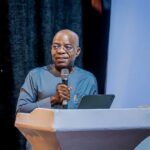
The President of the Nigerian Economic Society (NES) and expert in Petroleum Economics, Prof. Adeola Adenikinju, has expressed his concerns about the negative impacts of vandalism and oil theft on Nigeria’s economy.
Adenikinju, who is also a member of the Monetary Policy Committee (MPC) of the Central Bank of Nigeria (CBN), highlighted the importance of the energy sector for the country’s future.
He emphasised that low investments and divestment by international oil companies (IOCs) were taking a toll on the economy.
He lamented the challenges being faced by the sector, including vandalism, oil theft, and other factors that have been hampering its contribution to the country’s gross domestic product (GDP).
Adenikinju stressed that Nigeria had been losing a significant amount of money, with the oil sector contributing negatively to economic growth for the past four quarters.
He urged for the issue to be addressed urgently, stating that it was not acceptable for the oil GDP to be negative, reiterating the need for investments and advised against normalising losses, as they hindered the diversification of the industry.
The expert also highlighted the issue of divestment by multinational oil companies, saying these companies were reducing their investments in Nigeria due to factors such as the transition to greener energy sources and security challenges. He further mentioned that the fiscal system in place may also be discouraging investors from entering the sector.
Prof. Adenikinju warned that the consequences of low investment might not be felt immediately but would become evident in the future when existing production fields start declining without any potential replacements or expansions. He expressed concerns about the long-term sustainability of the industry.
Furthermore, the professor emphasized that the decline in oil production also impacted the availability of gas. He noted that the oil sector’s inability to meet the required quantity affected the gas supply for the Nigerian Liquefied Natural Gas (NLNG).
The NES President’s warnings serve as a wake-up call for the Nigerian government and stakeholders in the oil and gas industry. Urgent action is needed to address the challenges faced by the sector, attract investments, and ensure sustainable economic growth.
Failure to act promptly could have severe consequences for Nigeria’s economy, as the oil sector plays a crucial role in generating revenue and driving economic development. It is imperative for the government to work closely with international partners and stakeholders to tackle issues such as vandalism, oil theft, and the need for a more attractive fiscal system to attract investments.
By addressing these challenges, Nigeria can secure a more prosperous future and safeguard its position as one of Africa’s leading economies.
’You have to break the issue in the oil sector down. At the off-stream where you do production, until recently, there has been a lot of volatility. There was a time we were doing one million barrels per day because of security, pipeline vandalism, oil theft and so many challenges that were going on in the sector.
‘’Nigeria was losing a lot of money. In fact, from the last four quarters, the oil sector has been contributing negatively to Nigerian economic growth.
‘’The oil GDP has been negative and as I have mentioned in some other meetings, we should not normalize that. We shouldn’t accept that. That’s not the way to diversify the oil sector; it is not by losing money. It is caused by the oil sector growing. So, we need to address that.
‘’There a is also something like divestment in the sector, the multinational oil companies are not investing much again, either because of the challenges of some of them trying to move away from hydrocarbons to other energies that are greener or because of some of the security challenges that they have and maybe because of the fiscal system that we have. So, we don’t have enough investment. Investors are not coming into the sector and in fact, we may not have the full effects until later, because when you do investment, it takes years before that translates into production.
‘’So, the low investment that we are having now, we may not start to see the impact until much later when the existing production fields start declining and we are not able to replace and expand what we are doing.
‘’So, we have those kind of challenges and the unfortunate thing is that when we shut in or shut down or not producing enough oil, that also affects gas, because most of the gas we produce in Nigeria is associated gas, in fact, for some time, NLNG was not able to meet the quota of gas because the oil sector is not producing the required quantity and that was affecting the amount of gas that was available for the NLNG,” he said.