Follow Us on Google
By Keji Giwa
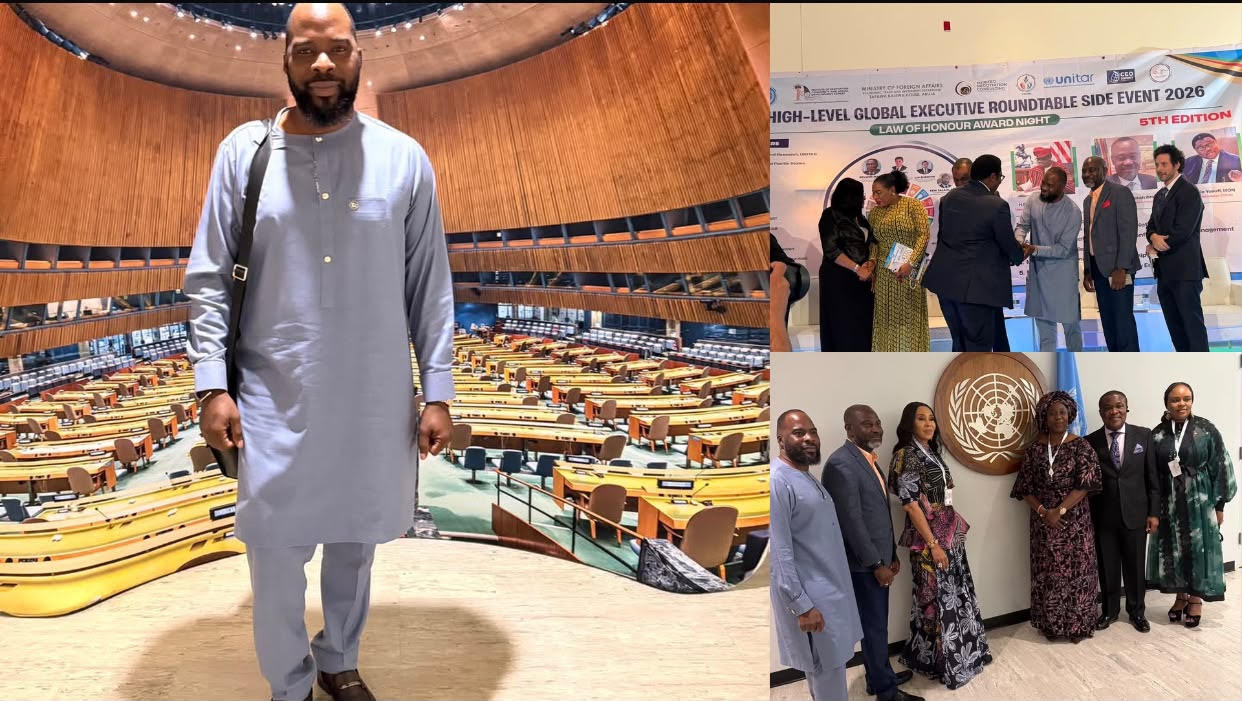
I was one of the speakers at a United Nations General Assembly (UNGA) Global Executive Roundtable side event held at the Permanent Mission of Nigeria to the UN in New York, hosted by Civil Society Organisation on Community Advancement and Humanitarian Empowerment Initiative. The focus was simple and urgent: bridging the gap between organised diaspora capital, credible Nigerian assets and government policy.
My submission was simple: Nigeria cannot develop without diaspora capital and diaspora capital cannot return without credible people, structures and physical proof.
For too long, the relationship between Nigeria and its diaspora has been misdiagnosed. We have celebrated remittances while ignoring ownership. The message to Nigerians in Diaspora appeals more to patriotism sentiments while neglecting investor protection. We have confused ‘Japa’ for betrayal.
For many Nigerians, leaving was a rational response to an environment that could no longer guarantee the opportunities, security, and stability they needed to build their futures. However, it must be said that leaving Nigeria does not mean abandoning Nigeria. The question is no longer whether Nigerians abroad love their country. The question is whether we can build credible structures that allow them to invest in it with confidence.
From Remittances to Ownership
The numbers tell the story. Nigeria received approximately $20.93 billion in remittances in 2024, while foreign direct investment was only about $1.08 billion. Nigerians abroad still love and finance the country, but they do not sufficiently trust it as an investment destination.
This is not an argument against remittances. Remittances keep families alive, pay school fees, build houses, and fund small businesses. In reality, remittances support consumption while ownership builds a nation.
Nigerians abroad are already financing Nigeria. The next step is to move from supporting consumption to participating in the ownership of productive assets – businesses, infrastructure, institutions, and destinations that create jobs and generate sustainable returns.
To do that, we must confront a hard truth – Nigeria is not poor because Nigerians lack intelligence. Intelligence without integrity becomes sophisticated dishonesty.
In America, a Nigerian has peace of mind. In Nigeria, that same Nigerian becomes a prayer warrior. Love is not due diligence. Patriotism is not investor protection. A Nigerian flag is not a business plan. In a low-trust economy, the credible executor becomes part of the asset.
Diaspora investors should not have to depend on personal relationships, emotional appeals, or constant intervention to protect their capital. They should be able to invest based on transparent structures, verifiable progress, and commercially sound governance.
Building the Proof
I speak not just as an advocate, but as a builder. We are building the bridge between organised diaspora capital, credible Nigerian assets, and government policy. Our vision is to build a portfolio of productive assets that contribute to Nigeria’s tourism, hospitality, and real estate economy.
For instance, at Giwa Gardens Water Park in Lekki, Lagos, we have invested in building a major family destination. Our focus now is on expanding the destination, improving the visitor experience, increasing operational capacity, and developing complementary resort facilities.
At The Carnelian, a 21-storey oceanfront development on Victoria Island, we are developing premium residential and recreational infrastructure in one of Lagos’s emerging coastal corridors – designed to serve both domestic and international markets.
And through Digital Landlords, we are creating credible investment opportunities that can attract organised private and diaspora capital – opportunities backed by physical proof, transparent reporting, and measurable commercial performance.
We are not waiting for the tourism economy to happen. We are investing in the assets that can help make it happen. But private capital alone cannot do it.
Government Must Build the Environment
Private developers can build world-class destinations, but we cannot independently solve every infrastructure challenge surrounding those destinations. The viability of tourism and real estate is directly linked to roads, electricity, water, drainage, security, and connectivity. These factors influence operating costs, customer access, and investor returns.
I see enormous value in connecting Nigerians abroad with opportunities to participate in the development of assets at home, provided those opportunities are structured transparently and commercially. But that requires collaboration which echoes what Governor Babajide Sanwo-Olu said at the same event.
“Our message from Lagos is simple: states, regions and subnational governments are ready to deliver. We have ambition. We have the responsibility. And increasingly, we have the solutions. Now we need to build the partnerships and mobilise the investment that will allow us to deliver them at scale,” Mr Governor told the gathering.
The government must create an enabling environment. Private developers must deliver quality assets. Investors must have confidence in the opportunities available to them.
A New Structure: Diaspora Capital and Policy Action Council
This is why we need structure. I am proposing the institutionalization of a *Nigerian Diaspora Capital & Policy Action Council (ND-CPAC). This Council would provide a structured platform through which Nigerian professionals, entrepreneurs, business owners, and high-net-worth individuals living abroad can coordinate investment interests, identify credible opportunities, and engage government on the conditions required to attract long-term private capital.
ND-CPAC would not be another talk shop. It would be a commercially focused and professionally governed platform with three clear objectives which includes; mobilising diaspora capital into credible Nigerian assets, establishing investment standards that promote transparency, accountability, and financial oversight and finally, supporting constructive policy engagement to improve investor protection and infrastructure delivery.
It would not replace existing institutions. It would connect credible opportunities with organised capital and facilitate cooperation between the private sector and public institutions.
Our ambition is not simply to build individual properties or attractions. It is to contribute to an investment ecosystem where private capital builds destinations, government infrastructure supports those destinations, and the resulting economic activity creates jobs and opportunities for Nigerians.
Nigeria has an extraordinary opportunity to build a tourism economy that creates jobs, attracts investment, and gives people from around the world compelling reasons to visit our country. But we must move beyond simply discussing potential.
Nigerians abroad have done their part. They have sent the money. Now we must give them a reason to own.
• Giwa, CEO of Digital Landlords and Developer of Giwa Gardens Water Park, writes from Lagos.