Follow Us on Google
Before we return to our ongoing series, FROM JERUSALEM TO MAKODA IN KANO STATE, we are taking a brief pause to reflect on an issue that extends well beyond football. In this two-part article, Onyia Chidera Mellisa reflects on one of Nigeria’s greatest paradoxes: a country blessed with exceptional talent, yet one that continues to watch many of its brightest stars achieve their greatest successes beyond its shores. Although football provides the starting point, this is ultimately a story about leadership, opportunity, identity and the future of Nigeria.

If football trophies were awarded solely on the basis of talent, Nigeria would probably be one of the most decorated football nations in history. We would have accumulated several FIFA World Cups by now, perhaps added a couple of UEFA European Championships, and might even have claimed a Copa América if ability alone determined who lifted silverware.
Unfortunately, football does not reward talent alone. Success is built on planning, organisation, investment, discipline and institutions that identify potential early and develop it patiently. Those are precisely the areas where Nigeria has often struggled, and nowhere is that reality more visible than in the story of Nigerian football.
The irony is that Nigeria will almost certainly be represented at the 2026 FIFA World Cup, but not always in the way Nigerians would have hoped. While the Super Eagles face the possibility of missing football’s biggest tournament, players of Nigerian heritage are expected to feature for England, Germany, France, Switzerland, Austria, Canada, Norway, South Africa, the United States and several other countries.
Some of these players proudly bear unmistakably Nigerian surnames. Others have Nigerian parents or grandparents whose stories began in Lagos, Enugu, Kano, Benin, Port Harcourt or countless other communities across the country. Many were raised in homes where the values of hard work, resilience, discipline and perseverance were not merely taught but lived every day. Although they will walk onto the pitch wearing different jerseys and singing different national anthems, their journeys are, in many respects, Nigerian stories.
That is why this article is not really about football. Football simply provides the lens through which we can examine a much bigger national conversation.
Across the world today, Nigerians continue to distinguish themselves in almost every profession imaginable. They are making breakthroughs in medicine, building technology companies, conducting scientific research, shaping public policy, winning international music awards, excelling in academia and representing some of the world’s biggest sporting institutions. Their achievements are a source of immense national pride, yet they also force us to confront an uncomfortable question: why do so many Nigerians realise their full potential only after leaving Nigeria?
The answer cannot be reduced to ambition alone. Millions of young Nigerians still love their country, but they also long for an environment where hard work is rewarded, institutions function, opportunities are accessible and merit is recognised. Faced with that choice, many understandably seek a future elsewhere. Some leave in search of education, others pursue employment or security, while many simply want a society where they can plan their lives with confidence.
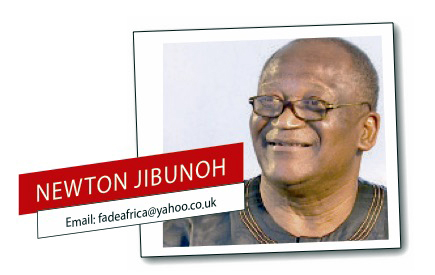
This was the concern my mentor and co-writer, Dr. Newton Jibunoh, raised several years ago when he observed that Nigerians were gradually losing their sense of belonging to their own country. At the time, it sounded like a painful reflection. Today, it seems more relevant than ever.
While preparing this article, I spoke with him again. During our conversation, he shared an experience involving his grandson that captured this reality in a surprisingly simple way. The young man had almost lost interest in international football until he realised how many players representing other countries had Nigerian roots. From that moment, every World Cup qualifier and every international tournament became personal. Whenever two countries met, his first instinct was to identify which team had a Nigerian connection. Once he found one that became the team he supported.
Other News
Dr. Jibunoh then smiled and admitted that he often catches himself doing something similar. He said he naturally gravitates towards teams with several Black players because, consciously or unconsciously, he sees reflections of his own history and identity in them.
That conversation stayed with me long after it ended because it was never really about football. It was about identity. It was about belonging. More importantly, it highlighted the emotional relationship many Nigerians continue to have with a country that produces extraordinary people but too often struggles to create the conditions in which they can thrive.
It also reminded me of something Dr. Jibunoh wrote about three years ago:
“Nigerians no longer belong to Nigeria and we must find a way of giving Nigerians some sense of belonging – something to fight for, like hope, but not false hope.”
Few examples illustrate those words more clearly than football.
Every four years, the FIFA World Cup reminds us of two opposing realities. On one hand, it showcases the extraordinary ability of Nigerians whose talents have carried them to the highest level of the game. On the other, it reminds us that many of those achievements are celebrated under someone else’s flag.
That contradiction should not diminish our pride in their accomplishments. Rather, it should compel us to ask why so much Nigerian excellence flourishes elsewhere. The issue has never been a shortage of talent. Nigeria produces gifted footballers with astonishing consistency. What has been in short supply are the structures capable of identifying that talent early, nurturing it properly and creating an environment where it can reach its full potential at home.
Decades ago, Chinua Achebe wrote what remains one of the most quoted observations about Nigeria: “The trouble with Nigeria is simply and squarely a failure of leadership.” More than forty years later, his words continue to resonate because they describe a challenge that extends beyond politics into almost every aspect of national life, including football.
The contrast between Nigeria and many of the world’s leading football nations is not one of talent but of structure. Countries that consistently produce world-class footballers invest heavily in youth academies, coaching education, scouting networks, sports science and modern facilities. They identify promising players at an early age, develop them through carefully designed systems and provide a clear pathway from grassroots football to the highest level of the game.
The lesson is difficult to miss. Nigeria has never been short of gifted footballers. What has been missing is a system that consistently identifies, develops and retains that talent. The same question that confronts Nigerian football also confronts the nation itself: how do we transform extraordinary potential into lasting success?
That question takes us beyond the football pitch and into a much broader conversation about leadership, opportunity and the future of a country whose greatest strength has always been its people.
TO BE CONTINUED…..