Follow Us on Google
•Blasts critics of Gov. Idris, says he inherited decay
From Kenneth Udeh, Abuja
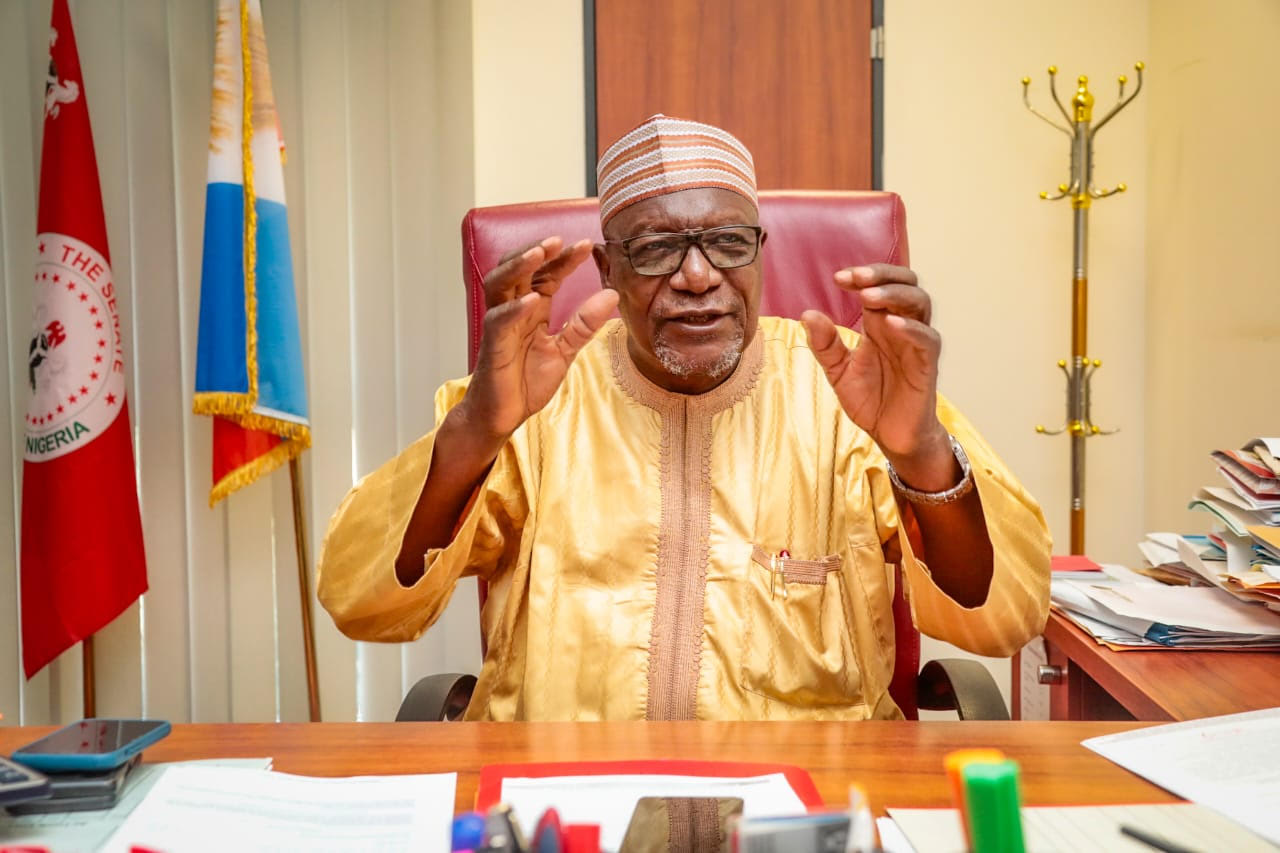
Senator Yahaya Abubakar Abdullahi, former Senate Majority Leader and current Chairman, Senate Committee on National Planning and Economic Affairs, has warned that Nigeria’s increasing drift toward a dominant-party structure must be managed with maturity, justice and political foresight if the nation is to avoid crisis.
Speaking in an interview, the Kebbi North Senator described the current wave of defections to the ruling APC as a political tsunami, reminiscent of the PDP’s peak era, one which ultimately collapsed because it was mismanaged.
He said Nigeria is too diverse to sustain a permanent one-party system, stressing that only justice, inclusion and competent party management will prevent history from repeating itself.
Excerpts:
With the recent defection of Governor Peter Mbah of Enugu State from the PDP to the APC, the resignation of Bayelsa State Governor Douye Diri from the PDP, and reports that the Taraba State Governor may also join the APC, Nigeria may soon have about 26 APC-controlled states. Should Nigerians be worried that the country is gradually drifting into a one-party system?
There was a time the PDP enjoyed this level of momentum, though what we are witnessing today is more like a tsunami compared to the PDP’s hurricane. But even then, Nigeria did not become a one-party state. When the PDP was at the height of its power, the collapse began barely a term after the mass influx into its fold. Nigeria is too diverse to permanently drift into a one-party arrangement. Perhaps in the 2027 cycle, the PDP may still yield the presidency to Tinubu because of his political sagacity, his talent for building consensus, brokering peace, and bringing disparate interests together.
But what happens after Tinubu completes a second term? No one knows. Under Obasanjo, the PDP acted like a bulldozer. Yar’Adua was gentle and inclusive, attracting even opposition members. Conflicts later emerged, but I pray such internal fractures do not come to the APC. The real question is whether we will ever have another President with Tinubu’s vision, capacity, and political dexterity, someone capable of uniting so many diverse interests under one political umbrella. The party is strong, but its leadership must consciously build a platform that is inclusive enough to sustain this momentum. Those defecting expect justice, fairness, and inclusion not just electoral success. As we move towards congresses at all levels, the party must ensure that both old members and new entrants experience the justice that the president has promised.
Amid this wave of defections, where do the interests of ordinary Nigerians lie, considering that politicians often defect for personal gain?
The key lies in the ability of the party’s leadership from the national level down to local governments to operate with Tinubu’s political discipline and strategic mindset. Tinubu is a master strategist, but he cannot do the job alone. The party ecosystem includes governors, state chapters, local structures, and lawmakers. The critical question is whether they can align their actions with the president’s broader vision. Political inclusion has concrete benefits. When people come together under a shared vision of development and national unity, governance becomes people-centered, not ambition-centered.
What Nigeria needs now is continuity. For years, every administration abandoned the achievements of its predecessor. But with almost two-thirds of the National Assembly, a majority of governors, and growing nationwide support, the APC now has a unique opportunity to provide enduring policy continuity if all interests can converge around a national agenda. The challenge is not the size of the party but its ability to manage competing interests. The PDP once had 28 governors but collapsed within four years because it could not manage internal contradictions. The APC must avoid that fate.
This is a moment for the president to create a unified development platform for Nigeria. But the success of this opportunity depends on choosing leaders with knowledge, experience, foresight, and temperament people who can ensure democratic inclusion and prevent conflicts of interest from derailing progress.
Do you think these defections are enough to guarantee President Tinubu’s victory in 2027 if he chooses to recontest?
Yes! except something drastic and unfortunate happens, which I neither foresee nor pray for. As things stand, the President is firmly on course for a second term. No President in our history has had this kind of nationwide political consensus. From the First Republic to the Fourth, even through the military era, I have seen every administration. This is the first time one party is enjoying such overwhelming support. It is both a victory and a major responsibility.The bigger question is: What happens after his second term? If the political base is not carefully managed, the party could fracture just like the PDP did.
With congresses approaching at all levels, how should the APC manage diverse interests to avoid implosion?
Through justice, broad consultation, and restraint. Islamic tradition says, ‘Do not give power to those who run after it.’ True leaders often do not clamour for power. The President should identify individuals with competence, calm temperament, and crisis-management skills, these are the people needed at the forefront. He should study each state individually, surround himself with knowledgeable people who understand the nuances at local levels, and ensure that consultations are continuous. Party primaries must be carefully managed. Governors must also be brought onto a common platform aligned with the president’s vision for a greater Nigeria. I do not envy the President or the new party chairman. They have enormous work ahead of them between now and 2027 and even up to 2031.
Other News
Some political figures including ADC chieftains, former PDP governorship aspirant Alhaji Ibrahim Mohammad Mera, and former AGF Abubakar Malami (SAN) say Governor Nasir Idris of Kebbi State does not deserve a second term due to alleged underperformance and insecurity. Do you agree?
As opposition politicians, they are entitled to their opinions. But anyone who compares the last eight years before the current administration with what has been done in the past two years would know the governor has performed remarkably well. Insecurity is a national problem. I was at a security meeting recently where the governor summoned all security chiefs. None of them claimed he was neglecting his responsibilities. He provides them with resources over ₦500 million monthly and operational vehicles, but governors cannot arm non-state actors. They do not control the police, not even the officers guarding them.
Security challenges in Kebbi are the same across Kaduna, Zamfara, Sokoto, and other northern states. No governor can solve insecurity alone under the current centralised security structure. Even those criticising him if given the governorship today would face the same banditry challenges.
What about infrastructure, healthcare, and agriculture?
The government is continuous. The current governor inherited a decayed system especially in primary healthcare and education. Apart from constituency projects facilitated by us in the National Assembly, there was virtually nothing on ground. If you compare Kebbi with states like Katsina where successive governments built on foundations laid by predecessors you will understand why Kebbi’s situation is dire. The governor inherited the worst conditions imaginable. He prefers not to attack his predecessor because they are in the same party. But the reality is clear: what he met was terrible. Even if he spent the entire state budget solely on repairs, it would still take years to get results. Let him complete four years. Then we can assess schools, hospitals, roads, and other sectors fairly not by taking pictures of dilapidated structures he did not create.
In view of recent kidnappings across Kebbi and Niger states, what is the lasting solution to insecurity?
Nigeria must overhaul its security doctrine. Before the military took over, we had a multi-layered security system national police, regional police, provincial police. The coup eliminated all of that and gave us centralised policing. Today, with a population of over 230 million, we have fewer than 400,000 police officers who all take orders from Abuja. Many LGAs do not even have 200 armed officers despite having populations close to one million. Nigeria simply does not have enough boots on the ground. We need a return to multi-layered policing if not state police, then a variant that allows for local first responders. Every village must have the ability to resist attacks for several hours until reinforcements arrive. Until that happens, neither governors nor the president can guarantee security.
Some argue that governors’ refusal to enforce capital punishment for bandits encourages criminality. Do you agree?
No. Capital punishment alone does not deter crime. Violence is often rooted in injustice, weak security presence, and poverty. Human beings instinctively seek survival. When poverty robs people of dignity and opportunity, society becomes vulnerable to violence. Create an atmosphere of fairness, access to resources, and basic livelihood and crime naturally reduces. I support capital punishment where a person has been proven sane and intentionally commits a capital offence. But the solution is not execution alone it is addressing the conditions that breed violence.
What is your stance on negotiation or amnesty for bandits?
First, build the right security architecture – local first responders, adequate policing layers, and an enabling environment for people to farm and live safely. After that, anyone who still takes up arms should be eliminated.
Banditry is rooted in resource-based conflict and injustice. Some perpetrators are foreigners, but many are local. Boko Haram, for example, is largely Kanuri; you cannot blame everything on foreign infiltration. Many youths were pushed into armed violence due to blocked economic pathways. Access to livelihood opportunities reduces the allure of banditry.
President Tinubu recently appointed new service chiefs. Were these appointments triggered by a reported coup plot, or part of routine restructuring? What advice do you have for them?
The president has full authority to change his security team anytime, subject to legislative approval which has been granted. Whether the changes were triggered by internal threats is his prerogative. Our role in Parliament is simply to ensure the appointees are qualified. My advice is that they must strengthen coordination, boost presence across communities, and help build a layered security structure that matches Nigeria’s size and complexity.
Reports indicate that food prices have dropped in some markets, but farmers claim huge losses due to increased food imports. Is the Federal Government being fair to farmers? And do Nigerians feel any real relief?
Agriculture involves complex layers producers, consumers, assemblers, and small-scale marketers who buy excess produce and store it. These people stabilise food availability during lean seasons. When the Government opened the import gates, it undermined those who had invested in storage. They bought at higher prices, stored food, and suddenly imports made their stock less valuable. Many have suffered huge losses. This chain of assemblers and rural marketers also provides informal credit to farmers. If they collapse, farmers lose access to loans, and fewer people will return to farms. Food prices may have dropped slightly, but purchasing power is still weak. The system that ensures food security has been disrupted. To build a sustainable agricultural economy, the government must support both producers and marketers—not one at the expense of the other.