Follow Us on Google
By Adewale Sanyaolu
Nigeria is moving to end its dependence on imported power equipment, with the Federal Government securing a commitment from Chinese equipment giant, TBEA, to establish a power and energy equipment industrial park in the country.
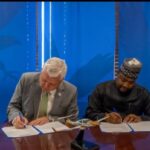
The proposed industrial park, which could position Nigeria as a regional manufacturing and export hub for critical power infrastructure, emerged from a high-level meeting between the Minister of Power, Joseph Tegbe, and TBEA at the company’s headquarters in Beijing.
The development marks a potentially significant shift in Nigeria’s power-sector strategy—from importing the equipment required to build and maintain its electricity infrastructure to manufacturing them locally, creating jobs, developing indigenous suppliers and retaining more value within the domestic economy.
Tegbe, who is on a working visit to China to engage original equipment manufacturers and technical partners involved in the Presidential Power Initiative, described TBEA as a long-term strategic development partner rather than merely a contractor.
He said the Federal Government was increasingly focused on attracting investors prepared to bring technology, skills and local capacity alongside capital.
Beyond the proposed industrial park, TBEA renewed its commitment to accelerate ongoing transmission and distribution projects across Nigeria, including projects expected to unlock more than 2,000MW of stranded generation capacity and strengthen bulk electricity supply to the Federal Capital Territory.
Tegbe also pushed for faster completion of projects under the Presidential Power Initiative, stressing that infrastructure that has already been contracted and substantially developed must be completed so Nigerians and businesses can begin to benefit from the investments.
He further called for the planned expansion of grid infrastructure to cover the East-West corridor, highlighting the government’s determination to ensure that new generation capacity is matched by the transmission and distribution infrastructure required to deliver electricity to consumers.
The discussions also extended beyond conventional grid infrastructure, with Nigeria and TBEA exploring the feasibility of electric-vehicle charging infrastructure as the country prepares for a power system increasingly shaped by renewable energy and energy-storage technologies.