Follow Us on Google
From Juliana Taiwo-Obalonye, Abuja
Nigeria will support a candidate for the position of United Nations Secretary-General who is committed to advancing Africa’s aspirations in global affairs, particularly securing greater representation for the continent in key decision-making bodies and strengthening multilateralism, Vice President Kashim Shettima has said.
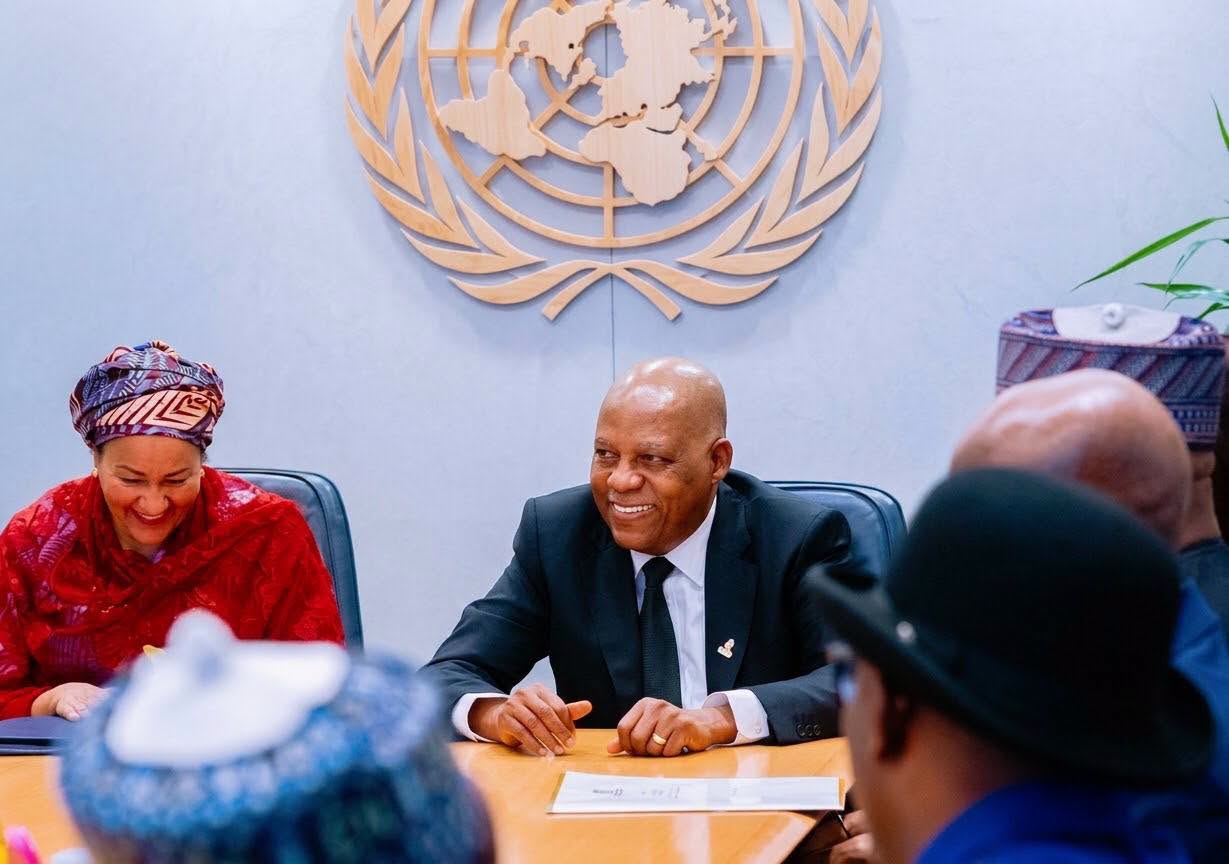
Shettima stated this during a meeting with Costa Rica’s candidate for the UN Secretary-General position, Rebeca Grynspan, who sought Nigeria’s support for her candidature.
Grynspan was formally nominated by Costa Rica in March 2026 in the race to succeed António Guterres as UN Secretary-General.
According to a statement issued by the Vice President’s media aide, Stanley Nkwocha, Shettima said Nigeria’s position would be guided by the principles of equity, justice and fairness, as well as the candidate’s commitment to addressing Africa’s concerns in the international system.
He stressed that Nigeria would support a candidate who recognised Africa’s demand for a greater role in global governance, particularly in the reform of the United Nations and increased representation in key decision-making institutions.
Shettima, who met Grynspan shortly before returning to Nigeria from the 81st United Nations General Assembly in New York, said the country’s decision would also take into consideration its longstanding relations with Latin America, commitment to conflict prevention, multilateralism and gender inclusion.
“Thank you for seeking Nigeria’s perspective for your candidature of the United Nations Secretary-General. Nigeria and Costa Rica share a common historical background connecting both countries and their regions.
“We also have a cordial relationship with Latin America, and we do not wish to jeopardise it. Beyond our historical ties and relations rest our interest in conflict prevention, multilateralism, and the peace of our nations,” he said.
The Vice President argued that the global governance architecture established in 1945 no longer adequately reflected contemporary demographic and political realities, particularly Africa’s growing population and increasing importance in international affairs.
He said Africa, with a population of more than 1.3 billion people, deserved a more prominent place in global decision-making, especially as demands intensified for reforms that would make multilateral institutions more representative.
Shettima’s position comes amid longstanding calls by African countries for reform of the United Nations Security Council to address what they regard as the continent’s inadequate representation in the body responsible for international peace and security.
Responding, Grynspan, a former Vice President of Costa Rica, said her candidature was driven by the need to reform the United Nations and make the organisation more responsive to the aspirations of developing countries, particularly those in the Global South.
Other News
“Coming from the Global South, I represent the interest and demands of the region. I also have a soft spot for Africa. I know the continent and its aspirations,” she said.
Grynspan pledged to prioritise peace and address structural challenges confronting the UN, while giving attention to Africa’s campaign for greater representation in the Security Council. Her candidature is among those currently being considered in the process to choose the next UN Secretary-General, with the Security Council expected to recommend a candidate to the General Assembly.
In a related development, Shettima also reaffirmed the Federal Government’s commitment to economic reforms during a bilateral meeting with Queen Máxima of the Netherlands in New York.
Queen Máxima was in New York in her capacity as the UN Secretary-General’s Special Advocate for Financial Health, with her UNGA engagements focused on improving financial health and access to services such as savings, insurance, credit and pensions.
During the meeting, Nigeria and the Netherlands discussed deeper cooperation on financial inclusion and financial health, particularly for women and vulnerable groups.
Shettima said the Tinubu administration had introduced interventions aimed at expanding access to financial services, including conditional cash transfers and programmes in the agricultural sector.
He also highlighted the role of Nigerian fintech companies in expanding financial access, saying government policy had created opportunities for technology-driven financial services to reach more Nigerians.
The Vice President defended the administration’s economic reforms, saying the measures were necessary given the economic conditions inherited in 2023.
Queen Máxima pledged support for Nigeria’s financial-health initiatives, particularly in the areas of insurance, credit guarantees and data development.
She said financial health programmes should help citizens build resilience, protect their investments and improve access to financial services.
The engagement comes as Nigeria’s financial exclusion rate fell to 21 per cent in 2026, although exclusion remains substantially higher among poorer households, according to the latest Access to Financial Services survey.
Minister of Finance, Taiwo Oyedele, who was also present, said the government was pursuing financial inclusion as part of broader efforts to improve livelihoods.
He said reforms in insurance, pensions and access to credit were expected to create greater opportunities for poorer Nigerians to improve their economic circumstances.