Follow Us on Google

By Godwin Tsa, Abuja
Nine weeks before the presidential poll, a Federal High Court ruling has split the African Democratic Congress (ADC) into two claimants to the same party. The electoral umpire, now pulled in opposite directions, will decide who is on the ballot.
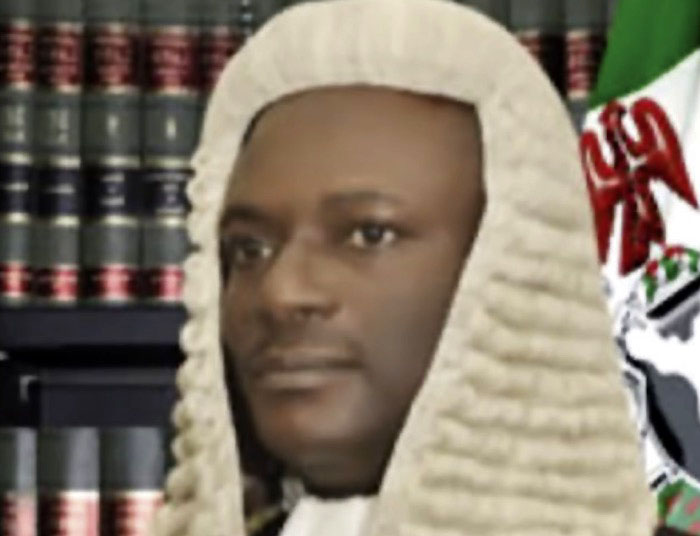
Last Thursday, Justice Peter Lifu held that the emergence of David Mark as ADC national chairman, alongside his executive, violated the party’s constitution and established guidelines.
The court declared the caretaker committee illegal, along with the presidential primary it conducted, which produced Atiku Abubakar as standard-bearer.
Counsel to the plaintiff, Nafiu Bala Gombe, Lukman Fagbemi, SAN, said the judgment nullifies every action taken by the Mark-led leadership since July 2025.
The court also directed INEC not to recognise decisions taken at the ADC’s 99th NEC meeting of July 27, 2025, and, by one account, held that only candidates from Gombe’s faction would be recognised. The presidential election is scheduled for January 16, 2027.
A year-long fight
The ruling is the latest turn in a dispute that has dogged the party all year. Atiku left the PDP to join the ADC in a coalition formed to challenge the APC in the 2027 election. Gombe’s suit, filed against the ADC, INEC, Mark, Aregbesola and former chairman Ralph Nwosu, sought to stop Mark and Aregbesola from presenting themselves as the party’s leaders.
The road to Thursday was uneven. After a March Court of Appeal ruling, INEC removed the Mark leadership from its portal. The Supreme Court then intervened on April 30, setting aside an interim status quo order and directing an expeditious trial.
The trial judge at the time, Justice Emeka Nwite, had adjourned indefinitely, warning that proceeding while the Supreme Court appeal was pending would be “judicial rascality.”
After his elevation to the Court of Appeal, the case was reassigned to Justice Lifu, who refused to recuse himself and fined Mark and Aregbesola N500,000 each. Allegations of bias are a standard appeal ground, and that history will feature.
The legal logic
The reasoning is a chain. If the body that took over the party was unlawfully constituted, the primaries it organised were not conducted by a competent authority, and the candidates they produced hold no valid nomination. Only a party’s lawful organs can conduct primaries and submit nominations. That is why one ruling on leadership reaches every ticket at once.
Nigerian courts have followed this logic before. In 2019, the Supreme Court held that the APC in Zamfara had conducted no valid primaries, which cost it its candidates and the votes cast for them.
The ADC will answer that Zamfara turned on the absence of primaries, whereas here primaries took place and the quarrel is over who convened them.
Two judgments, one party
The ADC’s strongest argument is that the judiciary has spoken in conflicting voices. It cites a July 2, 2026 judgment of Justice Musa Liman of the same court, which affirmed the Mark-led NWC and directed INEC to recognise it. One newspaper put the problem bluntly, noting that the new ruling effectively overrules a judge of equal and coordinate jurisdiction and voids the candidacies of no fewer than 1,503 people.
The Supreme Court’s earlier role offers limited comfort to either side. One account stresses that it did not finally determine that Mark was the legitimate chairman. The Court of Appeal’s record is mixed too. In July it upheld restrictions on INEC recognising state congresses organised by Mark-appointed committees.
The ADC’s own response is that the earlier congress rulings concerned only the conduct of ward, local government and state congresses and had no bearing on the direct primaries through which its candidates emerged.
The party also has history on its side with this judge. When Justice Lifu earlier ordered INEC to deregister the ADC and four other parties, the Court of Appeal unanimously found that the Federal High Court lacked jurisdiction to entertain the suit. The appellate court halted the order and rebuked the judge.
Two caveats apply. That reversal turned on jurisdiction, not the merits of Gombe’s claim, and this judgment follows a full trial that the Supreme Court itself ordered.
Friday: two camps, one umpire
The day after the judgment, both camps moved on INEC. The ADC filed an appeal against the November 5 judgment and urged INEC not to take any action capable of pre-empting the Court of Appeal.
Other News
At a press briefing in Abuja, the party’s NEC Chairmen Forum, which backs Gombe, demanded that INEC remove Mark and members of his “dissolved” interim working committee from its portal and replace them with Gombe and officials the forum regards as legally recognised.
The forum also asked INEC to reopen the portal so the ADC can hold fresh primaries “where necessary” and upload candidates. Its secretary, Kennedy Odion, said that failure to comply would leave the forum “no option” but to stage a nationwide protest against the commission.
He argued that the judgment also voided the candidacies of Atiku, his running mate Rotimi Amaechi and others who emerged through the interim leadership’s processes. Gombe himself has ruled out immediate reconciliation, asking Mark and Atiku to register in their wards before seeking to participate in party affairs.
Those demands raise a legal question the forum does not address. The ruling nullifies Mark’s leadership and the candidates it produced, but a court order directing INEC to open its portal for fresh primaries after the statutory windows have closed is a different matter. It is not clear that Thursday’s judgment grants that relief, and the Electoral Act’s timelines do not bend easily.
INEC’s dilemma
INEC is a defendant, so it is bound by the outcome as a party. It is also on record backing the Mark faction. Its commissioner said the commission granted the Mark-led faction access to its nomination portal following the Supreme Court judgment. It also publicly denied that Gombe had access codes, after his camp claimed to have uploaded candidates.
Atiku’s media office accused the commission of favouring Gombe, which it rejected. Now the commission faces protest threats from one side and a pending appeal from the other. I found no INEC statement on the judgment in the coverage available at the time of writing.
Three variables will decide the outcome.
A stay of execution. An appeal does not suspend a judgment on its own. Unless the Court of Appeal grants a stay, Gombe’s camp can press INEC to treat the Mark leadership as void. Notably, INEC itself sought the stay that rescued the ADC from the earlier deregistration order, a sign the commission can move quickly when it chooses.
It is expected that the case will reach the Supreme Court, which would give its final verdict before the elections start in January.
Two appellate tiers in ten weeks is demanding. Section 285 of the Constitution sets short deadlines for pre-election matters, but whether a leadership dispute filed in 2025 counts as one is arguable, and the answer decides which clock applies.
If the judgment stands, fresh primaries and nominations would run against closed windows. INEC extended the submission deadline to July 14, 2026.
A separate May ruling held that INEC could not lawfully abridge the statutory windows for submission, withdrawal and substitution of candidates, and INEC has appealed it. How that case resolves may determine how much room any party has to cure a defective nomination.
Beyond Atiku
The presidential contest draws the headlines, but the damage runs deeper. Hundreds of governorship, legislative and state assembly candidates now face the same cloud. They spent months and large sums on primaries and campaigns. A Zamfara-style outcome would cost them their tickets, and votes cast in their names would be wasted. They have the strongest personal reason to push the appeal and, if the picture does not clear, to look for other platforms.
Politics and precedent
If the ruling stands, the ADC could enter the election with no valid candidates or with a rival slate it did not choose, depending on what INEC accepts. Either outcome would sharply narrow the field facing the incumbent. The ADC reads the judgment as political, calling it another desperate attempt to cripple the opposition.
The timing, barely 24 hours after Atiku opened his campaign with a rally in Sokoto, feeds that reading. The opposing view is that courts are enforcing internal party democracy, long neglected in Nigerian politics, and that parties which take shortcuts in leadership transitions expose every downstream decision to challenge. Both claims will be tested on appeal.
What to watch
Four signals matter. Does the Court of Appeal fix an early date or grant a stay? Does INEC keep Atiku and the ADC candidates on its lists, or act on the judgment? Is the Supreme Court asked to resolve the conflict between the Liman and Lifu rulings directly? And does the forum follow through on its protest threat?
The judiciary’s credibility is now as much at stake as the ADC’s. A swift, well-reasoned appellate ruling, whichever way it goes, would protect public confidence in the election.
Two Federal High Court judgments pulling in opposite directions into January would produce a ballot contested before a single vote is cast, and a petition process stretching well into 2027.