Follow Us on Google
-
Norway seeks deeper cooperation, duty waiver on stockfish heads
By Chinenye Anuforo
The Federal Government has reaffirmed its commitment to building a sustainable and self-sufficient seafood production system that will boost food security, create jobs, and drive economic growth in Nigeria.
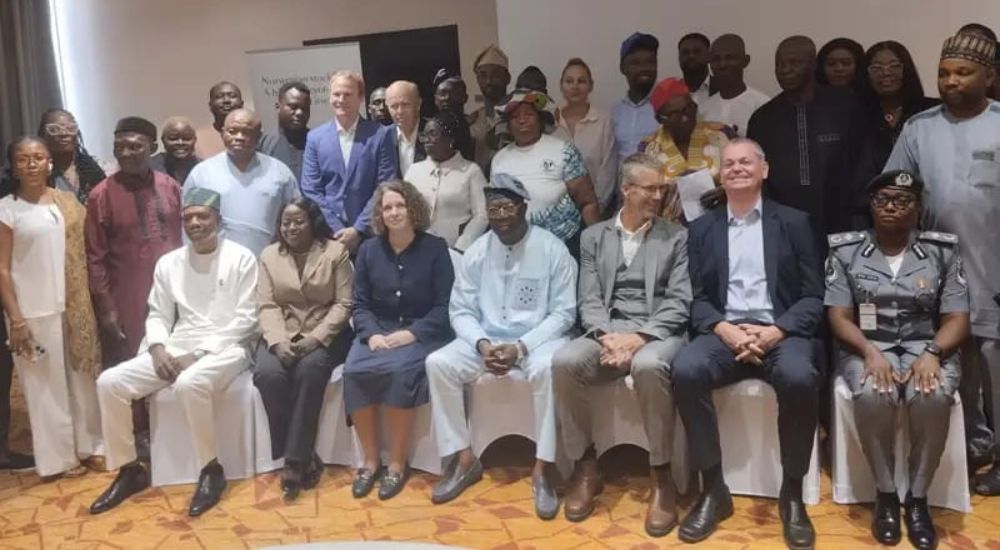
Minister of Marine and Blue Economy, Adegboyega Oyetola, made this known at an interactive seminar between Nigerian and Norwegian stakeholders on seafood import and export trade, held in Lagos on Wednesday.
The event, jointly organised by the Government of Norway and the Norwegian Seafood Council, brought together regulators, importers, exporters, and fishery experts to strengthen collaboration and review developments in the seafood sector.
Oyetola said the Ministry is implementing key reforms to expand domestic fish production through aquaculture, improve quality control, and modernise cold chain systems. He also revealed plans to establish a national fish terminal, upgrade residue monitoring facilities for exports, and strengthen capacity building for fisheries officers and fish farmers.
“While Nigeria still depends on fish imports to meet domestic demand, our goal is to achieve self-sufficiency through increased investment, technology deployment, and stakeholder collaboration,” the Minister said.
He commended Norway for its long-standing support in fisheries management and knowledge sharing, describing the seafood value chain as central to the nation’s blue economy drive.
In his address, the Royal Norwegian Ambassador to Nigeria, Svein Baera, described the Nigeria–Norway seafood relationship as a story of cultural exchange and mutual benefit that has lasted for decades.
He noted that Nigeria remains one of the world’s largest importers of Norwegian stockfish, adding that both nations share a commitment to sustainability.
“In recent years, Norway has reduced cod quotas to protect fish stocks and promote long-term marine health. Unfortunately, this has affected supply and prices globally,” Baera said.
He appealed for a zero per cent import duty on stockfish heads, saying it would help make the product more accessible and affordable for Nigerian consumers.
Other News
“There is much room for cooperation through technology transfer and capacity building. Norway is ready to share expertise in sustainable fisheries management, traceability, and aquaculture,” he added.
Johnny Håberg, Regional Director of the Norwegian Seafood Council, explained that Norway has supplied stockfish to Nigeria for over a century, and that the relationship extends beyond trade to knowledge exchange in aquaculture.
He said current price increases are due to global quota reductions and limited availability of cod, the main raw material for stockfish production. “Exporters would like to offer more stockfish at better prices, but lower quotas mean there’s simply not enough to sell,” he explained.
Abiodun Oritsejemine Cheke, Fisheries Consultant to the Council, disclosed plans to launch training programmes for Nigerian fish farmers and officers focused on sustainability, documentation, and trade certification areas limiting Nigeria’s fish exports.
She also renewed the call for a temporary zero-duty window of 150 days on stockfish heads, describing stockfish as “one of the most affordable sources of protein for Nigerian families.”
“A small pack costing about ₦200 can feed a family of four when combined with vegetables or local dishes. We hope government will consider this request favourably,” she said.
Cheke added that once current export restrictions are lifted, Norway is ready to buy farmed Nigerian tilapia at zero export duty, a move that will boost local fish production and international trade participation.
Both governments pledged to deepen cooperation in fisheries management, training, and sustainable aquaculture.
Stakeholders agreed that while global challenges persist, continued partnership between Nigeria and Norway will strengthen trade, enhance food security, and support Nigeria’s long-term goal of becoming self-sufficient in fish production.