Follow Us on Google

By Chukwuma Umeorah
Nigeria and Tanzania are seeking coordinated action across Africa to strengthen the health workforce responsible for delivering healthcare to women, as both countries prepare to host a continental summit aimed at addressing gaps in maternal, reproductive and other women’s health services.
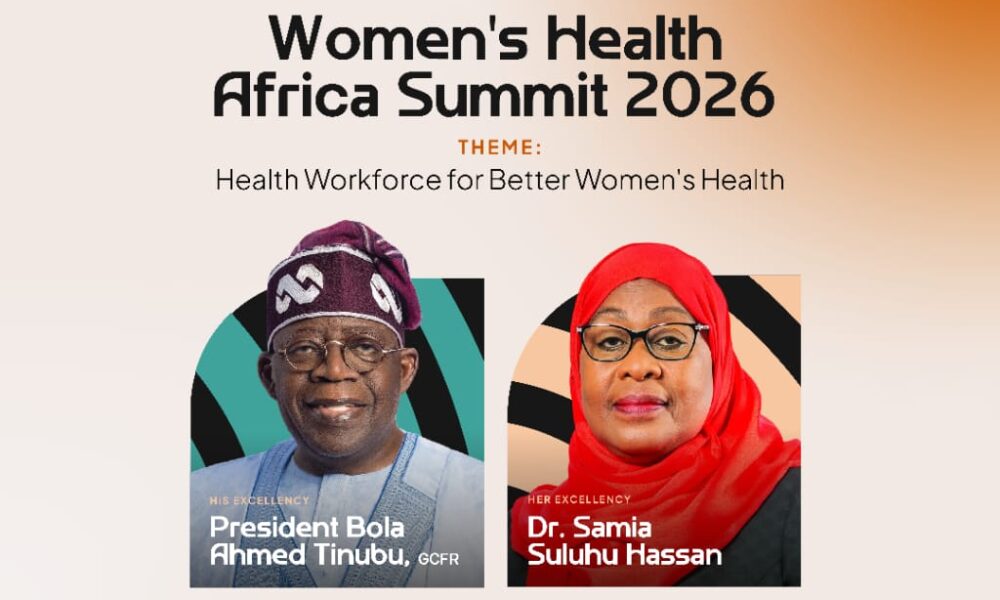
The two countries will convene about 300 decision-makers, including heads of state, health and finance ministers, African Union (AU) officials, development finance institutions and health-sector stakeholders at the inaugural Women’s Health Africa Summit (WHAS 2026), scheduled for December 1 at the State House Banquet Hall, Abuja.
The summit is being anchored by Nigeria’s Federal Ministry of Health and Social Welfare, under the leadership of Pate, with presidential facilitation by the Office of the Senior Special Assistant to the President on Women’s Health.
The summit, themed, “Health Workforce for Better Women’s Health,” is expected to focus on mobilising investment, strengthening healthcare delivery and securing measurable commitments from African countries to improve women’s health across different stages of life.
Coordinating Minister of Health and Social Welfare, Prof. Muhammad Ali Pate, said the meeting would provide an opportunity for African countries to identify gaps in their healthcare systems, share experiences and take greater responsibility for addressing the continent’s health priorities.
“The Women’s Health Africa Summit is a great platform for bringing together leaders, advocates, practitioners, academics and financiers to identify gaps, mobilise action and facilitate shared learning across countries. Indeed, women’s health is a global issue, and even wealthier countries continue to face significant gaps in this area.
“Ultimately, responsibility lies with us as leaders on the continent. We must take ownership of our health priorities.”
The initiative also seeks to address the capacity of frontline health workers, functional referral systems and community healthcare services, which are considered necessary for reducing preventable maternal and newborn deaths.
Tanzania’s co-hosting role is linked to its leadership of the AU’s maternal and child health agenda under President Samia Suluhu Hassan, who champions the Continental Roadmap on Reproductive, Maternal, Newborn, Child and Adolescent Health (RMNCAH) 2026–2030. The roadmap is built around three targets: zero home delivery, zero preventable maternal and newborn deaths, and zero unvaccinated children.
Special Adviser to the Tanzanian President on Maternal and Child Health, Hon. Ummy Ally Mwalimu, said collaboration between the two countries was necessary to translate continental health commitments into measurable results.
“Under the leadership of Her Excellency President Dr. Samia Suluhu Hassan, AU Champion for Maternal and Child Health, Tanzania is proud to co-host WHAS with Nigeria. Collaboration between our two AU Champions is an implementation imperative, not simply a matter of institutional goodwill. Coordinated leadership is essential to align workforce investment, community health delivery, sustainable financing and accountability with country-led priorities, avoid fragmented efforts and translate continental commitments into measurable results.
“The Three Zeros of the Continental RMNCAH Roadmap depend on competent, adequately supported frontline health workers, functional referral systems and effective community outreach. WHAS, under the theme ‘Health Workforce for Better Women’s Health’, provides a timely platform for these shared commitments.”
Beyond maternal and reproductive healthcare, the summit will address non-communicable diseases, gynaecological conditions and menopause, broadening the focus of women’s healthcare beyond pregnancy and childbirth.
Senior Special Assistant to the President on Women’s Health, Dr. Adanna Steinacker, said the initiative would seek to address the limited attention given to women’s health needs across different stages of life.
“For too long, women’s health has been treated as a secondary concern or viewed narrowly through a single stage of life. WHAS changes that paradigm, bringing African governments, capital, and innovators together to back women’s health across the entire life course as a core pillar of our continent’s social and economic future.”
Financing is also expected to feature prominently, with the organisers identifying innovation, financing and delivery as the three pillars of the summit. The meeting will seek initial commitments from participating countries and institutions, including accelerated action on neglected gynaecological conditions, while establishing a framework for continued African-led cooperation and accountability after the event.