Follow Us on Google

From Abel Leonard, Lafia
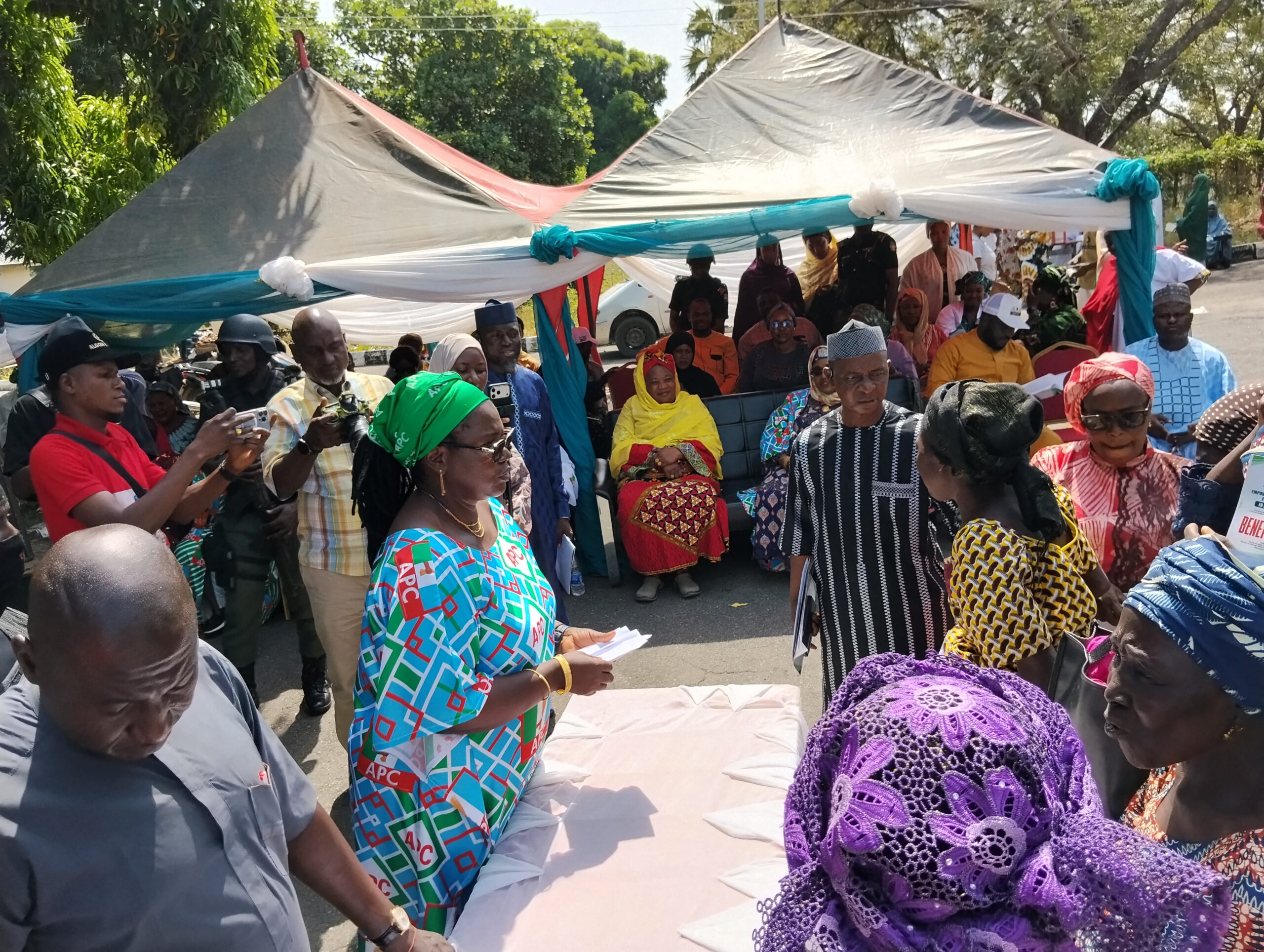
The First Lady of Nasarawa State, Hajiya Silifat Abdullahi Sule, has warned beneficiaries of the state government’s empowerment programme against selling equipment distributed to them, insisting that the intervention must translate into sustainable businesses, improved livelihoods and economic independence.
She gave the warning on Tuesday during the distribution of sewing machines, grinding engines and cash support to 200 women across Nasarawa North Senatorial District, stressing that the items were provided to help beneficiaries establish and expand businesses rather than turn them into immediate cash.
The First Lady expressed concern over the tendency of some beneficiaries of empowerment programmes to sell equipment received from government, warning that such action would undermine the purpose of the intervention.
“You cannot sell an intervention bought for over N500,000 for N150,000. It is unfair and inappropriate. These items are meant to empower you and improve your livelihoods, not to be sold,” she cautioned.
She urged the beneficiaries to regard the equipment as business assets capable of generating regular income, creating opportunities for their families and improving their economic circumstances.
Sule also appealed to women who were not included in the latest distribution to remain patient, assuring them that subsequent empowerment programmes would provide opportunities for other women across the state.
She explained that the initiative was part of the government’s efforts to expand women’s access to economic opportunities and strengthen household incomes through productive interventions.
Earlier, the Commissioner for Women Affairs and Social Development, Hon. Rebecca Adamu Kpanja, said the programme was designed to complement the skills acquired by women through various training initiatives by providing them with the equipment required to establish, strengthen and expand their businesses.
She said Governor Abdullahi Sule’s administration had sustained several interventions aimed at improving women’s economic participation, including fish farming, goat rearing, skills acquisition and entrepreneurship development.
According to her, the distribution of equipment to 200 women in Nasarawa North was another step towards reducing poverty, promoting self-reliance and improving the financial capacity of households.
Kpanja expressed optimism that the programme would be extended to Nasarawa West and Nasarawa South Senatorial Districts, giving more women across the state the opportunity to benefit.
In her goodwill message, a former Rector and Special Adviser to the Governor, Mrs Justina Kotso, commended the First Lady for championing initiatives aimed at promoting sustainable economic empowerment for women.
Kotso argued that providing women with practical skills and start-up equipment offered more lasting benefits than cash assistance that could quickly be exhausted on immediate household needs.
“When you give a woman money, she may spend it on biscuits for her children and other household needs, and before long, the money is finished. But when you empower a woman with skills and provide her with start-up support, you are teaching her how to fish for herself,” she said.
She described the First Lady as a strong advocate of women’s welfare, adding that the provision of skills and productive equipment would help beneficiaries build sustainable sources of income and become economically independent.
Kotso congratulated the beneficiaries and urged them to maximise the opportunity by putting the equipment to productive use, establishing viable businesses and improving their families’ economic wellbeing.
Speaking on behalf of the beneficiaries, Asabe Namo thanked the Nasarawa State Government for the intervention and pledged that the women would put the equipment to productive use in accordance with the First Lady’s directive.
She assured the government that the beneficiaries would support the administration and take the message of its empowerment initiatives across Nasarawa North Senatorial District to encourage wider awareness of the programme.
Namo also appealed to women who were not captured in the exercise to remain patient, expressing hope that they would be considered in subsequent empowerment programmes.