Follow Us on Google
Joseph Inokotong, Abuja
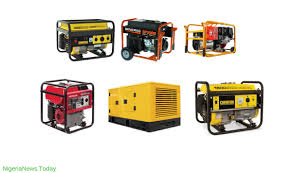
Nigeria and business concerns in the country spend a whopping $14 billion (N5.075 trillion) per annum on petrol and diesel-powered generators.
This has contributed in numerous ways to the increase in the cost of doing business in the country, as well as air and noise pollution.
This was disclosed by the African Development Bank (AfDB) Senior Director for Nigeria, Ebrima Faal, in his reaction to the approval by the Bank the sum of $210 million financing package to the Federal Government, for the Nigeria Transmission Expansion Project (NTEP1), which seeks to rehabilitate and upgrade the nation’s power lines and improve distribution and supply.
The Bank’s Senior Director for Nigeria, Ebrima Faal, in a press statement said: “Nigerians and their businesses spend $14 billion annually on inefficient and expensive petrol or diesel-powered generators.
“This project will contribute significantly to the reduction of Nigeria’s power deficit, decrease air and noise pollution and reduce the cost of doing business.”
The AfDB recently approved $210 million financing to the Federal Government, for the Nigeria Transmission Expansion Project (NTEP1), to rehabilitate and upgrade the nation’s power lines and improve distribution and supply.
Upon completion, the project will reduce the use of small-scale diesel generators and therefore contribute to the reduction of GHG emissions by saving approximately 11,460ktCO2 per year.
Also, it would significantly improve Nigeria’s electricity supply, and directly impact the economy, industries, businesses and the quality of life of Nigerians.
To be executed by the Transmission Company of Nigeria, NTEP1 is part of a $1.6 billion Transmission Rehabilitation and Expansion Programme (TREP).
The Bank’s financing, which comprises $160 million loan, and an additional $50 million loan from the Africa Growing Together Fund, will support construction of 330kV double circuit quad transmission lines and substations across the country.
The AfDB said the project will upgrade existing 263 km of 330kV lines, while adding an additional 204 KM of new lines to increase TCN’s wheeling capacity, stabilize the grid and reduce transmission losses.
“The project will create about 2,000 direct jobs- 1,500 during construction and 500 during operations – especially for youth: 30% of these jobs are expected to be taken by women. By increasing electricity supplies to Small and Medium Enterprises, the project will foster the creation of additional indirect jobs,” the AfDB further said.
The Bank’s Acting Vice-President for Power & Energy, Wale Shonibare,
said implementation of the project would increase evacuation capacity from the south of the country towards the north, where power supply is limited.
“NTEP1 will increase the grid transmission stability and capacity, and reduce the amount of stranded power, whilst improving power export and regional power system integration to the West African Power pool, especially through Niger and Benin interconnections,” he said.
Highlighting the project’s contribution to regional integration efforts, Batchi Baldeh, the Bank’s Director for Power Systems Development said it would benefit from the Bank’s expertise and proven track record in leading the development of power grids across the continent, notably in West Africa, with many successful operations supporting the implementation of interconnectors.
“In line with our work to improve utility performance, NTEP1 will substantially strengthen the capacity of TCN with regards to the development of energy infrastructure projects, especially the adoption of modern and more efficient transmission technologies, which are most required in Nigeria for network improvements,” said Baldeh.
NTEP-1 is part of the Bank’s response to the power sector crisis in Nigeria and is aligned with the government’s strategic plans articulated in its Economic Recovery and Growth Plan (2017-2020) and Power Sector Recovery Programme.
The project also aligns with the Bank’s High 5 priority to ‘Light up and Power Africa” and the New Deal on Energy in Africa.