Follow Us on Google
…Says security vote allocations offshoot of military rule, unknown to law
From Sola Ojo, Abuja
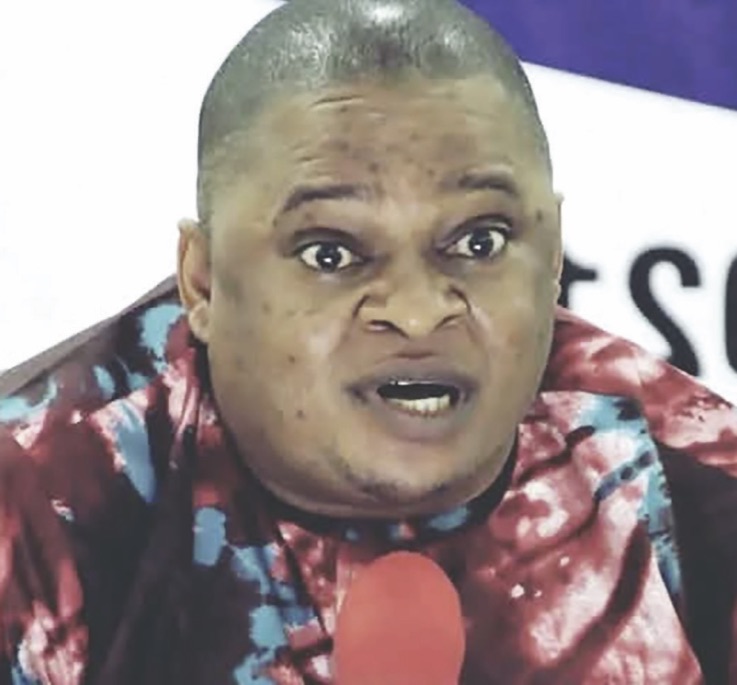
An Abuja-based Police Reform expert, Dr. Salaudeen Hashim has warned that Nigeria may end up creating ethnic police if the push for state police is not carefully structured, arguing that governors are more interested in the political economy of the initiative than genuine security reform. In this interview, he urged that the hundreds of billions of naira annual security votes be redirected into transparent police funding because it was a carryover of military rule which is unknown to Nigerian modern laws, while outlining a comprehensive reform agenda for the new Inspector-General of Police among other sundry issues.
Excerpts:
Let’s quickly start with your agenda for the new Inspector-General of Police. How is it looking like?
First and foremost, the new IGP must understand the strategic deficit that created the gap leading to his appointment. There are key issues he must address immediately. The first is the debate around state policing. There was clear tension between the presidency’s push for state policing and the former IGP’s perceived stance on the matter. I think much of the controversy stemmed from a lack of clarity and definition. As the new IGP assumes office, he must help clarify these issues and align policing strategy with national policy direction.
Second is the issue of shrinking civic space. The former IGP was widely criticised for alleged attacks on the media and journalists. The International Press Institute (IPI) reportedly blacklisted him over concerns about press freedom. The new IGP must work deliberately to re-image the police in this regard and demonstrate clear respect for civil liberties and media rights.
Third is police regulation. It is crucial for the new IGP to internalise and institutionalise the current police regulations to align with the new legal framework guiding policing in Nigeria. You cannot effectively run a modern police system on a new Police Act while relying on outdated regulations. That clash of norms will continue to create operational and legal inconsistencies. So, modernisation must be deliberate and structured.
Fourth is the issue of police deployment, particularly the withdrawal of officers from VIP protection duties. One of the criticisms against the former IGP was poor compliance with presidential directives on this matter. If a significant portion of police personnel remains attached to VIPs, it weakens frontline policing and crime prevention. The new IGP must ensure full compliance with this directive, conduct a proper audit of deployments, and redirect manpower to core policing functions. Only then can we properly assess and confront emerging security challenges.
Another critical area is logistics. Effective crime response depends heavily on logistics; vehicles, communication systems, mobility, and operational support. Response time must become a strategic priority. Any IGP who can significantly improve response time will make a lasting impact. However, this cannot be achieved without strengthening the police’s logistical framework and integrating it into a coherent operational plan.
Above all, the new IGP must address public perception. How do citizens currently view the police? How does he intend to rebuild trust and rebrand the institution? Restoring public confidence is fundamental to achieving broader reforms.
Talking about trust, you will agree with me that Police has lost public trust long ago despite the critical role they okay in keeping Nigeria as one today, so how can the police rebuild trust so citizens are willing to support them?
If citizens trust the police and believe the institution genuinely works for them, support will come naturally including donations, operational assistance, and community cooperation. One of the challenges the police face is overreliance on occasional donations from a few VIPs. The larger population ordinary citizens have not been meaningfully engaged. Yet, if millions of citizens contribute even modestly, it could generate significant support for policing. The problem is that many citizens lack confidence in the institution. They believe the police primarily serve VIPs rather than the public.
Historically, policing in Nigeria evolved from a colonial structure designed for repression, control, revenue enforcement, and suppression. Although reforms have been introduced over time, there are perceptions that elements of that colonial ideology have been revived where the police are sometimes seen as instruments against citizens rather than protectors of them. Policing must be citizen-centric. The police is, in essence, a civilian institution created to serve society.
And, as a part of a broader reform agenda, I would even suggest reconsidering the name “Nigerian Police Force.” The word force carries a coercive connotation. Renaming it the “Nigerian Police Service” would signal a philosophical shift from coercion to service. Language shapes perception, and perception shapes institutional culture. Substituting force with service would reinforce the idea that policing exists to serve the people, not dominate them.
You mentioned public perception. What about the role of content creators and media narratives around the police?
Yes, there is a need to establish reasonable regulatory standards for content creators. Whenever this issue comes up, people assume it is an attempt to gag the media. That is not the point. No space can function effectively without some level of regulation and accountability. We are seeing situations where some content creators consistently project only the negative aspects of policing. While there have been bad and even ugly incidents involving the police, there have also been good examples that deserve attention. Balance is important.
When social media repeatedly showcases officers improperly dressed, poorly equipped, or unable to respond effectively to crime, it reinforces a damaging narrative. Images of officers running at the sound of gunfire, for instance, may generate engagement online, but they also shape public perception in ways that undermine institutional confidence. The goal should not be censorship or suppression. Rather, the new IGP should seek collaboration with media practitioners and content creators to promote responsible storytelling. Positive messaging does not mean ignoring problems; it means presenting a fair and balanced picture. Constructive engagement is fundamental.
Funding remains a major challenge for the police. How can this be addressed?
Funding is indeed critical. If you examine what police divisions and Divisional Police Officers receive in operational allowances, you will understand the structural constraints they face. One major issue is the continued existence of the so-called “security vote” controlled by the political class. Across states, this runs into hundreds of billions of naira annually. Yet, this expenditure is neither transparently audited nor clearly accounted for in law.
Other News
Ironically, the annual security votes controlled by political office holders in many cases rival or exceed the funds available to the police, who are responsible for nationwide personnel and operational responsibilities. This creates a paradox: as security vote allocations increase, insecurity often persists or worsens. Security vote is largely a legacy of military rule. It is not clearly defined in law, yet it continues to be disbursed without transparent oversight. Governors and other political office holders control these funds, but there is limited evidence of direct impact on strengthening institutional policing capacity.
If we are serious about reform, we must rethink the architecture of security funding. Redirecting a substantial portion of security vote allocations into formal, accountable funding streams for the police and other security agencies could transform logistics, equipment procurement, welfare, housing, and operational readiness. Once officers are properly equipped, trained, and supported, response times will improve, morale will rise, and service delivery will be strengthened. Until we address this structural funding imbalance, meaningful reform will remain difficult. Transparent, accountable financing is fundamental to building a responsive and effective police institution.
Let’s talk about the police-to-citizen ratio and link it to the ongoing recruitment of 50,000 officers. How best can we go about it?
The planned recruitment of 50,000 officers is a significant step, but the process must be deliberate and strategic. The Police Service Commission must avoid repeating past mistakes. First, the recruitment process must not be commercialised. Selling recruitment slots or allowing financial influence will undermine professionalism from the outset.
Second, it must not be politicised. Political interference creates imbalance and lopsided representation, which ultimately weakens institutional cohesion and public trust.
Third, it must not be privatised. Recruitment into a national security institution cannot be outsourced in ways that compromise standards. Also, a robust vetting mechanism is absolutely essential. Vetting is a core security tool. Anyone entering the police must pass through a credible background screening process. When recruitment is politicised, commercialised, or privatised, vetting becomes compromised. That is partly why we sometimes see personnel at different levels involved in misconduct or criminality.
Beyond recruitment, there must be strong political support for welfare, training, and working conditions. Without adequate welfare and resources, you risk legitimising future misconduct. Officers who are poorly paid, poorly equipped, and unsupported are more vulnerable to corruption.
The recruitment drive is partly aimed at addressing Nigeria’s alarming police-to-citizen ratio. The widely cited benchmark recommended by the United Nations is approximately one police officer to 400 citizens. In Nigeria, however, the ratio is far worse.
With an estimated police strength of about 330,000 to 350,000 officers policing a population of over 200 million people, the disparity is enormous. This places a heavy burden on individual officers and severely affects response capacity.
Therefore, this recruitment must prioritise competence, capacity, passion for service, and resilience. We need officers who are prepared for the realities of the job and committed to professional standards.
The senate has indicated support for security reforms, and there are discussions around constitutional amendments to accommodate state police. What is your position?
Personally, I do not support state police, but I support state policing.
State policing means decentralising collaboration, allowing communities and subnational actors to play stronger roles in safety and decision-making. That is different from creating fully autonomous state-controlled police forces. The danger with state police is structural and political. For state police to function effectively, you would need to build an entire supporting infrastructure like state custodial services, state justice institutions, prosecutorial systems, and correctional frameworks. That requires massive resources and coordination. There would also be federal grants for take off, and the political economy around that process is concerning. Recruitment, procurement of uniforms and equipment, and operational funding could easily become politicised. More fundamentally, there is the risk of creating ethnic police rather than truly professional state police. Nigeria is already heavily polarised. If governors control police forces without strong safeguards, there is a risk of further marginalisation of minorities within states. Instead of solving the problems of centralised policing, we may replicate or even worsen them at the state level.
Security institutions must inspire ownership from all citizens. If people feel excluded or targeted, they will not trust or support the system.
Some might say you are defending the police. Why take that position?
It is a difficult balance. For nearly three decades, the CLEEN Foundation has worked to strengthen police accountability and reform. Our engagement is not about blind defence; it is about institutional improvement. Personally, I have experienced police brutality in my days as a student movement leader. So, this is not about denial of reality. However, activism alone is not always a problem-solving strategy. At some point, you must move from activism to partnership. This is not to dismiss genuine grievances or to undermine advocacy. But sustainable reform requires constructive engagement with the state. Partnership creates room for dialogue, for honest feedback, and for incremental change. Because we have access to police leadership at high levels, we often choose to engage internally rather than publicly antagonise. That approach has yielded successes in several areas, even though we have encountered resistance in others. Overall, meaningful progress has been made.
Ultimately, Nigerians must “own” their police institution. When citizens see the police as theirs, and not as an external force, the relationship improves. Ownership encourages accountability and service delivery.
What are quick wins available to us now?
The solution lies in deliberate and structured reform. We must close funding loopholes and eliminate leakages that weaken operational capacity, re-equip and modernise the police with adequate logistics and technology. We must also re-image the institution through citizen-centric engagement, implement deep, coherent reforms rather than fragmented or cosmetic changes. Again, we must develop modern training curricula that emphasise professionalism, human rights, and accountability and this reform must be intentional, comprehensive, and sustained. If we truly commit to these changes, we can build a police institution that is professional, responsive, and genuinely protective of citizens’ lives and property.