Follow Us on Google
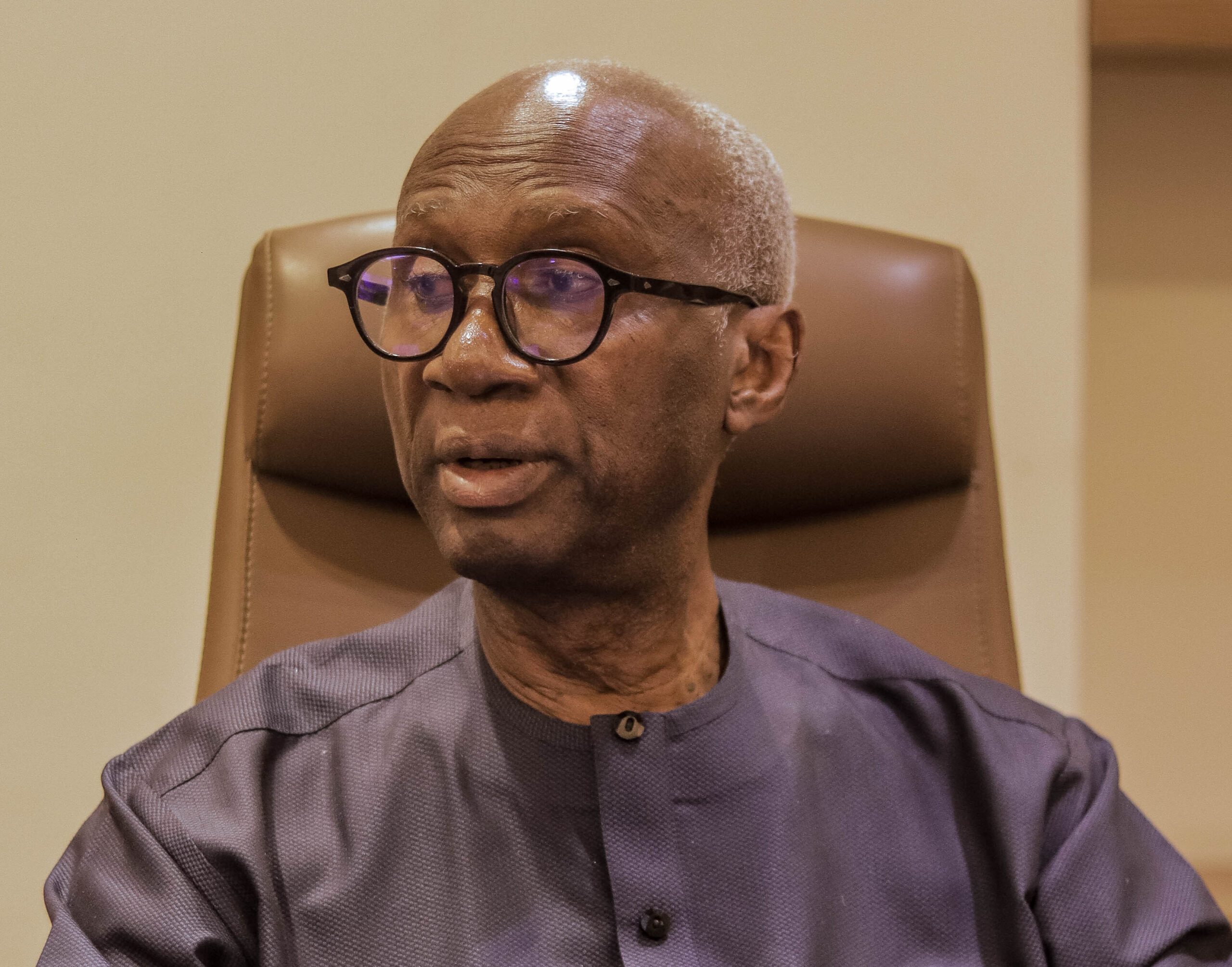
Twenty-five years after the launch of GSM services transformed Nigeria’s telecommunications landscape, Chairman of MTN Nigeria and former Executive Vice Chairman of the Nigerian Communications Commission (NCC), Dr Ernest Ndukwe, has urged Nigeria to accelerate investment in artificial intelligence (AI), data centres and other digital infrastructure to avoid a new digital divide.
Ndukwe, who reflected on Nigeria’s telecommunications journey as MTN marks 25 years of operations in the country, said the industry had evolved from a severely underdeveloped communications sector into a critical backbone of the Nigerian economy.
He said the transformation was driven by regulatory reforms, private-sector investment and the rapid expansion of telecommunications infrastructure, but warned that the country must apply the lessons from the GSM era to emerging technologies.
“The lesson from the GSM era is that we must invest heavily in new technologies so that we are not left behind,” Ndukwe said.
He recalled that spectrum was one of the earliest and most difficult challenges regulators had to resolve before the GSM revolution could take off.
“Without frequency, it is impossible to build a mobile or wireless network,” he said, explaining that spectrum had previously been allocated in uneven portions, with some operators holding 5MHz, 7.5MHz or 10MHz.
According to him, regulators had to recover the fragmented allocations and establish a transparent licensing framework that would give operators a fair starting point in the emerging telecommunications market.
“It was determined that for fair competition at the start of the new telecom market we were trying to birth, all operators needed to have the same size of spectrum through a transparent licensing process,” he said.
Ndukwe recalled that the process faced resistance, with some companies taking the authorities to court, but regulators eventually recovered enough spectrum in the 900MHz and 1800MHz bands for the new services.
He identified infrastructure as another major challenge, noting that Nigeria had an inadequate telecommunications network for its population at the time.
Nigeria had about 400,000 fixed lines and 20,000 analogue mobile lines for a population of approximately 120 million people, while existing infrastructure provided by Nigerian Telecommunications Limited (NITEL) was grossly inadequate.
“Nigeria was severely short of telecommunications infrastructure, which made it necessary to quickly commence a licensing process capable of attracting the right private companies to build out the network,” he said.
The arrival of GSM operators subsequently transformed communications in Nigeria, with the first official GSM call in August 2001 marking what Ndukwe described as a significant moment in the country’s development.
“We could immediately see the happiness of the Nigerian public as telecommunications services became easily and widely available. For me and the other members of the Commission at the time, it was a dream come true, and it showed that Nigeria could hold its head high among the comity of nations,” he said.
According to Ndukwe, the impact of the GSM revolution has extended far beyond telecommunications, becoming a major catalyst for economic development.
“The biggest impact has been its role in catalysing economic development. There is hardly any aspect of commerce that does not depend on telecommunications services,” he said.
He said the banking industry was among the biggest beneficiaries of the expansion of telecommunications infrastructure, arguing that the sector could not have achieved its current scale, performance and efficiency without widespread connectivity.
“For the banking industry today, it would have been impossible to attain the expansion and the high level of performance and efficiency it has attained without pervasive telecommunications infrastructure and services,” he said.
Ndukwe also noted that mobile money and fintech platforms, including MoMo, OPay, Moniepoint and PalmPay, depend heavily on telecommunications infrastructure.
He said telecommunications had similarly transformed education, healthcare and access to information, with broadband connectivity supporting remote learning and digital communication.
The COVID-19 pandemic, he noted, demonstrated the importance of connectivity, as platforms such as Zoom enabled businesses, schools and other institutions to remain connected.
Ndukwe said telecommunications had also helped Nigeria participate in global developments and prevented the digital divide between the country and more advanced economies from widening further.
Reflecting on MTN Nigeria’s 25-year journey, Ndukwe attributed the company’s sustained position in the market to consistency, a strong corporate culture and a high-performing workforce.
Other News
Ndukwe, who joined MTN Nigeria’s board in 2018, said the company had distinguished itself through disciplined management and a strong organisational culture.
“From my years after joining the MTN Nigeria Group, it is clear that the company is well run, has a strong culture profile, is strictly managed, and has high-performing members of staff,” he said.
He said these qualities had helped the company navigate significant challenges, including the major fine imposed on MTN in 2015.
“It is therefore not surprising that MTN Nigeria has remained a major player and sustained its leadership. Even after the major fine imposed on the company in 2015, the company was able to trade through the challenges,” he said.
Ndukwe also described MTN Nigeria’s decision to sell shares to the Nigerian public as a major positive development, saying millions of Nigerians now have a direct financial interest in the company’s success.
Despite the progress made over the past 25 years, he said operators continue to face significant challenges in maintaining telecommunications infrastructure, particularly in the areas of power, security, right of way, fibre cuts and damage to underground cables during road construction.
He disclosed that MTN Nigeria is investing in additional cable infrastructure, particularly in the northern part of the country, to improve network resilience and customer experience.
“Recently, we began investing in additional cable infrastructure, particularly in the northern part of the country, to provide redundancy for our main fibre capacity,” he said.
According to him, the additional infrastructure will provide alternative routes for network traffic when existing fibre routes are disrupted.
“The aim is to improve customer quality of experience so that when a cable is cut, traffic can be rerouted through another route and services can continue,” Ndukwe said.
He added that MTN would continue investing in network resilience because customers increasingly depend on telecommunications for financial transactions, business, education, entertainment and other activities.
“We do not want to make excuses, so we continue to invest in building a resilient network to manage these challenges,” he said.
However, Ndukwe warned that Nigeria’s next major technological challenge could be the emergence of a new digital divide driven by AI.
He said much of the infrastructure supporting advanced AI technologies is concentrated outside developing countries, creating the risk that economies such as Nigeria could become largely consumers of technologies developed elsewhere.
He identified data centres as critical infrastructure for AI, the Internet of Things (IoT), digital identity and other emerging technologies, but stressed that reliable electricity would be essential to their development.
“Data centres consume significant power, which is why the power challenge must be addressed,” he said.
Ndukwe said the infrastructure required for the next phase of technological development must go beyond telecommunications networks to include electricity, water, manufacturing and other foundational systems.
He pointed to the United States, Europe and China, where large data centres and hyperscalers support significant portions of the global digital economy, saying Nigeria must recognise the scale of investment required to develop similar capacity.
“Developing countries must wake up and invest in new technologies while also addressing infrastructure challenges, not only ICT or telecommunications infrastructure,” he said.
“Nigeria must wake up and take action as a country.”
As Nigeria marks 25 years of GSM connectivity, Ndukwe’s assessment of the sector highlights how telecommunications has evolved from a scarce service into essential national infrastructure and a major driver of economic activity.
He said the next phase of Nigeria’s digital development would depend on whether the country can build the power, data centre, fibre, water and wider infrastructure needed to participate meaningfully in an increasingly AI-driven global economy.