Follow Us on Google
By Adebowale Johnson
For decades, Nigeria’s leadership conversation has largely centred on individuals, who should lead, who has the experience to lead, who possesses the character to lead and who can deliver when given responsibility.
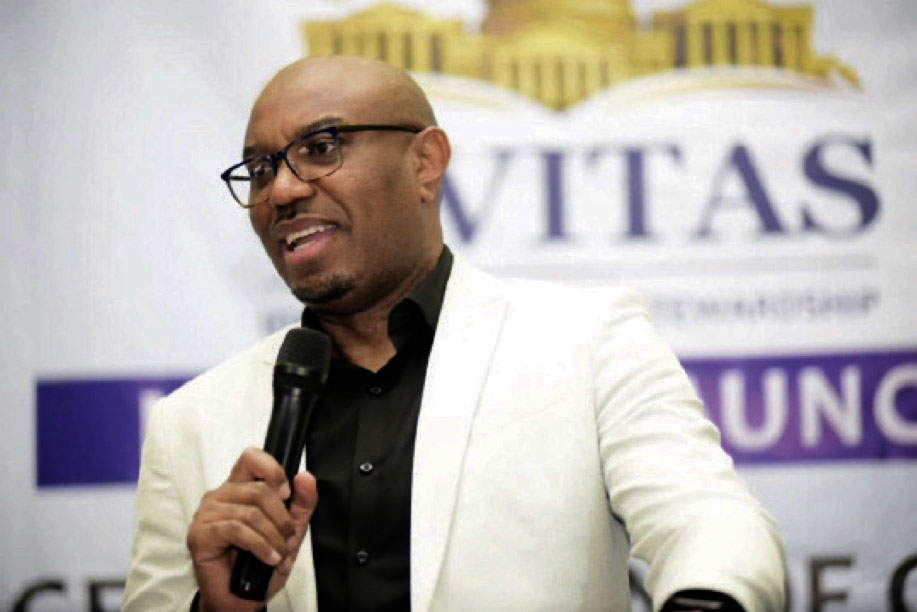
But Dr Ebere Morgan, a leadership development expert and chief executive officer of CIVITAS, believes the deeper challenge may lie elsewhere.
“Nigeria’s leadership challenge is not necessarily a shortage of intelligent or talented people,” Morgan said. “The challenge is whether we have built the systems that consistently convert human potential into institutional capacity and sustainable societal outcomes.”
His argument challenges a familiar way of thinking about leadership in Nigeria. Rather than waiting for exceptional individuals to emerge and then placing them in positions of authority, Morgan believes the country needs to deliberately build systems capable of identifying, developing and sustaining leadership across generations.
He describes this as leadership infrastructure.
Nigeria routinely invests in schools, hospitals, financial institutions, roads and other forms of physical and institutional infrastructure. Leadership development, however, is often left to personality, politics, professional advancement, appointments or chance.
Morgan believes that approach is inadequate for a country seeking sustainable development.
“Leadership infrastructure refers to the deliberate architecture through which a society identifies, develops, deploys, supports and regenerates its leadership capacity across generations,” he explained.
For him, leadership development should not begin only after an individual becomes a commissioner, chief executive, governor, vice-chancellor or director-general. The foundations should be laid much earlier through the development of identity, responsibility, citizenship, agency, judgment, influence and stewardship.
Nigeria, he noted, has no shortage of physicians, engineers, entrepreneurs, academics, professionals, public servants and young people with considerable ability.
“The more important question is whether we have built the systems required to transform that intelligence into collective capacity,” he said.
It is from this perspective that Morgan is seeking to expand his leadership training and mentorship model into the Niger Delta, a region he describes as possessing enormous natural wealth, human talent and strategic importance, despite its longstanding development and institutional challenges.
As a son of Delta State, his interest in the region has a personal dimension. But Morgan also sees the Niger Delta as a potential testing ground for a different model of leadership development.
He argues that the region should not be approached primarily through the lens of what it lacks, but through what it already possesses, a large population of young people, educational institutions, businesses, traditional structures, civil-society organisations and public institutions.
Taken together, these resources, he believes, could form an ecosystem for leadership development rather than a series of isolated programmes.
There are already interventions focused on youth development, technology, entrepreneurship, skills acquisition and economic diversification. Morgan’s argument is not that these efforts are unnecessary, but that they need to be complemented by another form of capacity.
“Human capital without leadership capacity remains underleveraged capital,” he maintained.
Teaching young people coding, entrepreneurship or vocational skills is important, he said, but so is equipping them to exercise judgment, collaborate across differences, mobilise people, build trustworthy institutions and steward resources.
At the centre of his proposed Leadership Infrastructure Architecture, or LIA, is a developmental continuum built around three stages — Citizen, Leader and Statesman.
Through CIVITAS, the citizen is developed; through VANGUARD, the leader is developed; while SUMMIT is designed to develop statesmanship.
The progression is deliberate, Morgan explained.
“A society cannot sustainably produce statesmanship at the top if citizenship has been neglected at the foundation.”
The CIVITAS initiative is built around three interconnected concepts: Identity, Agency and Stewardship.
Identity focuses on helping young people understand who they are, their values, history, strengths, responsibilities and relationship with their communities and country.
Agency moves them from spectatorship to participation through problem-solving, communication, collaboration, critical thinking, initiative and responsible decision-making.
Stewardship asks what they will do with the opportunities, knowledge, influence and resources entrusted to them.
Morgan is keen to distinguish this approach from the conventional leadership seminar, where participants listen to speakers, collect certificates and return to their normal routines.
“Leadership development cannot be episodic formation,” he said, describing the need for mechanisms that reinforce learning and require practical application.
His proposed model therefore incorporates workshops, Leadership Labs, mentorship, coaching, civic-action projects, town halls, competitions and showcases.
Participants can progress through stages from “Civitan” to “Catalyst”, “Fellow”, “Ambassador” and eventually “Distinguished Civitan”.
The progression is intended to represent movement from belonging to contribution, leadership, representation and eventually legacy.
But Morgan says the real test of such a system would not be the number of certificates issued or even the number of people initially trained.
“The strongest evidence of success would not be the continued involvement of CIVITAS or its founders,” he said. “It would be the emergence of young Nigerians who can reproduce the values and capacities of the programme independent.
That emphasis on continuity is central to his thinking.
Cohorts remain connected, mentors stay involved and civic-action projects require participants to translate learning into community activity. Over time, alumni can become mentors, facilitators and community catalysts.
The ambition is to create a regenerative leadership pipeline in which one generation helps develop the next.
Morgan’s argument ultimately extends beyond any single programme or organisation.
He believes Nigeria needs a broader national leadership-development infrastructure involving schools, universities, traditional institutions, businesses, civil-society organisations, families and government agencies.
Schools, he argues, should become environments where citizenship, character, responsibility, collaboration and problem-solving are developed alongside academic knowledge.
Universities could provide leadership laboratories where students confront real institutional and community challenges.
Traditional institutions could contribute cultural knowledge and intergenerational wisdom. Businesses could provide opportunities for organisational leadership and execution, while civil-society organisations could create platforms for civic participation and social problem-solving.
Government, meanwhile, could establish structured leadership pipelines rather than waiting until individuals receive public appointments before preparing them for responsibility.
Morgan is also wary of turning leadership development into a government monopoly or partisan project.
Instead, he believes it should become part of Nigeria’s broader developmental fabric.
His international experience, he said, provides useful perspectives, but leadership principles must ultimately be adapted to Nigerian cultures, institutions and communities.
That means educators, traditional leaders, young people, parents, businesses, community organisations and local institutions all have a role in determining how such a framework works in practice.
For young Nigerians confronting unemployment, migration pressures and limited opportunities for civic participation, Morgan believes leadership development must also move beyond certificates and connect participants to real ecosystems involving businesses, technology platforms, entrepreneurship, internships, civic projects, universities, NGOs and community initiatives.
He acknowledges that leadership development cannot create jobs that do not exist.
But, he argues, it can equip young people to identify opportunities, organise people, solve problems, build networks, navigate institutions and convert knowledge into action.
The long-term ambition, therefore, is larger than the number of people trained.
Morgan wants to establish what he describes as a developmental lineage in which young Nigerians enter the system early, develop their identity and agency, undertake community projects, receive mentorship, progress through education and professional life and eventually return to develop others.
For him, the ultimate measure of leadership is not simply what changes while a leader is present, but what continues to change because that leader was present.
“The real test of leadership is not simply what changes while a leader is present, but what continues to change because that leader was present,” he said.
It is a proposition that reframes Nigeria’s longstanding leadership debate.
Rather than waiting for exceptional leaders to emerge by accident, Morgan is arguing for a society that deliberately develops leadership from the foundation — strengthening citizens before leaders, leaders before statesmen and institutions before personalities.
The broader aspiration is a Nigeria where communities are increasingly capable of solving their own problems, institutions become stronger than the individuals who temporarily lead them, and young people move from spectatorship to agency.
For Morgan, that would represent something considerably larger than a successful leadership programme.
It would mean building a society capable of continuously producing, developing and sustaining leadership across generations.