Follow Us on Google
From Charity Nwakaudu, Abuja
As Nigeria positions itself as a future hub for global mining investment, industry experts are calling for a strategic shift—placing indigenous capacity and home-grown solutions at the centre of the country’s mineral development agenda.
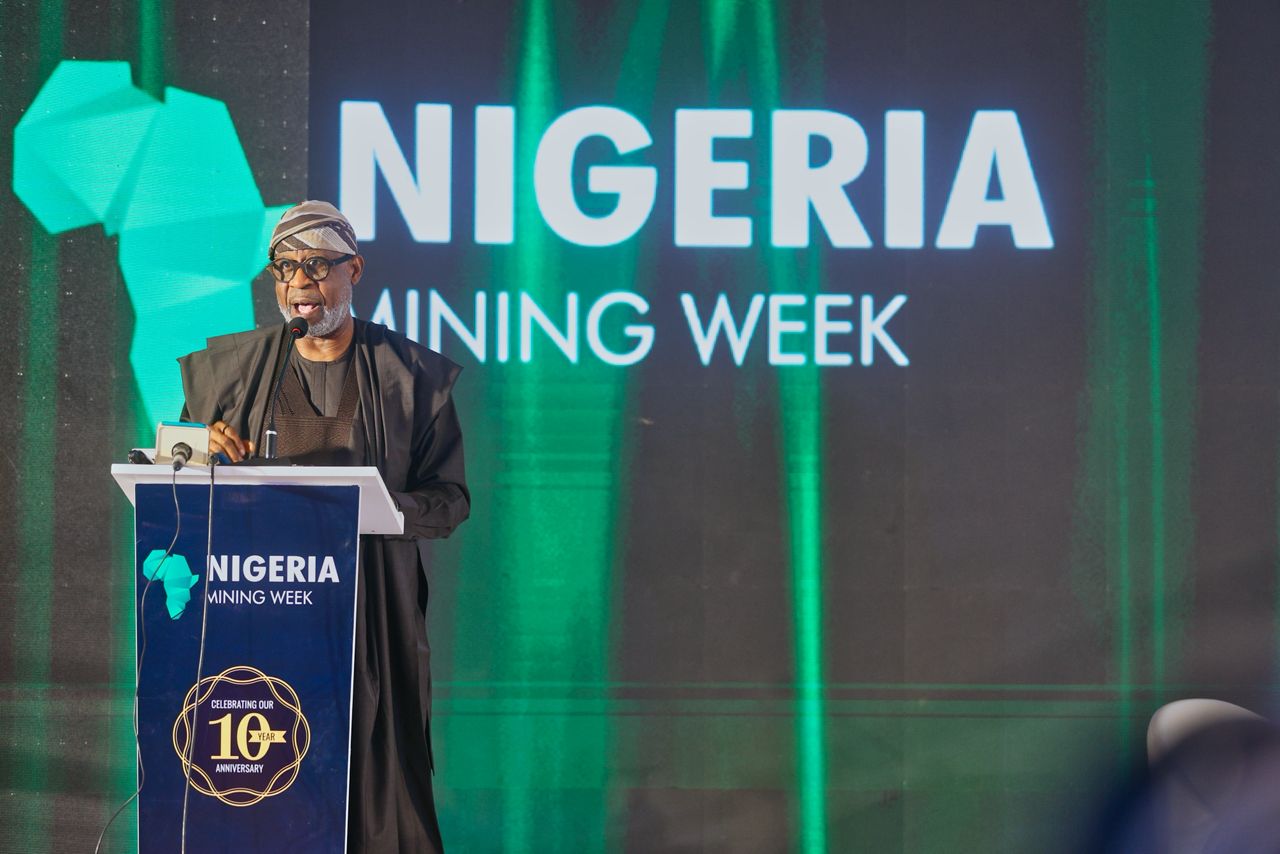
Speaking at the ongoing Nigeria Mining Week 2025 in Abuja, Professor Akinade Olatunji, Senior Consultant at Rapidlink Resources, emphasised that while Nigeria’s legal and regulatory framework for mining is now “world-class,” the next phase must focus on deliberate local empowerment.
“There’s no question that reforms have reignited interest, both nationally and globally,” he said. “But the real transformation will come when we replicate what worked in oil and gas—intentional policies that create space for local operators to thrive.”
Olatunji questioned how many international mining giants have meaningfully entered the Nigerian market despite ongoing reforms.
“We need to ask ourselves if these big names will remain committed long-term, and whether their operations are truly sustainable within our economic and social context,” he said.
Drawing lessons from Nigeria’s petroleum sector, he pointed to the 2001 marginal fields policy which successfully birthed a generation of indigenous oil and gas firms. “That policy gave rise to companies like Seplat, Aradel, and NDWestern—firms that have not only survived but are now acquiring assets from global oil majors.”
According to Olatunji, what changed in oil and gas was not just regulation but intentionality—government-led policies that deliberately nurtured local ownership, built capacity, and insisted on accountability. He argued that a similar playbook is essential for the mining sector to achieve inclusive growth.
“The mining sector must become more than just an extraction site for foreign capital. It should be a launchpad for Nigerian-owned enterprises, powered by Nigerian professionals,” another panellist noted.
The event, which has drawn investors, regulators, and operators from across the globe, also examined how transparency, access to finance, and community beneficiation can be embedded in Nigeria’s mining future.
Experts agreed that while attracting global capital is important, long-term sustainability will depend on empowering local firms, fostering technology transfer, and building a resilient value chain from exploration to export.
Other News
With Nigeria’s solid minerals sector now in the spotlight as a key pillar of economic diversification, stakeholders concluded that this is the moment to make bold, home-grown policy decisions.
“If we get it right—just as we did with marginal oil fields—Nigeria could soon be exporting not just minerals, but mining expertise,” Olatunji stated.
In a paper titled “SMDF–NASD Collaboration: Accelerating Nigeria’s Mining Sector”, the Technical Adviser to the Executive Secretary of the Solid Minerals Development Fund (SMDF), Abdulmajeed Amussah, emphasised that Nigeria’s push for economic diversification is gaining fresh momentum as SMDF partners with NASD Plc to unlock capital market solutions tailored to the solid minerals sector.
According to him, the groundbreaking collaboration is a significant step toward transforming one of Nigeria’s most underutilised sectors into a major economic growth driver.
“The initiative, backed by the Minister of Solid Minerals Development, Dr. Dele Alake, and the Minister of Steel Development, Prince Shuaibu Abubakar Audu, aims to accelerate the transition of mining projects from exploration to production through structured, transparent, and innovative financing tools,” he said.
Amussah explained that despite Nigeria’s estimated $700 billion in untapped mineral wealth, the sector currently contributes less than 1% to GDP — a situation analysts attribute largely to the lack of access to long-term, risk-aligned capital.
He noted that this is the challenge the SMDF–NASD partnership aims to solve.
He further emphasised that through the collaboration, NASD Plc, a key player in Nigeria’s capital market infrastructure, will provide regulated platforms for project financing — including Digital Securities Platforms (DSP) and Security Token Offerings (STOs) — enabling vetted mining companies to access flexible capital structures backed by real-time data and robust compliance frameworks.
“The real innovation here is matching the lifecycle of a mining project with the right capital instruments — while ensuring investor protection and transparency,” Amussah stated.