Follow Us on Google
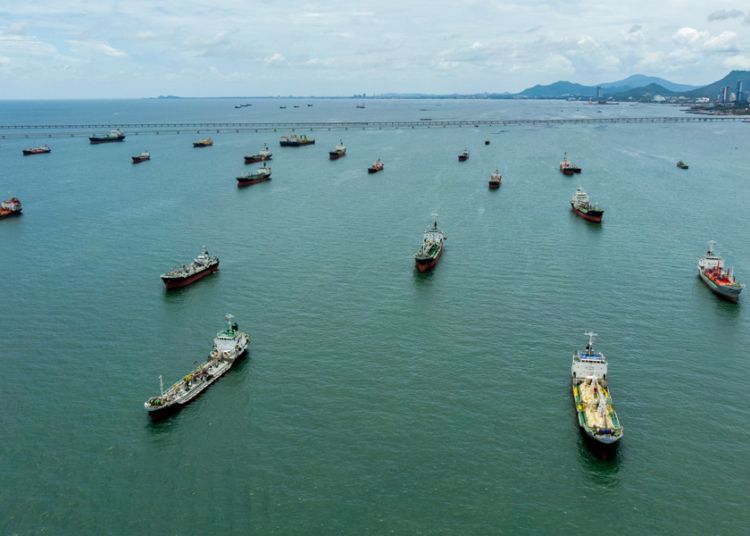
Nigeria’s oil revenue outlook may witness a sharp drop over the reopening of Strait of Hormuz.
Nigeria’s oil earnings recorded an estimated windfall of about N5.13 trillion in two months (February to April), as crude prices surged sharply following tensions between the United States–Iran crisis, pushing revenues far above the Federal Government’s 2026 budget assumptions.
The US-Iran war started on February 28 when oil prices were below $70 a barrel.
The Strait of Hormuz one of the world’s most critical energy gateway has been under blockade for four months due to tensions in the Middle East.
But, three days ago, a truce was reached among all parties, leading to a ceasefire and the reopening of the channel.
While the war lasted, oil prices rose to an all time peak of over $120 per barrel, further boosting revenue for Nigeria.
The 2026 budget is anchored on daily oil production of 1.8 million barrels per day, a benchmark oil price of $64.85 per barrel and an exchange rate of N1,400 to the dollar.
Based on these, expected daily oil revenue stands at $116.73m, derived from multiplying 1.8 million barrels by $64.85. When converted at the budget exchange rate, this amounts to about N163.42bn per day, which serves as the baseline for measuring any revenue gains or shortfalls.
Other News
Actual earnings in March and April exceeded this benchmark, largely due to a sharp rise in crude oil prices occassioned by the crisis in the Middle East.
March, data from the Nigerian Upstream Petroleum Regulatory Commission(NUPRC) indicated that Nigeria’s oil production averaged 1.55 million barrels per day, while the average crude price stood at $95.03 per barrel, according to the Central Bank of Nigeria, and the exchange rate averaged N1,370 to the dollar.
Using these figures, daily revenue amounted to approximately $147.30m, obtained by multiplying 1.55 million barrels by $95.03. Converted at the average exchange rate for the month, this translates to about N201.80bn per day.
Despite production falling short of the budget target by about 250,000 barrels per day, the higher oil price ensured that overall revenue remained significantly above projections.
But should the reopening of Strait of Hormuz drive crude prices towards Nigeria’s 2026 budget benchmark of $64.85 per barrel as against elevated crisis level of $95 per barrel, the country could lose about N13 trillion in the remaining months of 2026.
The reopening of the Strait of Hormuz will return millions of barrels of Middle East crude to the market. Saudi Arabia, Iraq, Kuwait and the UAE collectively produce more than 15 million barrels per day, compared with Nigeria’s average output of about 1.55 million barrels per day.
The renewed availability of these supplies could narrow the premium enjoyed by Nigerian crude grades during the disruption and intensify competition in key Asian markets.
Industry observers have warned that while the Hormuz disruption delivered an unexpected windfall to Nigeria through higher oil prices, the reopening of the strategic waterway could further expose the country’s persistent production challenges.